
Kerala High Court sets aside 10 am-5 pm window for producing arrestees
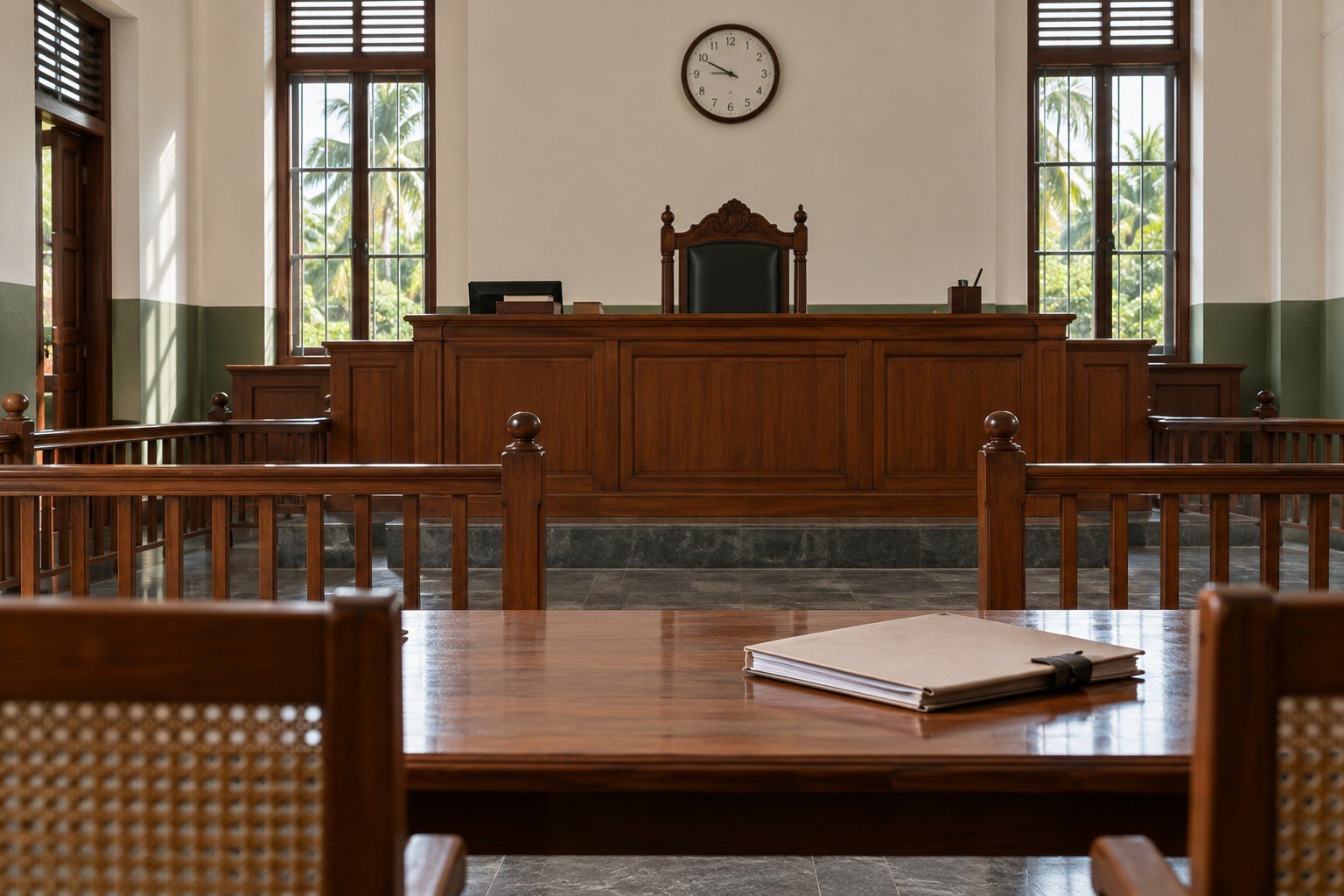
A Division Bench of the Kerala High Court on 23 October 2026 set aside part of the Home Department's guideline on producing arrested persons before Magistrates. It sought production, as far as possible, between 10 a.m. and 5 p.m., and later only in exceptional circumstances. The court upheld prior intimation to the Magistrate after 5 p.m. and ordered fresh guidelines.
Syllabus: GS2 · Constitution; Prelims · Polity & Governance; GS2 · Executive & Judiciary
Why this matters for UPSC
GS2 polity: Prelims can ask what Article 22(1), Article 22(2) and Article 22(3) provide and what Section 58 and Section 187 of the BNSS require; GS2 Mains, whether executive guidelines can dilute arrest safeguards.
Why it matters
The ruling touches anyone arrested in Kerala in the evening. Under the struck-down wording, an officer arresting someone at 7 p.m. could treat production that night as an exception and keep the person in a lock-up until court opened. Until a judge sees the arrested person, nobody independent checks whether the arrest was lawful, whether the reasons were given in writing, or whether bail is due. A lawyer has no hearing to argue in. Earlier production shortens that gap. Its reasoning also speaks to every State: rules made for good reasons, such as the safety of judges and doctors, still cannot quietly stretch a deadline the Constitution fixes for personal liberty.
Prelims pointers
- Article 22(3): clauses (1) and (2) do not apply to an enemy alien or to a person arrested or detained under a preventive detention law.
- Article 39A, a Directive Principle inserted by the Forty-second Amendment, 1976: the State shall provide free legal aid so justice is not denied for economic or other disabilities.
- Section 187(3) BNSS: total custody during investigation is capped at 90 days for offences punishable with death, life or ten years or more, and 60 days otherwise.
- Section 187(4) BNSS: police custody needs the accused produced in person; further judicial custody may be extended through audio-video electronic means.
- Section 38 BNSS: a person arrested and interrogated may meet an advocate of choice during interrogation, though not throughout it.
- Section 48 BNSS: the arresting officer must tell a relative, friend or nominated person, and the district's designated police officer, of the arrest and place of custody.
- Joginder Kumar v. State of U.P. (1994) and Sheela Barse v. State of Maharashtra (1983): an arrested person's protections begin immediately upon arrest.
- Section 187(6) BNSS: where a Magistrate is not available, an Executive Magistrate may, for reasons recorded, authorise detention for up to seven days in the aggregate.
Practise a UPSC-style question
With reference to Article 22 of the Constitution of India, consider the following statements:
1. An arrested person cannot be denied the right to consult, and be defended by, a legal practitioner of his choice.
2. No arrested person may be detained beyond twenty-four hours, journey time excluded, without the authority of a magistrate.
Which of the statements given above is/are correct?
- (a) 1 only
- (b) 2 only
- (c) Both 1 and 2
- (d) Neither 1 nor 2
Show the answer
Answer: (c) Both 1 and 2
Answer: (c) Both 1 and 2. Clause (1) gives the right to a lawyer and clause (2) fixes the 24-hour limit.
Statement 1: correct. Article 22(1) says no arrested person shall be denied the right to consult, and to be defended by, a legal practitioner of his choice.
Statement 2: correct. Article 22(2) requires production before the nearest magistrate within 24 hours, journey time excluded, and bars custody beyond it without a magistrate's authority.
Eliminate: Statement 2 is the 24-hour rule itself, so it is correct. Out: (a), (d).
Eliminate: Statement 1 is the text of clause (1). Out: (b).
Trap: Wrong scope. Students who link Article 22 only to the 24-hour rule forget that clause (1) carries the separate right to a lawyer, and doubt statement 1.
Remember: Article 22(1) gives grounds and a lawyer; Article 22(2) gives a magistrate within 24 hours.
More from the 24 October 2026 edition
- IAEA tells UN General Assembly nuclear power could triple by 2060 World & IR
- Haryana directs HERC under Section 108 to halt parallel power licence Polity
- NSO proposes PLFS redesign from 2027 to count platform workers Economy
- Karnataka HC: six guidelines curb mechanical FIRs, arrests over social-media posts Polity
- IMD forecasts Bay of Bengal cyclone heading for north Andhra, south Odisha Environment
- NMC withdraws 2023 medical education standards regulations, ends annual renewal Polity
- Orissa High Court: road pandals may stand if movement stays open Polity
- MHA tells Supreme Court of over 21,900 digital arrest complaints in 2026 National
- Jharkhand HC quashes Sentence Review Board's 'preordained' refusal of premature release Polity
- Allahabad HC: POCSO compensation cannot be refused for lack of injury Polity
- MoRTH draft proposes mandatory emergency braking (AEBS) in cars from 2030 National
- Kerala HC: State liable for wild-animal attacks despite not owning animals Environment