
IMD–IITM study in MAUSAM maps India's Köppen climate-zone shifts since 1951
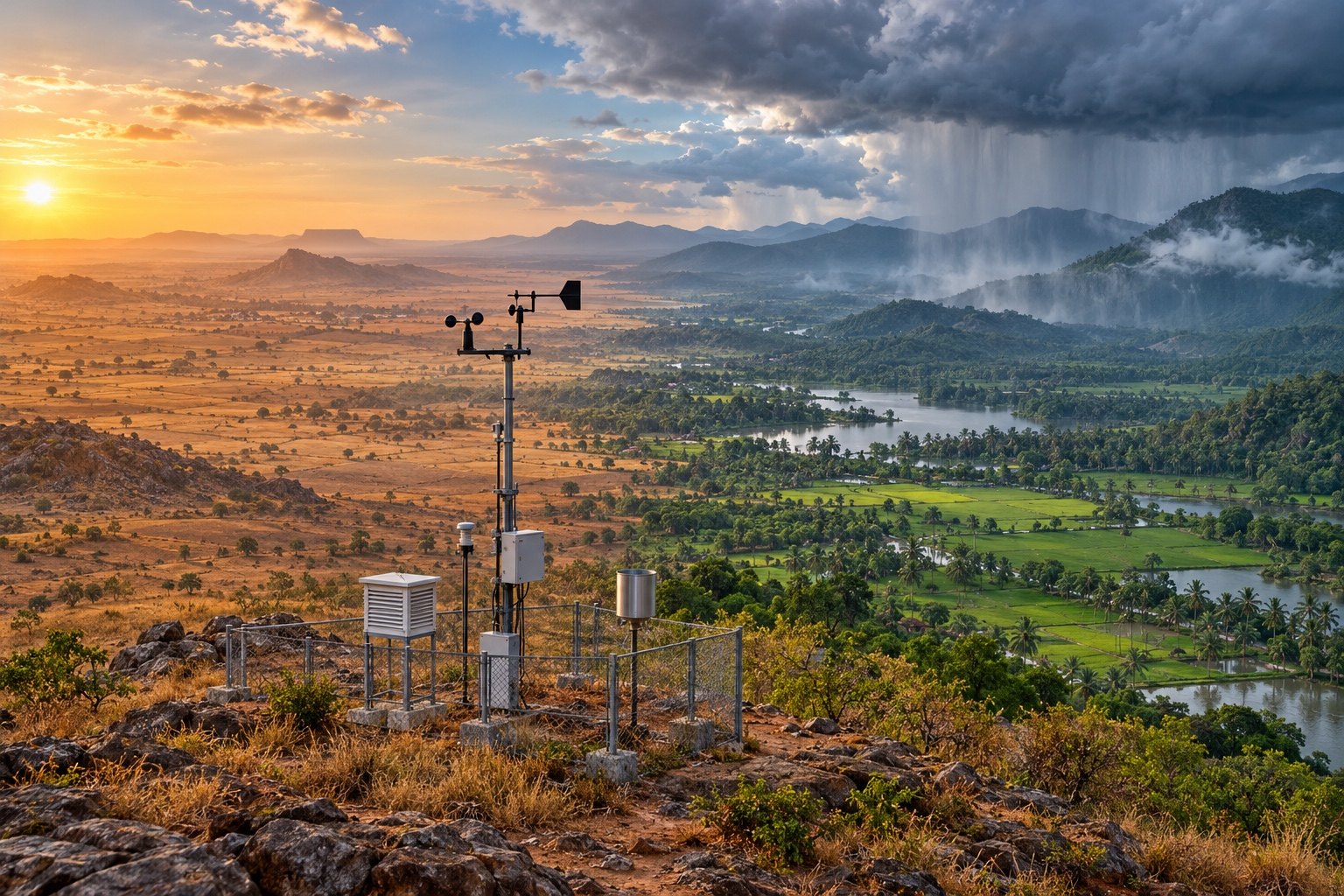
Scientists of the India Meteorological Department (IMD), with a co-author from the Indian Institute of Tropical Meteorology, Pune, have mapped how India's Köppen–Geiger climate zones shifted from 1951–1980 to 1991–2020. The study was published on 1 October 2026 in IMD's journal MAUSAM. The hot semi-arid belt has spread east into East Uttar Pradesh, while peninsular India has turned wetter.
Syllabus: Prelims · Geography; GS3 · Agriculture & Irrigation; Prelims · Environment & Ecology
Why this matters for UPSC
GS1 geography: Prelims can ask the Köppen–Geiger codes (Am, Aw, BSh, Cwa), what a 30-year climate normal is and what IMD and IITM do. GS1 and GS3 Mains can ask about shifting climate zones and the risk to paddy.
Why it matters
A farmer in eastern Uttar Pradesh plans sowing and harvest around rains and temperatures that have held for generations. If that land now behaves like the drier belt to its west, paddy that needs steady monsoon water faces more stress, and the old crop calendar can fail. Peninsular districts face the opposite change, with wetter conditions that alter which crops and water plans suit them. Because the Indo-Gangetic plain grows much of the country's rice and wheat, a slow drift in its climate is a food-security question, not only a weather one. It also shows that a distant ocean pattern can shape rain over Bihar and Bengal, so forecasts and farm advice need to watch it.
Prelims pointers
- Köppen–Geiger groups: A tropical, B arid, C temperate, D cold and E polar; where criteria overlap, the arid group B is assigned first.
- Tropical climates (A) have a coldest month of at least 18°C; Am and Aw differ by driest-month rainfall measured against annual rainfall.
- Arid climates: desert (W) or steppe (S) by annual rainfall against a dryness threshold; third letter h (hot) means mean annual temperature of at least 18°C, k (cold) below.
- Peel et al. (2007) split temperate (C) from cold (D) climates at a coldest month of 0°C, a change from Köppen's 1936 threshold.
- World Meteorological Organization: 1991–2020 is the current 30-year normal; 1961–1990 is kept as a fixed base for tracking long-term climate change.
- India Meteorological Department: set up in 1875, bringing the country's meteorological work under one central authority; today under the Ministry of Earth Sciences.
- Indian Institute of Tropical Meteorology, Pune: an autonomous institute of the Ministry of Earth Sciences.
Practise a UPSC-style question
With reference to the Köppen–Geiger climate classification, consider the following statements:
1. It classifies climates using threshold values of monthly air temperature and precipitation.
2. Its tropical (A) climates have a mean temperature of at least 18°C in the coldest month.
3. Where criteria overlap, the arid (B) group is assigned ahead of the tropical, temperate and cold groups.
Which of the statements given above is/are correct?
- (a) 1 and 2 only
- (b) 2 and 3 only
- (c) 1 and 3 only
- (d) 1, 2 and 3
Show the answer
Answer: (d) 1, 2 and 3
Answer: (d) 1, 2 and 3. All three describe the scheme as set out by Peel et al. (2007) and used by IMD.
Statement 1: correct. The scheme rests on thresholds and seasonality of monthly temperature and precipitation, so each class matches a kind of vegetation.
Statement 2: correct. Tropical (A) climates are not arid and have a coldest month of at least 18°C.
Statement 3: correct. Because tropical, temperate and cold classes can overlap with arid conditions, the arid group B is given precedence.
Eliminate: statement 2 is the textbook definition of group A, so any option without 2 goes. Out: (c).
Eliminate: statement 1 is the basis of the whole scheme, so options without 1 go. Out: (b).
Eliminate: statement 3 is the precedence rule, so the option without 3 goes. Out: (a).
Trap: Sounds right. Statement 3 reads like an invented technical rule, but it is the real precedence rule; students who doubt it pick (a).
Remember: A tropical, B arid (assigned first), C temperate, D cold, E polar.
More from the 24 October 2026 edition
- IAEA tells UN General Assembly nuclear power could triple by 2060 World & IR
- Haryana directs HERC under Section 108 to halt parallel power licence Polity
- NSO proposes PLFS redesign from 2027 to count platform workers Economy
- Karnataka HC: six guidelines curb mechanical FIRs, arrests over social-media posts Polity
- IMD forecasts Bay of Bengal cyclone heading for north Andhra, south Odisha Environment
- NMC withdraws 2023 medical education standards regulations, ends annual renewal Polity
- Orissa High Court: road pandals may stand if movement stays open Polity
- MHA tells Supreme Court of over 21,900 digital arrest complaints in 2026 National
- Jharkhand HC quashes Sentence Review Board's 'preordained' refusal of premature release Polity
- Allahabad HC: POCSO compensation cannot be refused for lack of injury Polity
- MoRTH draft proposes mandatory emergency braking (AEBS) in cars from 2030 National
- Kerala HC: State liable for wild-animal attacks despite not owning animals Environment