
Vienna Conventions: India presses mission protection at UN Sixth Committee
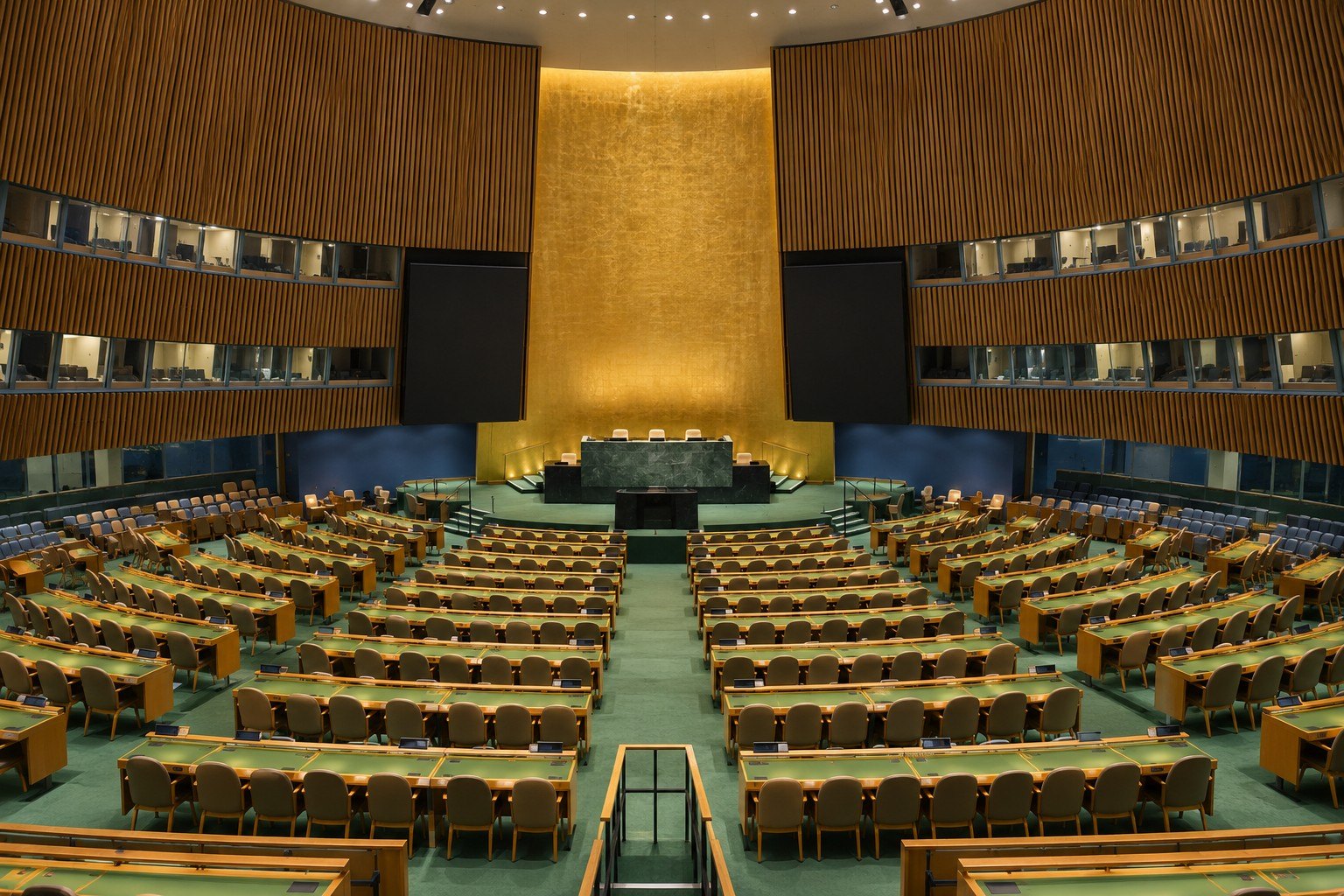
India told the UN General Assembly's Sixth Committee on 20 October 2026 that receiving States must protect diplomatic and consular missions under the Vienna Conventions of 1961 and 1963. Lok Sabha MP Sanjay Dina Patil voiced concern at reported vandalism, assaults, hostile drone overflights, arson and the online release of diplomats' personal data, and called accountability indispensable.
Syllabus: Prelims · Current Affairs & IR; GS2 · Groupings & Agreements; GS2 · International Institutions
Why this matters for UPSC
GS2 (international institutions) and Prelims test the Vienna Convention on Diplomatic Relations and the Vienna Convention on Consular Relations: inviolability, immunity and persona non grata. Mains can ask how host States should protect missions.
Why it matters
Embassies and consulates are how countries talk, settle disputes and help their citizens abroad. When a mission is vandalised, a diplomat is threatened or a family's home address is posted online, staff cannot work freely and the two countries' relations suffer. An Indian student arrested abroad, for instance, depends on a working consulate to be told of the arrest and to arrange a lawyer. Protection runs both ways: a host that fails to guard foreign missions invites the same treatment for its own envoys. Newer threats such as drones over compounds and online harassment were not imagined in the 1960s treaties, so States are now sharing practical measures to fill the gap.
Prelims pointers
- VCDR 1961, Article 22: mission premises are inviolable; receiving-State agents may enter only with the head of mission's consent; premises are immune from search, requisition, attachment or execution.
- VCDR 1961, Article 29: a diplomatic agent cannot be arrested or detained in any form; Article 30 gives the agent's private residence the same inviolability as mission premises.
- VCDR 1961, Article 31: immunity from criminal jurisdiction is complete; civil immunity has three exceptions (private immovable property, succession, private professional or commercial activity).
- VCDR 1961, Article 32: only the sending State may waive a diplomat's immunity, the waiver must be express, and execution of a judgement needs a separate waiver.
- VCDR 1961, Article 9: the receiving State may declare a diplomat persona non grata at any time without giving reasons, even before arrival.
- VCCR 1963, Article 41: a consular officer may be arrested pending trial for a grave crime, on a decision of the competent judicial authority.
- VCCR 1963, Article 36: if an arrested national so requests, authorities must tell the consular post without delay; consular officers may visit and arrange legal representation.
- 1973 Convention on Internationally Protected Persons: in force since 20 February 1977; a State that does not extradite an alleged offender must submit the case for prosecution (Article 7).
Practise a UPSC-style question
With reference to the Vienna Convention on Diplomatic Relations, 1961, consider the following statements:
1. A diplomatic agent's immunity from the receiving State's jurisdiction also exempts him from the jurisdiction of the sending State.
2. Agents of the receiving State may enter the premises of a mission only with the consent of the head of the mission.
Which of the statements given above is/are correct?
- (a) 1 only
- (b) 2 only
- (c) Both 1 and 2
- (d) Neither 1 nor 2
Show the answer
Answer: (b) 2 only
Answer: (b) 2 only. Mission premises are inviolable, but immunity abroad never shields a diplomat from his own country's courts.
Statement 1: incorrect. Article 31(4) of the 1961 Convention says immunity in the receiving State does not exempt the diplomat from the sending State's jurisdiction.
Statement 2: correct. Article 22 makes mission premises inviolable; the receiving State's agents may enter only with the head of mission's consent.
Eliminate: statement 2 is the core rule of inviolable premises, so it is correct. Out: (a), (d).
Eliminate: statement 1 is wrong because home-country jurisdiction survives under Article 31(4). Out: (c).
Trap: Wrong scope. Statement 1 stretches immunity from the host country's courts to the diplomat's own country, which the Convention expressly rules out.
Remember: Diplomatic immunity is from the host's courts only; the sending State can always try its own diplomat.
More from the 22 October 2026 edition
- Tamil Nadu orders State-wide rainwater harvesting drive as a mass movement Environment
- Counter-drone air defence: MoD signs BEL contract for LLLR-I low-level radars Defence
- Bihar relaxes VB-G RAM G farm-season pause for 38 disaster-hit districts National
- PARAKH turns PRS 2024 learning gaps into monthly district action National
- UNEP Emissions Gap Report 2026: 1.5°C without overshoot is lost Environment
- India tells UN Third Committee its safeguards against enforced disappearance World & IR
- India reiterates call for binding PAROS treaty at UNGA First Committee World & IR
- WHO report maps within-country NCD inequalities: 35 indicators, up to eight dimensions World & IR
- Mecca Joint Defence Agreement goes to Turkey's parliament for ratification World & IR
- TV Programme Code: I&B advisory follows Inter-Departmental Committee's findings Polity
- Ladakh dissolves Kargil hill council, sets panchayat polls for 21 November Polity
- ASI begins fresh excavation at Kashipur (Govisana), Uttarakhand National