
Mecca Joint Defence Agreement goes to Turkey's parliament for ratification
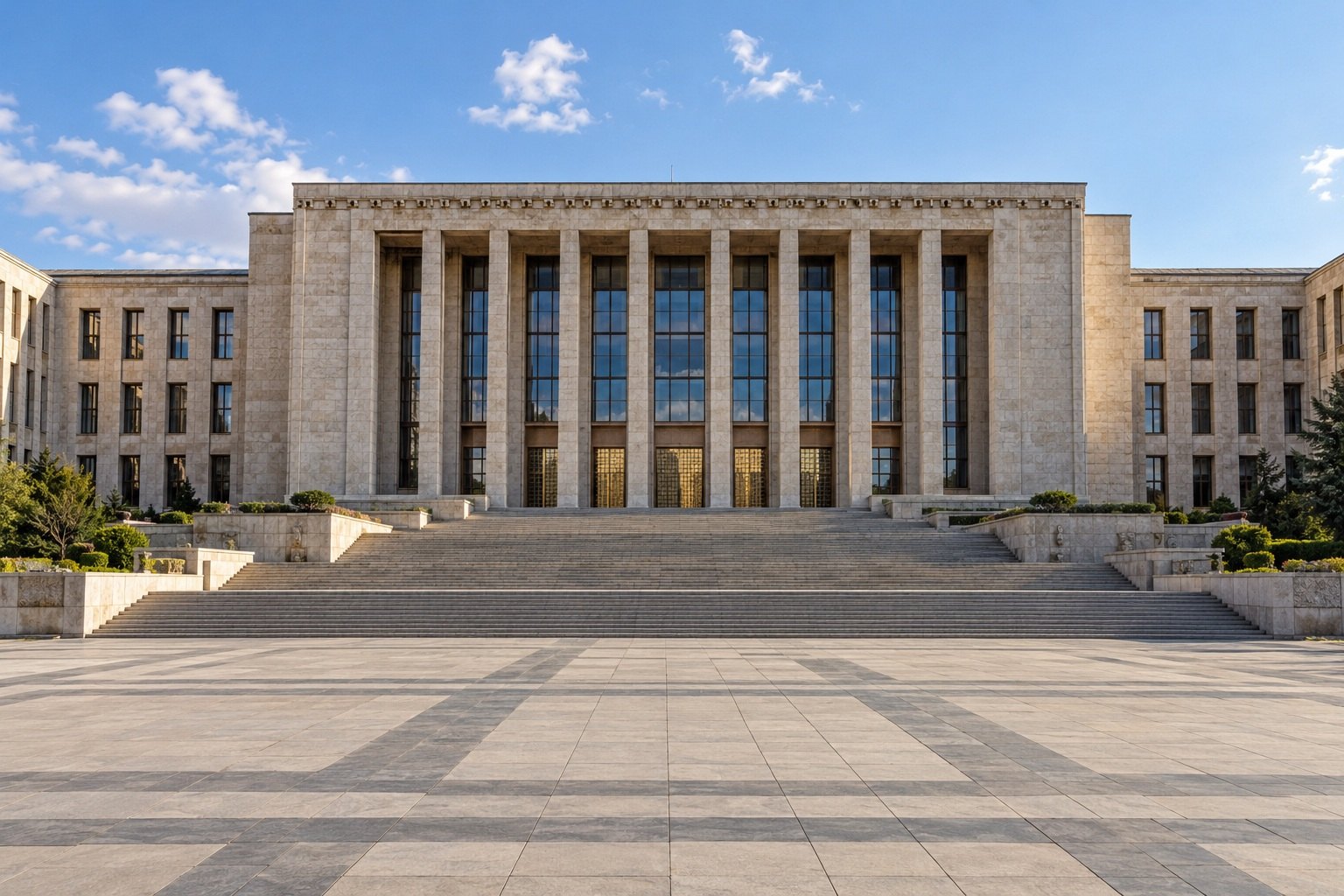
Turkey on 20 October 2026 sent the Mecca Joint Defence Agreement, signed with Pakistan and Saudi Arabia on 7 August, to its Grand National Assembly for ratification, and the 16-article text became public. Article 2 treats an armed attack on one party as an attack on all. India's Ministry of External Affairs said in August it was examining its implications.
Syllabus: Prelims · Current Affairs & IR; GS2 · Groupings & Agreements; GS2 · Foreign Policies & the Diaspora
Why this matters for UPSC
GS2 international relations, on agreements affecting India's interests. Prelims can ask what Article 51 of the UN Charter and NATO's Article 5 provide and how ratification works; Mains, what the Mecca pact means for India's ties with Saudi Arabia.
Why it matters
For India, three countries it deals with closely are now bound by a standing defence pledge: Saudi Arabia, a strategic partner in energy, defence and investment; Turkey, whose defence firms sell to Saudi Arabia and produce jointly with Pakistan; and Pakistan itself. The pact runs indefinitely and allows no exit for ten years after it takes effect, so it will shape West Asian security for at least a decade. The text names no enemy, and its weight lies in joint weapons production, training and intelligence sharing. Indian diplomats must keep the Saudi partnership growing while Pakistan's ministers and military chief sit on the pact's committee and a Pakistani heads its first Secretariat. It arrives as Houthi strikes and shipping disruptions in the Strait of Hormuz keep Gulf energy supplies uncertain.
Prelims pointers
- Article 51 of the UN Charter recognises the inherent right of self-defence against an armed attack; collective defence pacts such as the Mecca text invoke it.
- North Atlantic Treaty (1949), NATO's founding document: its Article 5 treats an armed attack on one member as an attack on all.
- Strategic Mutual Defence Agreement (Riyadh, 17 September 2025): Saudi Arabia and Pakistan treat aggression against either as aggression against both.
- India and Saudi Arabia established diplomatic relations in 1947 and are strategic partners in defence and security, energy, investment, health and education.
Practise a UPSC-style question
With reference to the Mecca Joint Defence Agreement, consider the following statements:
1. Its Strategic Political and Defence Committee comprises the parties' foreign ministers, defence ministers and chiefs of general staff.
2. Its Secretariat is to be headquartered in Türkiye.
3. A party may withdraw from it after 10 years have passed since its entry into force.
Which of the statements given above is/are correct?
- (a) 1 and 2 only
- (b) 2 and 3 only
- (c) 1 and 3 only
- (d) 1, 2 and 3
Show the answer
Answer: (c) 1 and 3 only
Answer: (c) 1 and 3 only. The Secretariat sits in Saudi Arabia, not in Türkiye.
Statement 1: correct. Article 8, as published, sets up the committee of the parties' foreign ministers, defence ministers and chiefs of general staff, meeting twice a year.
Statement 2: incorrect. Article 8 places the Secretariat in the Kingdom of Saudi Arabia, with which it concludes a headquarters agreement.
Statement 3: correct. Article 16 keeps the pact in force indefinitely and allows a party to withdraw after 10 years in force, on three months' written notice.
Eliminate: Be sure of statement 2 first: Article 8 puts the Secretariat in Saudi Arabia, so it is incorrect. Out: (a), (b), (d).
Trap: Swapped attribution. The Secretariat is moved from Saudi Arabia to Türkiye, the party now ratifying the pact, which a student who read only the headline may accept.
Remember: Mecca pact: ministers' committee twice a year, Secretariat in Saudi Arabia, exit after 10 years.
More from the 22 October 2026 edition
- Tamil Nadu orders State-wide rainwater harvesting drive as a mass movement Environment
- Counter-drone air defence: MoD signs BEL contract for LLLR-I low-level radars Defence
- Bihar relaxes VB-G RAM G farm-season pause for 38 disaster-hit districts National
- PARAKH turns PRS 2024 learning gaps into monthly district action National
- UNEP Emissions Gap Report 2026: 1.5°C without overshoot is lost Environment
- Vienna Conventions: India presses mission protection at UN Sixth Committee World & IR
- India tells UN Third Committee its safeguards against enforced disappearance World & IR
- India reiterates call for binding PAROS treaty at UNGA First Committee World & IR
- WHO report maps within-country NCD inequalities: 35 indicators, up to eight dimensions World & IR
- TV Programme Code: I&B advisory follows Inter-Departmental Committee's findings Polity
- Ladakh dissolves Kargil hill council, sets panchayat polls for 21 November Polity
- ASI begins fresh excavation at Kashipur (Govisana), Uttarakhand National