
India approved to join Southern Indian Ocean Fisheries Agreement
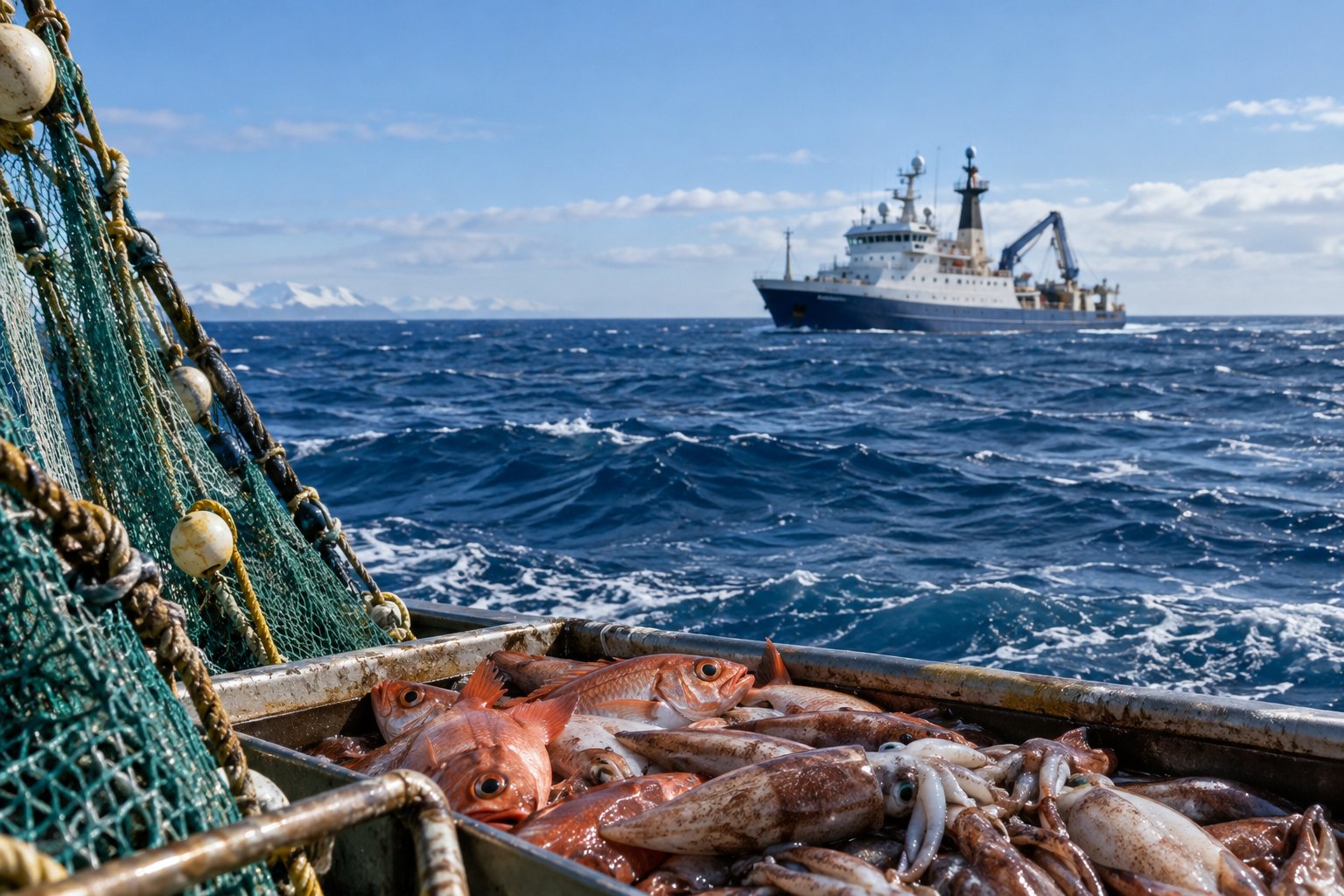
The Union Government has approved India's accession to the Southern Indian Ocean Fisheries Agreement (SIOFA), the regional framework for high-seas fishing. India, a cooperating non-contracting party since 2022, will become a Contracting Party. Indian-flagged vessels can then fish squids, toothfish, alfonsino and other non-migratory stocks in the SIOFA area.
Syllabus: Prelims · Current Affairs & IR; GS2 · Groupings & Agreements; GS2 · International Institutions
Why this matters for UPSC
GS2 international institutions and groupings: Prelims can ask how SIOFA differs from the Indian Ocean Tuna Commission and what it covers; GS3 Mains, about the Blue Economy and high-seas fishing.
Why it matters
Indian fishers and companies have worked mostly close to the coast, while a few distant-water fleets take most of the catch on the high seas. Becoming a full member gives India a legal route to stocks such as squid and toothfish, a voice in how those stocks are measured and shared, and a say in rules against illegal fishing. For coastal fishing communities the gain depends on whether boats, finance and port facilities follow; the approval opens the door but does not by itself supply a deep-sea fleet.
Prelims pointers
- SIOFA covers fish, molluscs, crustaceans and other sedentary species in its area of competence on the high seas.
- SIOFA excludes highly migratory species listed in Annex I of UNCLOS.
- SIOFA also excludes sedentary species under coastal states' fishery jurisdiction, as per Article 77(4) of UNCLOS.
- Tuna and tuna-like species are managed in the Indian Ocean by one body and other stocks by SIOFA: the two divide work by species.
Practise a UPSC-style question
Consider the following statements about the Southern Indian Ocean Fisheries Agreement (SIOFA):
1. It covers fish, molluscs, crustaceans and other sedentary species in its area.
2. It regulates highly migratory species listed in Annex I of UNCLOS.
3. A cooperating non-contracting party can take full part in its Scientific Committee and Compliance Committee.
Which of the statements given above is/are correct?
- (a) 1 only
- (b) 2 only
- (c) 3 only
- (d) 1, 2 and 3
Show the answer
Answer: (a) 1 only
Answer: (a) 1 only. SIOFA covers sedentary and other non-migratory stocks, and leaves out highly migratory species.
Statement 1: correct. The Agreement covers fish, molluscs, crustaceans and other sedentary species in its area.
Statement 2: incorrect. Highly migratory species listed in Annex I of UNCLOS are excluded from SIOFA.
Statement 3: incorrect. A cooperating non-contracting party has limited participation in the Scientific and Compliance Committees.
Eliminate: statement 2 is incorrect, which removes any option containing it. Out: (b), (d).
Eliminate: statement 3 is incorrect, since a cooperating party has limited say. Out: (c).
Trap: Look-alike names. The tuna-focused body and SIOFA are confused, and a party's status is stretched beyond its rights. Remember which body handles migratory tuna.
Remember: SIOFA takes non-migratory stocks; tuna belong to the Indian Ocean Tuna Commission.
More from the 14 October 2026 edition
- Cooperation Ministry mandates uniform audit report for Multi-State societies Economy
- CCEA approves strategic buyer for 60.72% of IDBI Bank Economy
- India–Mauritius tax treaty gets principal purpose test against treaty shopping Economy
- Greater India Society at 100: India's cultural links across Asia National
- Cabinet extends National Social Assistance Programme to 2030-31, renames it National
- Indian Navy to end first command of CMF's Combined Task Force 154 Defence
- Putin signs law ratifying India-Russia temporary labour agreement World & IR
- India rejects UN Indigenous Peoples Rapporteur's reference, cites Forest Rights Act World & IR
- India tells UNGA Third Committee UN rights bodies must shun selectivity World & IR
- 158 refugees get citizenship in Ahmedabad, 126 under the CAA Polity
- India-Canada reset: PMs back early CEPA to double trade by 2030 World & IR
- Union Territory of Ladakh: India rejects China's objection to standard names World & IR