
The Siddis: India's African-origin Scheduled Tribe and the PVTG framework
Why in news: On 2 November 2026, 15-year-old Khushbu Darjada took girls' 63-kg judo silver at the Dakar Youth Olympics, a first for a Siddi athlete.
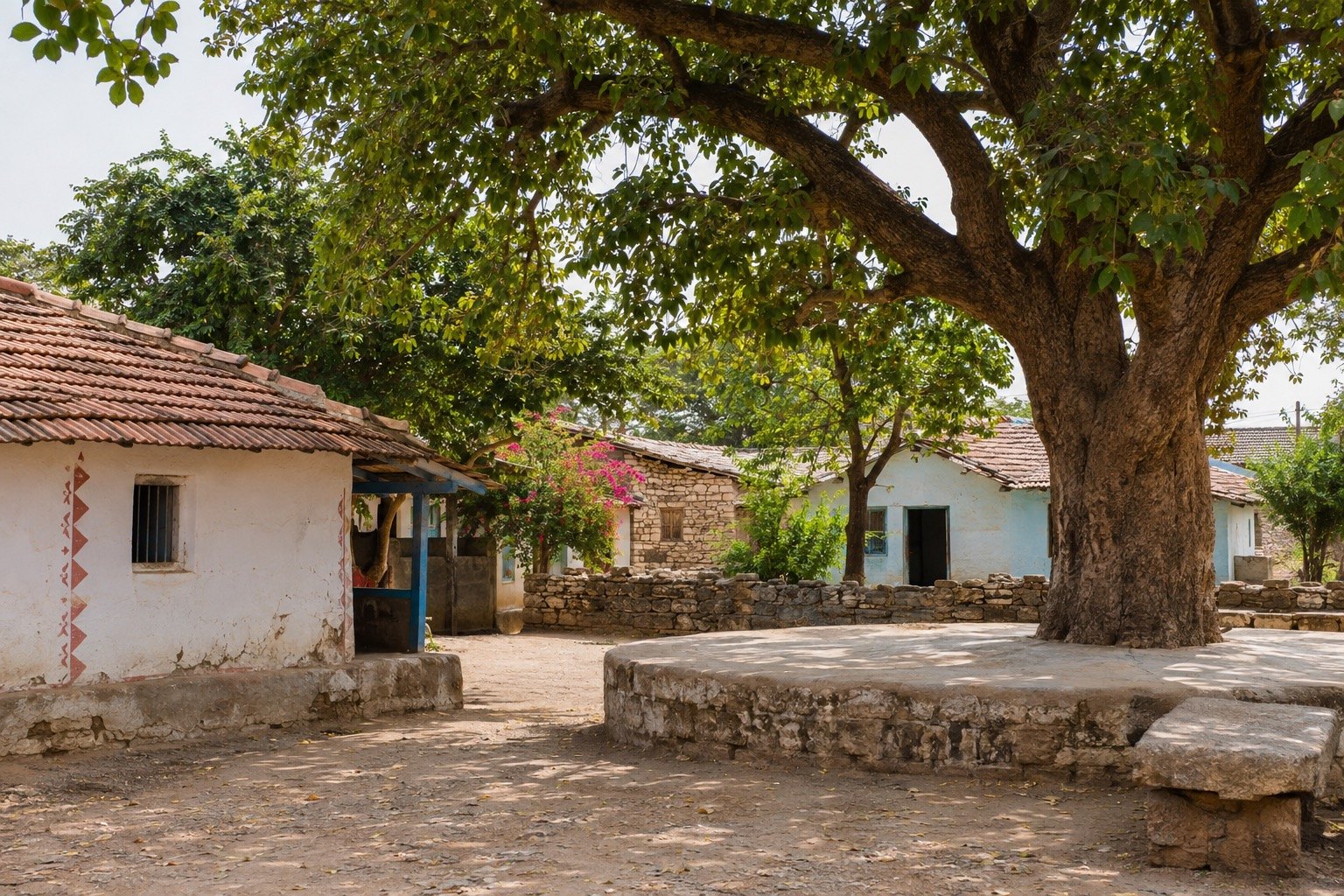
The Siddis are a community of East African descent living in Gujarat, Karnataka, Goa, Maharashtra, Diu and Daman. In Gujarat they are a Scheduled Tribe in six Saurashtra districts and a Particularly Vulnerable Tribal Group (PVTG). Khushbu Darjada's judo silver at the Youth Olympics in Dakar on 2 November 2026 was the first such medal for a Siddi athlete.
Syllabus: Prelims · Economy & Social Development; GS1 · Indian Society & Diversity; GS2 · Welfare of Vulnerable Sections
Why this matters for UPSC
GS1 Indian society and GS2 vulnerable sections: the Siddis, Article 342 and the PVTG framework. Prelims can ask the PVTG criteria and State lists; Mains, why tribal status stops at district lines.
In short
The Siddis are an Indian community of East African descent, notified as a Scheduled Tribe under Article 342 and, in Gujarat, listed as a Particularly Vulnerable Tribal Group (PVTG).
Siddi welfare turns on legal status: tribal benefits should follow the community, not district lines, and PM-JANMAN must reach every PVTG habitation.
Why it matters
A Siddi teenager in Talala and a cousin in Bharuch may share ancestry, faith and the dhamal, yet the law sorts them apart. The first can get a Scheduled Tribe certificate and, with it, the benefits meant for Scheduled Tribes in the State; the second is placed in a backward-class category instead. Address, not identity, decides the difference. PVTG status adds a further layer, steering housing, water, road and health programmes to the villages where such groups live. For a small community spread across States, each label shapes what reaches a household. The wider question is how lists drawn district by district in the 1950s keep pace with where tribal people live today.
Prelims pointers
- PVTGs are identified on four criteria: a pre-agricultural level of technology, a low level of literacy, economic backwardness, and a declining or stagnant population.
- The Ministry of Tribal Affairs counts 75 PVTGs in 18 States and the Andaman and Nicobar Islands; Odisha's list, with 13 groups, is the longest.
- The Andaman and Nicobar Islands, the one Union Territory with PVTGs, has five: the Great Andamanese, Jarawa, Onge, Sentinelese and Shom Pen.
- Karnataka's two PVTGs are the Jenu Kuruba and the Koraga; the Koraga also appear on Kerala's PVTG list.
- PM-JANMAN, launched in FY 2023-24 for 75 PVTG communities, works through 11 interventions implemented by 9 line ministries.
- The original dargah of Baba Gor, where an Urs is held every year, stands at Ratanpur in Jhagadia taluka of Bharuch district.
- Gir National Park, near the Siddi villages of Talala taluka, is with some other parts of Gujarat the only natural home of the Asiatic lion.
Practise a UPSC-style question
With reference to the criteria for identifying Particularly Vulnerable Tribal Groups (PVTGs), consider the following statements:
1. A rising population is one of the four criteria for identifying a PVTG.
2. A pre-agricultural level of technology is one of the identifying criteria.
3. A low level of literacy is one of the identifying criteria.
Which of the statements given above is/are correct?
- (a) 1 and 2 only
- (b) 2 and 3 only
- (c) 1 and 3 only
- (d) 1, 2 and 3
Show the answer
Answer: (b) 2 and 3 only
Answer: (b) 2 and 3 only. The four criteria include pre-agricultural technology and low literacy, but not a rising population.
Statement 1: incorrect. The criterion is a declining or stagnant population, per the Ministry of Tribal Affairs (PIB, July 2019), not a rising one.
Statement 2: correct. A pre-agricultural level of technology is the first of the four PVTG criteria.
Statement 3: correct. A low level of literacy is a PVTG criterion, along with economic backwardness.
Eliminate: Statement 1 reverses the population test, which looks for a declining or stagnant population. Out: (a), (c), (d).
Trap: Reversed direction. The population test is turned around: a group is marked vulnerable when its numbers fall or stand still, not when they grow.
Remember: PVTG criteria: pre-agricultural technology, low literacy, economic backwardness, declining or stagnant population.
More Explainers
- CDRI: India's coalition for disaster-resilient infrastructure Environment
- Pichwai painting of Nathdwara, Rajasthan National
- Kerch Strait: the sea link between the Black Sea and Azov World & IR
- Wind energy in India: potential, offshore wind and the policy push Economy
- Pallikaranai marsh: a Chennai Ramsar site and its zone of influence Environment
- Andaman cobra: India's only island cobra, Endangered and endemic Environment
- International Coconut Community and India's Coconut Development Board World & IR
- Real Estate (Regulation and Development) Act, 2016: how it protects homebuyers Polity
- Open correctional institutions and the Supreme Court's 2026 directions Polity
- ICTP, Trieste: the UNESCO-IAEA centre for physics and mathematics Sci-Tech
- PJ.2.1 and how new Covid variants are classified and tracked Sci-Tech
- Berlin Conference of 1884-85 and the rules for colonising Africa World & IR