
South Sudan and UNMISS: the newest country and India's peacekeepers
Why in news: On 12 November 2026 Amnesty International said UNMISS and South Sudan's authorities failed to act on warnings before the 1 March Abiemnom raid.
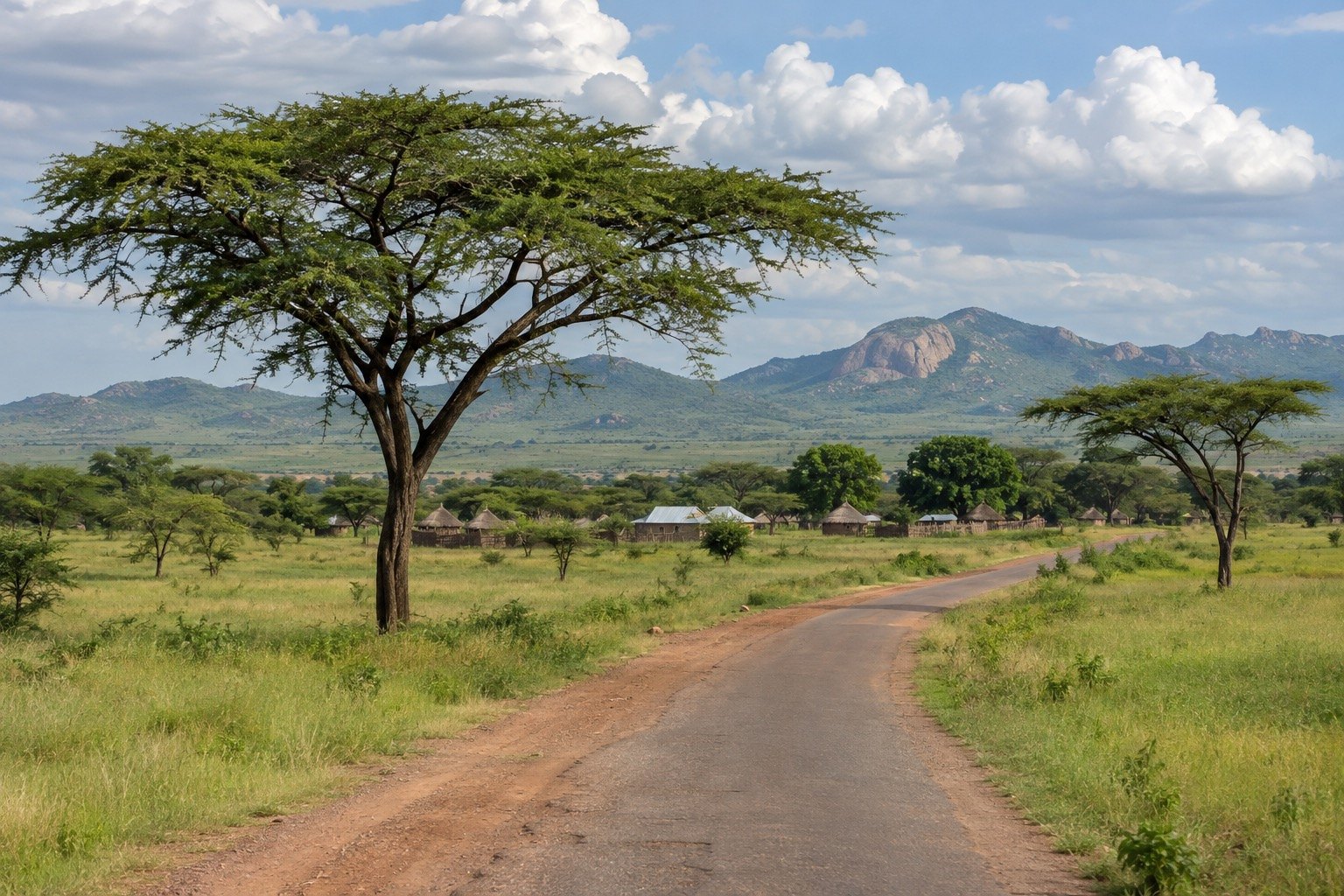
South Sudan, the world's newest country by the UN's count, seceded from Sudan in 2011. The UN Security Council created the UN Mission in South Sudan (UNMISS) that year; since 2014 protecting civilians comes first, and Indian troops serve in it. Amnesty International said on 12 November 2026 that the mission failed to act on warnings before a March massacre.
Syllabus: GS1 · Resources & Industry Location; GS2 · Foreign Policies & the Diaspora; GS2 · International Institutions
Why this matters for UPSC
GS2 international institutions: UN peacekeeping and India's role in Africa. Prelims can ask South Sudan's origins and the UNMISS mandate; Mains, peacekeeping's limits.
In short
South Sudan, which seceded from Sudan in 2011, hosts the UN Mission in South Sudan (UNMISS), a Security Council mission whose core task is protecting civilians amid recurring conflict.
UNMISS will be judged on acting early with fewer troops; India, with its large contingent, should press for mandates matched by resources.
Why it matters
A family fleeing an armed raid in a remote South Sudanese county often has one place to run: the nearest UN base. When warnings are missed or a base holds only a few dozen soldiers, that refuge can fail, and people die in their homes. Fewer troops and tighter budgets mean the mission must choose which villages it can reach, so some are left exposed. For India the stakes are personal too: Indian soldiers serve in the mission, and some have died in it. The case tests whether UN peacekeeping can still protect civilians when its mandate is strong but its means keep shrinking.
Prelims pointers
- South Sudan was admitted as a UN Member State by the General Assembly on 14 July 2011.
- The south of Sudan was part of Anglo-Egyptian Sudan, under joint British-Egyptian rule, from 1899.
- The CPA was signed in Nairobi; the 2018 Revitalized Agreement was signed in Addis Ababa, with IGAD leading the peace process.
- UNMISS has its headquarters at Juba; Indian peacekeepers are deployed in Juba, Jonglei and Upper Nile.
- Look-alike: UNMISS covers South Sudan, while UNISFA, also set up in 2011, guards Abyei, an oil-rich area contested by Sudan and South Sudan.
- Under the Status of Forces Agreement, UNMISS needs no prior authorisation from the host government for its mandated tasks.
- ONGC Videsh Ltd has invested about US$2.5 billion in hydrocarbons across Sudan and South Sudan since 2003, per the MEA.
Practise a UPSC-style question
With reference to the creation of South Sudan, consider the following statements:
1. The Comprehensive Peace Agreement of 2005 was signed between the Government of Sudan and the African Union.
2. The Comprehensive Peace Agreement provided for a referendum on the south's independence after six years.
3. South Sudan separated from Sudan following an internationally monitored referendum on independence.
Which of the statements given above is/are correct?
- (a) 1 and 2 only
- (b) 2 and 3 only
- (c) 1 and 3 only
- (d) 1, 2 and 3
Show the answer
Answer: (b) 2 and 3 only
Answer: (b) 2 and 3 only. The 2005 accord was a deal between Khartoum and the southern movement, not the African Union.
Statement 1: incorrect. The 2005 Comprehensive Peace Agreement was signed in Nairobi by the Government of Sudan and the Sudan People's Liberation Movement (SPLM), per the MEA.
Statement 2: correct. The agreement gave the south autonomy and promised a referendum on independence in six years' time.
Statement 3: correct. The UN records that South Sudan seceded on 9 July 2011 after an internationally monitored referendum in January 2011.
Eliminate: statement 1 names the wrong party to the agreement. Out: (a), (c), (d).
Trap: Swapped attribution. The African Union is active in South Sudan's peace process today, so it sounds like a plausible signatory of the 2005 accord.
Remember: CPA 2005, Sudan and the SPLM, signed in Nairobi; referendum January 2011; independence 9 July 2011.
More Explainers
- CDRI: India's coalition for disaster-resilient infrastructure Environment
- Pichwai painting of Nathdwara, Rajasthan National
- Kerch Strait: the sea link between the Black Sea and Azov World & IR
- Wind energy in India: potential, offshore wind and the policy push Economy
- Pallikaranai marsh: a Chennai Ramsar site and its zone of influence Environment
- Andaman cobra: India's only island cobra, Endangered and endemic Environment
- International Coconut Community and India's Coconut Development Board World & IR
- Real Estate (Regulation and Development) Act, 2016: how it protects homebuyers Polity
- Open correctional institutions and the Supreme Court's 2026 directions Polity
- ICTP, Trieste: the UNESCO-IAEA centre for physics and mathematics Sci-Tech
- PJ.2.1 and how new Covid variants are classified and tracked Sci-Tech
- Berlin Conference of 1884-85 and the rules for colonising Africa World & IR