
Eklavya Model Residential Schools: the Centre's residential schools for Scheduled Tribe students
Why in news: On 12 November 2026, the President met meritorious EMRS students at Rashtrapati Bhavan during the Ministry of Tribal Affairs' Janjatiya Gaurav Pakhwada.
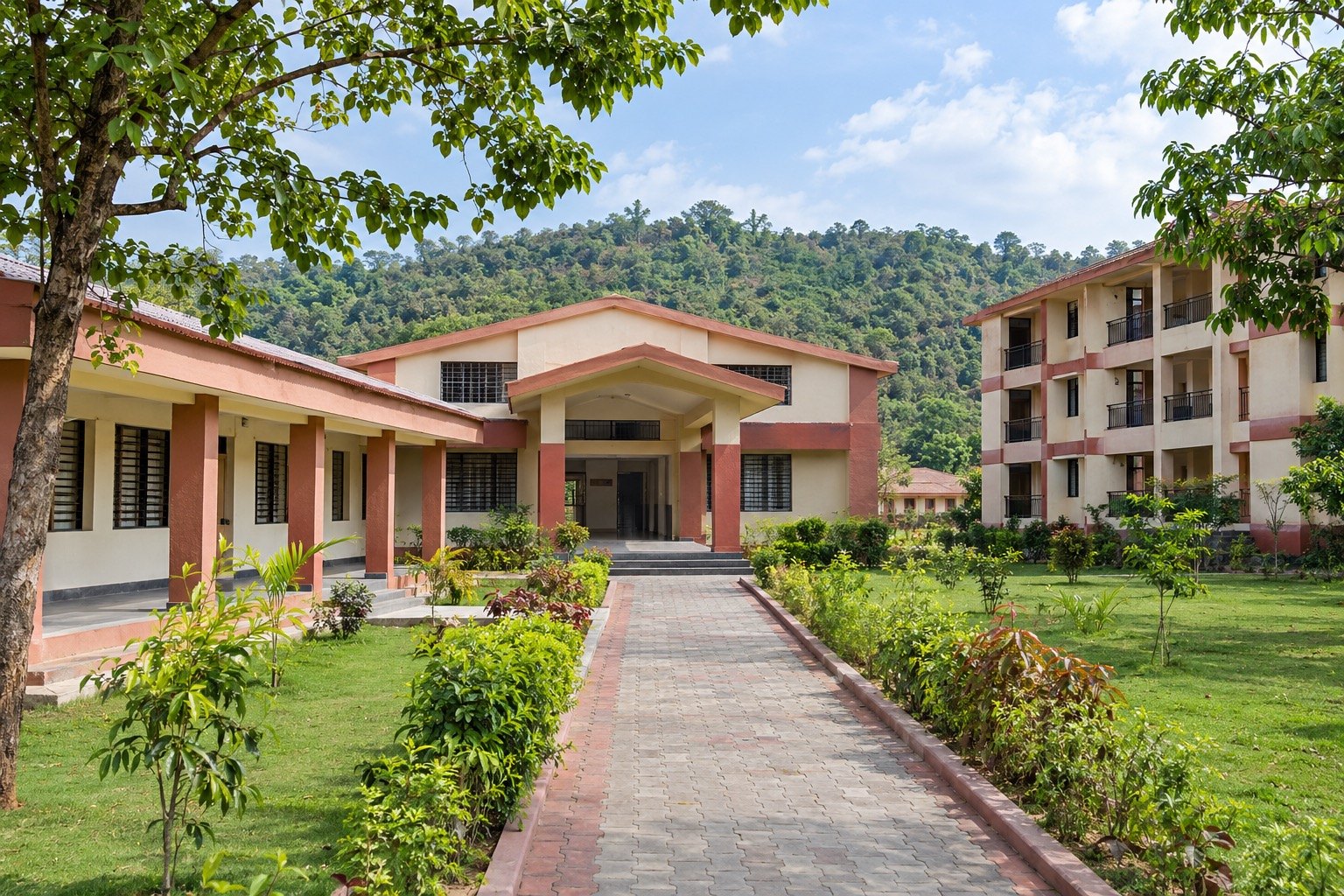
Eklavya Model Residential Schools (EMRS) are residential schools for Scheduled Tribe (ST) children under a Central Sector Scheme of the Ministry of Tribal Affairs. Each school has 480 seats from Class VI to XII, and the Ministry's target is 728 schools. On 12 November 2026, the President met meritorious EMRS students at Rashtrapati Bhavan.
Syllabus: Prelims · Economy & Social Development; GS2 · Welfare of Vulnerable Sections; GS2 · Health, Education & Human Resources
Why this matters for UPSC
GS2 welfare schemes and tribal education: EMRS, NESTS and Article 275(1). Prelims asks a scheme's ministry, seats and criteria; Mains, its delivery gaps.
In short
Eklavya Model Residential Schools (EMRS) are the Centre's residential schools for Scheduled Tribe children, begun under Article 275(1) grants and now a Central Sector Scheme run through NESTS.
EMRS has a sound design; its test now is opening every sanctioned school and staffing it with regular teachers, so each eligible block gets one.
Why it matters
A tribal child from a remote block can study from Class VI to Class XII in one campus with a hostel, meals, uniforms and books, instead of leaving school or travelling far for it. Girls get as many seats as boys. Coaching for entrance tests such as NEET and JEE, skill labs and sports training open doors that a village school rarely can. The scheme is also a test of whether the State can deliver equal schooling to people it has long left behind. Where a sanctioned school stays unbuilt or runs on guest teachers, the children of that block lose the promise the scheme was made to keep.
Prelims pointers
- Article 275(1) grants are charged on the Consolidated Fund of India; its first proviso funds Centre-approved State schemes for ST welfare or Scheduled Areas administration.
- Each EMRS has a maximum strength of 480 students, Class VI to XII, with equal seats for boys and girls.
- EMRS reserve 20% of seats for ST students who excel in sports; non-ST students may fill up to 10% of seats.
- EMRS follow the Right to Education Act, 2009 and norms of CBSE and the Navodaya Vidyalaya Samiti, with facilities at par with Jawahar Navodaya Vidyalayas as far as possible.
- Look-alike: EMRS belong to the Ministry of Tribal Affairs and are managed by NESTS, not by the Navodaya Vidyalaya Samiti, whose norms they borrow.
- Eklavya Model Day Boarding Schools (EMDBS), proposed where the ST share is 90% or more, were merged with EMRS from April 2022.
- Each State's Centre of Excellence for Sports under the scheme serves one individual and one group sport, to Sports Authority of India norms.
Practise a UPSC-style question
With reference to Eklavya Model Residential Schools (EMRS), consider the following statements:
1. EMRS were first set up in 2018-19 under a Central Sector Scheme of the Ministry of Tribal Affairs.
2. Each EMRS has a capacity of 480 students, catering to Classes VI to XII.
3. The schools are managed by an autonomous society under the Ministry of Tribal Affairs.
Which of the statements given above is/are correct?
- (a) 1 and 2 only
- (b) 2 and 3 only
- (c) 1 and 3 only
- (d) 1, 2 and 3
Show the answer
Answer: (b) 2 and 3 only
Answer: (b) 2 and 3 only. The schools date back to 1997-98; 2018-19 only recast them as a Central Sector Scheme.
Statement 1: incorrect. EMRS began in 1997-98 with grants to States under Article 275(1); the Central Sector Scheme came in 2018-19.
Statement 2: correct. Each school takes at most 480 students, from Class VI to XII.
Statement 3: correct. NESTS, an autonomous society created in 2019 under the Ministry of Tribal Affairs, manages the schools.
Eliminate: statement 1 is wrong because the schools predate 2018-19. Out: (a), (c), (d).
Trap: Outdated fact. The year the scheme was revamped is offered as the year the schools began.
Remember: EMRS began in 1997-98; the Central Sector Scheme came in 2018-19.
More Explainers
- CDRI: India's coalition for disaster-resilient infrastructure Environment
- Pichwai painting of Nathdwara, Rajasthan National
- Kerch Strait: the sea link between the Black Sea and Azov World & IR
- Wind energy in India: potential, offshore wind and the policy push Economy
- Pallikaranai marsh: a Chennai Ramsar site and its zone of influence Environment
- Andaman cobra: India's only island cobra, Endangered and endemic Environment
- International Coconut Community and India's Coconut Development Board World & IR
- Real Estate (Regulation and Development) Act, 2016: how it protects homebuyers Polity
- Open correctional institutions and the Supreme Court's 2026 directions Polity
- ICTP, Trieste: the UNESCO-IAEA centre for physics and mathematics Sci-Tech
- PJ.2.1 and how new Covid variants are classified and tracked Sci-Tech
- Berlin Conference of 1884-85 and the rules for colonising Africa World & IR