
APEC: the Asia-Pacific's non-binding forum of 21 economies
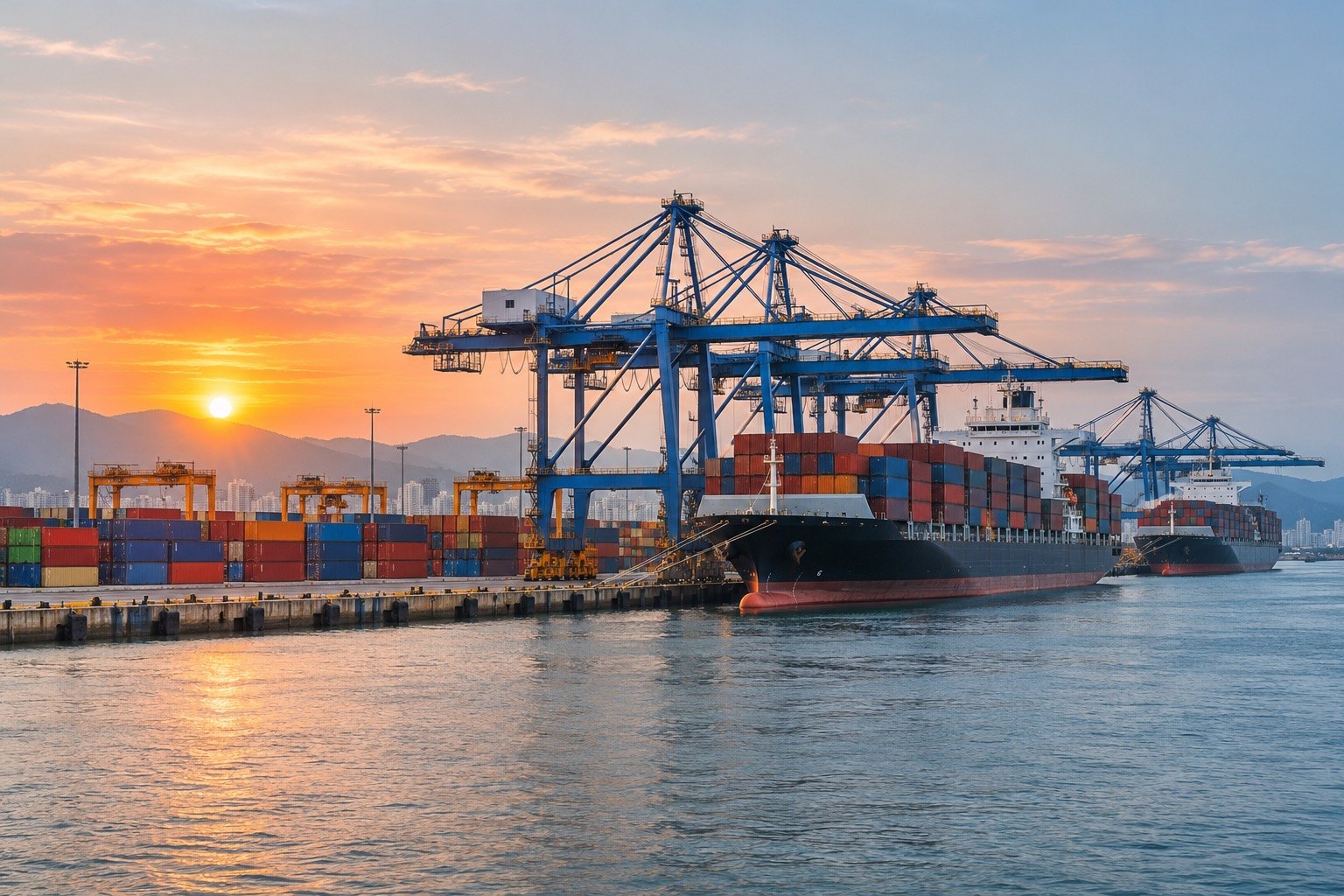
Asia-Pacific Economic Cooperation (APEC) is a forum of 21 member economies that works to lower trade and investment barriers through voluntary, consensus-based decisions that bind no member. Twelve economies founded it in Canberra in 1989, and its Secretariat sits in Singapore. China hosts APEC in 2026, with Shenzhen holding the Economic Leaders' Week in November.
Syllabus: Prelims · Current Affairs & IR; GS2 · Groupings & Agreements; GS2 · International Institutions
Why this matters for UPSC
GS2 international relations: regional groupings, their structure and mandate. Prelims can ask APEC's members, observers, Secretariat and goals; Mains, the strength of its non-binding model.
In short
APEC is a forum of 21 Asia-Pacific economies, founded in 1989, that lowers trade and investment barriers through voluntary, consensus-based and non-binding commitments rather than treaty obligations.
APEC's voluntary model has kept a diverse region cooperating for decades; its credibility now rests on members honouring commitments that no rule can enforce.
Why it matters
An exporter in Chile, Viet Nam or Papua New Guinea gains when the economies it sells to cut tariffs and ease investment rules together, even though no treaty forces them to. APEC shows that neighbours with very different systems can move in step by peer pressure and example. The cost of that freedom is that a member can drift from a target without any penalty. India watches the forum from outside. As a non-member, it has no voice when APEC economies agree shared priorities on trade, digital rules and supply chains, though Indian firms sell into those markets too.
Prelims pointers
- Hong Kong, China and Chinese Taipei are APEC members separate from the People's Republic of China; all three entered the forum in 1991.
- Mexico and Papua New Guinea joined APEC in 1993 and Chile in 1994; the United States, Japan, Canada and Australia are among the 12 founders.
- APEC's three official observers are the ASEAN Secretariat, the Pacific Economic Cooperation Council (PECC) and the Pacific Islands Forum (PIF) Secretariat; none is a member economy.
- ABAC advises APEC's leaders on business priorities, while PECC, an observer, is a network of government, business and academic figures who study Asia-Pacific policy in a private capacity.
- The yearly host economy chairs the Economic Leaders' Meeting, chosen ministerial meetings, the Senior Officials' Meeting and ABAC.
- The Putrajaya Vision 2040 is pursued through three economic drivers: innovation and digitalisation; trade and investment; and growth that is strong, balanced, secure, sustainable and inclusive.
- Under the Bogor Goals, industrialised economies were to reach free and open trade and investment by 2010, developing economies by 2020.
Practise a UPSC-style question
With reference to the membership of Asia-Pacific Economic Cooperation (APEC), consider the following statements:
1. India is one of the 21 member economies of APEC.
2. Hong Kong, China and Chinese Taipei are both APEC member economies.
3. Papua New Guinea is a member of both APEC and the Pacific Islands Forum.
Which of the statements given above is/are correct?
- (a) 1 and 2 only
- (b) 2 and 3 only
- (c) 1 and 3 only
- (d) 1, 2 and 3
Show the answer
Answer: (b) 2 and 3 only
Answer: (b) 2 and 3 only. India is absent from APEC's list; the other two statements hold.
Statement 1: incorrect. India does not appear among the 21 member economies on APEC's official list of members.
Statement 2: correct. Hong Kong, China and Chinese Taipei both entered APEC in 1991, alongside the People's Republic of China.
Statement 3: correct. Papua New Guinea joined APEC in 1993 and is also listed among the members of the Pacific Islands Forum.
Eliminate: statement 1 is the surest, since India is not on APEC's members list. Out: (a), (c), (d).
Trap: Sounds right. India's size and trade ties make its membership feel natural, but it is not one of the 21 economies.
Remember: APEC has 21 economies, including Hong Kong, China and Chinese Taipei, but not India.
More Explainers
- CDRI: India's coalition for disaster-resilient infrastructure Environment
- Pichwai painting of Nathdwara, Rajasthan National
- Kerch Strait: the sea link between the Black Sea and Azov World & IR
- Wind energy in India: potential, offshore wind and the policy push Economy
- Pallikaranai marsh: a Chennai Ramsar site and its zone of influence Environment
- Andaman cobra: India's only island cobra, Endangered and endemic Environment
- International Coconut Community and India's Coconut Development Board World & IR
- Real Estate (Regulation and Development) Act, 2016: how it protects homebuyers Polity
- Open correctional institutions and the Supreme Court's 2026 directions Polity
- ICTP, Trieste: the UNESCO-IAEA centre for physics and mathematics Sci-Tech
- PJ.2.1 and how new Covid variants are classified and tracked Sci-Tech
- Berlin Conference of 1884-85 and the rules for colonising Africa World & IR