
DRI seizes suspected king cobra venom and big-cat skins in Maharashtra
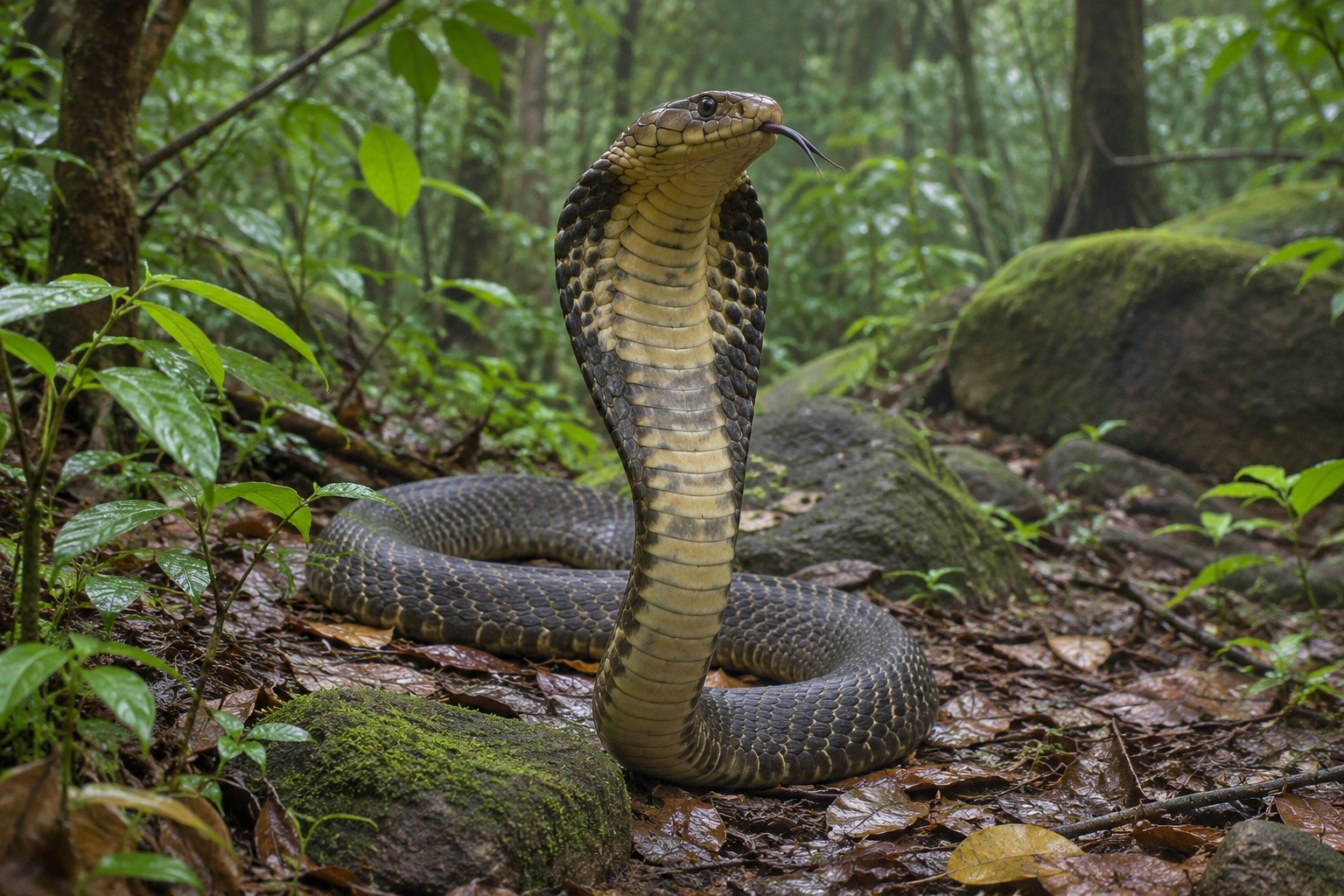
The Directorate of Revenue Intelligence (DRI) broke up two wildlife trafficking networks in Maharashtra's Western Ghats region on 25 and 26 November 2026, holding six people. Near Pune it seized about two litres of suspected king cobra venom. In Navi Mumbai it found suspected tiger, leopard and cheetah skins and an air rifle. All four species sit in Schedule I.
Syllabus: Prelims · Current Affairs & IR; GS3 · Environment & Conservation
Why this matters for UPSC
GS3 environment: wildlife conservation under the Wild Life (Protection) Act, 1972. Prelims can ask about Schedule I and species names; Mains, about enforcement against wildlife trade.
Why it matters
A buyer who pays for a tiger skin or a bottle of snake venom gives a poacher the reason to go back into the forest. Every seizure that ends in a prosecution raises the risk for the whole chain: the hunter, the middleman who arranges the meeting and the buyer. These cases also show that the trade now finds customers through social media, so a sale can be arranged far from where an animal was killed. The bigger question is whether strict laws on paper turn into convictions, which depends on agencies sharing information and forest officers building cases that hold in court.
Prelims pointers
- Under the Wild Life (Protection) Act, 1972, no person may hunt a Schedule I animal, except as the Act itself allows.
- A wild animal hunted or kept against the Act, with its trophy, article or meat, becomes the property of the State Government.
- If the animal is hunted in a sanctuary or National Park declared by the Central Government, it becomes Central Government property instead.
- A vehicle, vessel, weapon, trap or tool used for an offence and seized under the Act also becomes Government property.
- Anyone who comes to hold such Government property must report it within 48 hours to the nearest police station or an authorised officer.
- Keeping, gifting, selling or damaging such property needs the prior written permission of the Chief Wild Life Warden or an authorised officer.
- Tiger (Panthera tigris) and leopard (Panthera pardus) share the genus Panthera; the cheetah is Acinonyx jubatus, and the king cobra Ophiophagus hannah.
Practise a UPSC-style question
With reference to Schedule I of the Wild Life (Protection) Act, 1972, consider the following statements:
1. The Act bars the hunting of Schedule I animals but allows their live capture for sale.
2. Animals listed in Schedule I receive the highest degree of legal protection under the Act.
3. Trade in the derivatives and trophies of Schedule I animals is prohibited under the Act.
Which of the statements given above is/are correct?
- (a) 1 and 2 only
- (b) 2 and 3 only
- (c) 1 and 3 only
- (d) 1, 2 and 3
Show the answer
Answer: (b) 2 and 3 only
Answer: (b) 2 and 3 only. Schedule I gives top protection and bans trade, and capture is barred too.
Statement 1: incorrect. The Wild Life (Protection) Act, 1972 bars both hunting and capture of Schedule I animals, so live capture for sale is not allowed.
Statement 2: correct. Schedule I animals, such as the tiger and the king cobra, get the strongest protection the Act gives.
Statement 3: correct. Any trade or dealing in Schedule I animals, their derivatives or their trophies is prohibited.
Eliminate: statement 1 is wrong, so every option that holds it goes. Out: (a), (c), (d).
Trap: Half-true statement. The hunting ban in statement 1 is right, but the capture clause added to it is wrong.
Remember: Schedule I bars hunting, capture, unauthorised possession and trade alike.
More from the 29 November 2026 edition
- Jute Commissioner caps raw jute stocks under 2016 Control Order Economy
- MoRTH proposes stricter tender conditions for EPC highway contracts Economy
- SCO's first Civilisational Dialogue Forum adopts the Indraprastha Communique World & IR
- Maharashtra withdraws Tiger Conservation Plans of four tiger reserves Environment
- WHO measles report: India to miss 2026 measles-rubella elimination target National
- Education Ministry accepts Sahasrabudhe committee plan to prevent campus suicides National
- TRAI rewrites Reference Interconnect Offer rules with new market-power test Economy
- Road ministry decides five-times-fee penalty for masked plates at MLFF tolls Economy
- MHA amends Citizenship Rules, 2009: citizenship certificates go digital Polity
- ITU Plenipotentiary Conference accepts India as host of PP-30 in 2030 World & IR