
MoRTH proposes stricter tender conditions for EPC highway contracts
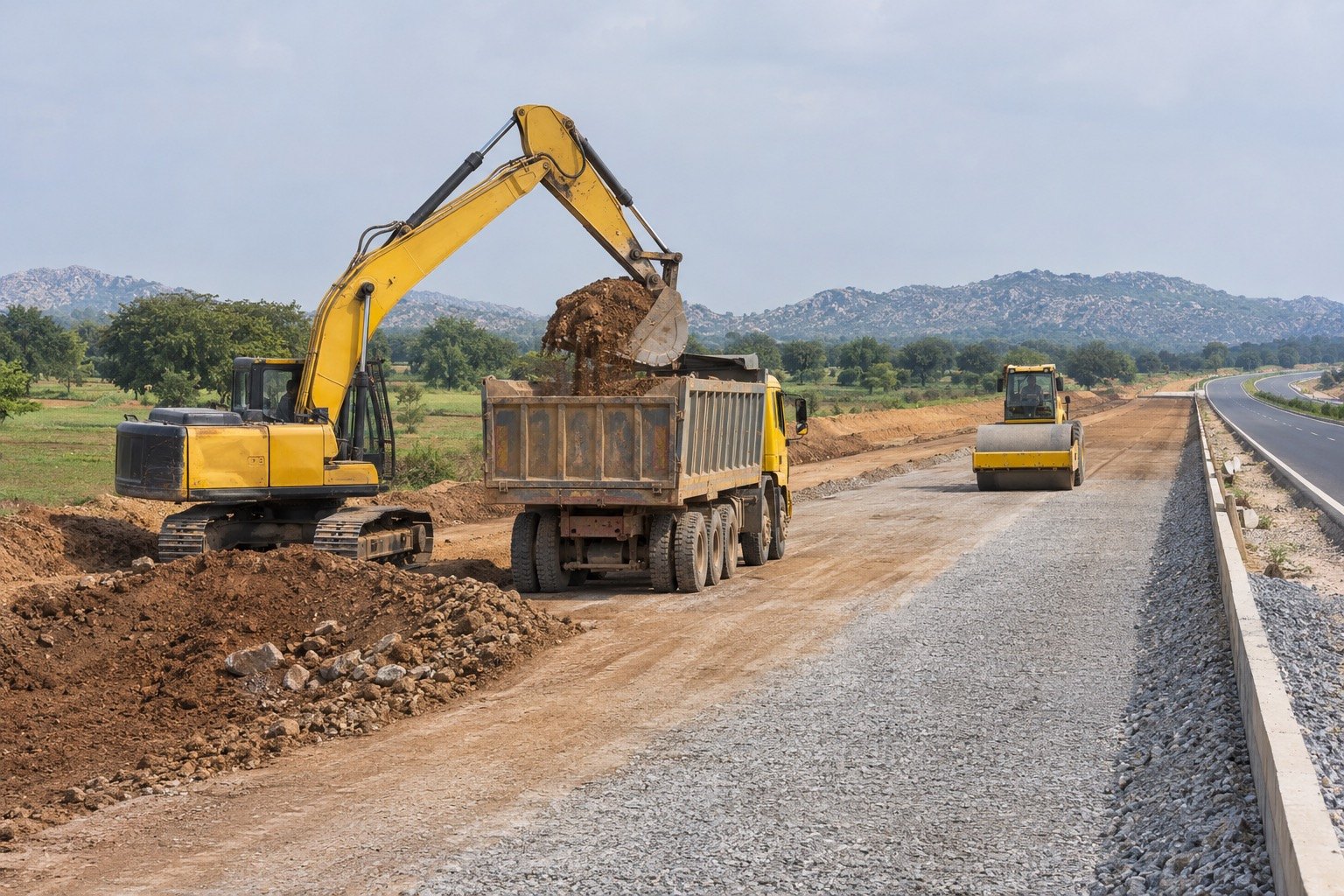
The Ministry of Road Transport and Highways has proposed tighter tender conditions for its EPC highway contracts. A bidder's capacity would rest on five years of work and delays, not one good year. Performance security would be 3% of the bid for well-rated firms and 5% for poor ones. Joint ventures could have at most two members, down from three.
Syllabus: GS3 · Infrastructure; GS3 · Investment Models; GS2 · Governance & e-Governance
Why this matters for UPSC
GS3 infrastructure and investment models: EPC, HAM and BOT in highway building. Prelims can ask who bears which risk in each model; Mains, how procurement rules curb delays.
Why it matters
A commuter stuck for years beside a half-built flyover pays for weak contracting in lost time and fuel. When a firm wins a road by quoting far below the real cost, it often runs out of cash midway and the work stops. Judging firms on their whole record, and asking poor performers to put more money at stake, aims to keep such firms away from big works. Fewer partners in a joint venture make it clearer who answers for a failure. Closing the route of asking the next bidder to match the lowest price may mean more re-tendering and some delay, but it keeps the award process cleaner.
Prelims pointers
- Under the Item Rate model, the employer supplies the design and estimates, pays for quantities executed and bears the risk of quantity changes.
- In EPC, the contract price can be adjusted for cost variation and for changes in scope that the employer orders.
- Under BOT (Annuity), the concessionaire receives annuity payments during operation, while tolling rights rest with the employer.
- HAM and BOT (Toll) differ on toll: a BOT (Toll) concessionaire keeps the toll, while under HAM tolling rights stay with the employer.
- Under HAM, the private partner bears construction and maintenance risk and only part of the financing risk.
- A 2014 CCEA decision delegated the choice of delivery mode for highway projects to MoRTH.
Practise a UPSC-style question
With reference to the Hybrid Annuity Model (HAM) for national highways, consider the following statements:
1. The private developer collects and retains the toll revenue during the operation period.
2. The developer's share of the project cost is repaid with interest through annuities during operation.
Which of the statements given above is/are correct?
- (a) 1 only
- (b) 2 only
- (c) Both 1 and 2
- (d) Neither 1 nor 2
Show the answer
Answer: (b) 2 only
Answer: (b) 2 only. Under HAM the developer is repaid in annuities, while the toll stays with the employer.
Statement 1: incorrect. Under HAM, tolling rights during operation vest with the employer once commercial operation is declared (PIB, 2020).
Statement 2: correct. The developer arranges 60% of the cost and gets it back with interest and maintenance payments as annuities.
Eliminate: statement 1 is wrong, so (a) and (c) go. Out: (a), (c).
Eliminate: statement 2 is right, so (d) goes. Out: (d).
Trap: Look-alike names. A student who mixes up HAM with BOT (Toll), where the concessionaire keeps the toll, will mark statement 1 correct.
Remember: HAM pays the developer annuities; the toll goes to the employer.
More from the 29 November 2026 edition
- Jute Commissioner caps raw jute stocks under 2016 Control Order Economy
- DRI seizes suspected king cobra venom and big-cat skins in Maharashtra Environment
- SCO's first Civilisational Dialogue Forum adopts the Indraprastha Communique World & IR
- Maharashtra withdraws Tiger Conservation Plans of four tiger reserves Environment
- WHO measles report: India to miss 2026 measles-rubella elimination target National
- Education Ministry accepts Sahasrabudhe committee plan to prevent campus suicides National
- TRAI rewrites Reference Interconnect Offer rules with new market-power test Economy
- Road ministry decides five-times-fee penalty for masked plates at MLFF tolls Economy
- MHA amends Citizenship Rules, 2009: citizenship certificates go digital Polity
- ITU Plenipotentiary Conference accepts India as host of PP-30 in 2030 World & IR