
Jute Commissioner caps raw jute stocks under 2016 Control Order
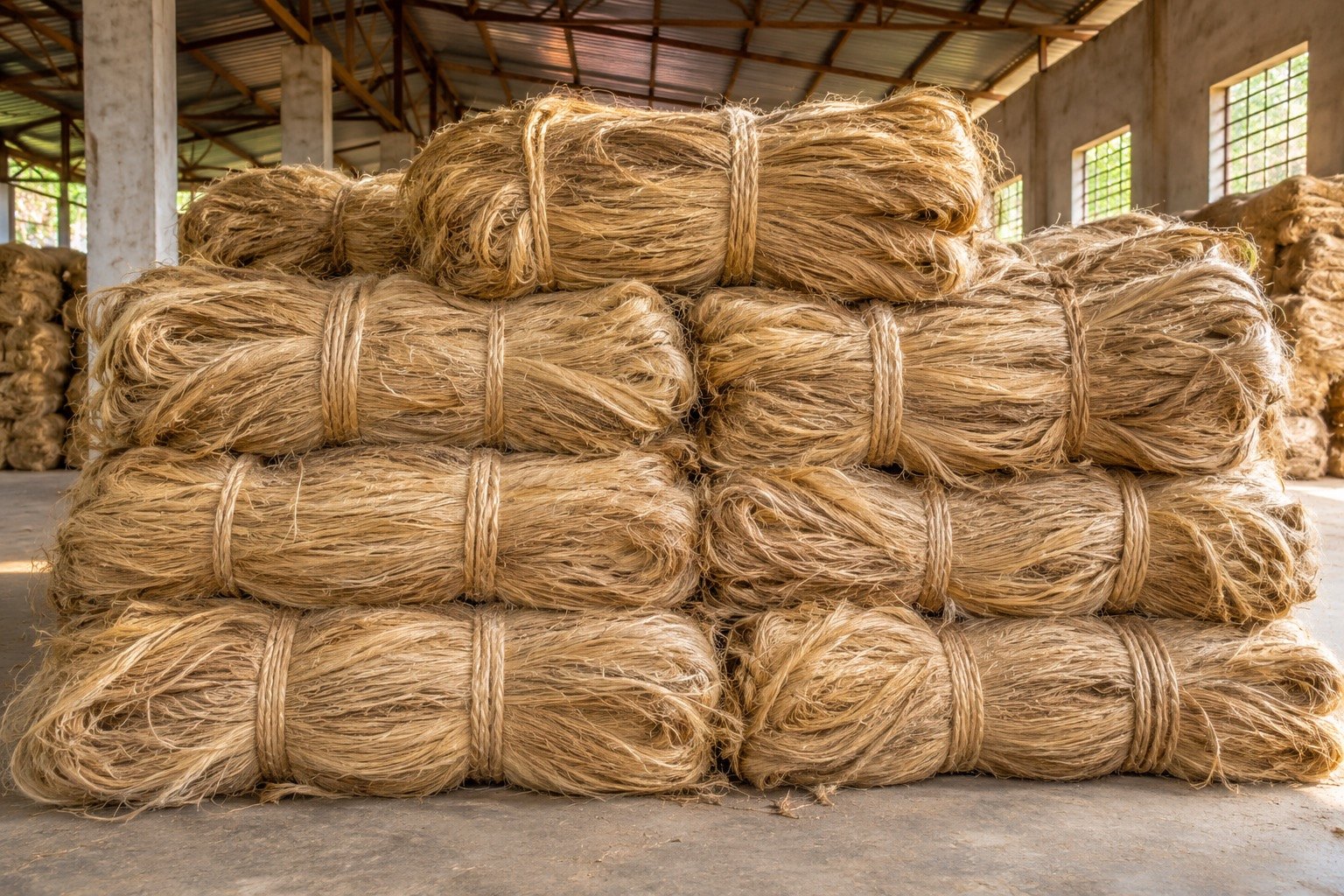
The Jute Commissioner, Ministry of Textiles, has capped the raw jute any person may hold, by an order dated 27 November 2026 under the Jute and Jute Textiles Control Order, 2016. Balers with a press may hold 1,000 quintals, other registered stockists 100, and mills 90 days' consumption. All holders must declare stock every fortnight.
Syllabus: GS3 · Indian Economy & Growth; Prelims · Current Affairs & IR; GS3 · Agriculture & Irrigation
Why this matters for UPSC
GS3 economy: the Essential Commodities Act, 1955, stock limits and the jute sector. Prelims can ask about the Jute Commissioner, JCI and MSP; Mains, curbing speculation.
Why it matters
A trader in a jute-growing district who stored raw jute in the hope of a higher price must now sell the surplus or risk prosecution. Mills that turn the fibre into sacks for grain should find more of it on the open market, and may keep a longer cover of stock than before. Farmers gain if steadier prices keep mills buying through the season. The larger question is how far the state should police private stocks. A cap can calm a speculative market, but it can also weaken the reason to store, and traders carry the loss if the price later falls.
Prelims pointers
- Under the Essential Commodities Act, 1955, an essential commodity is one in the Act's Schedule; the Centre may add or remove items by notification, after consulting the States.
- Section 3 of the ECA lets the Centre, by order, regulate or prohibit the production, supply, distribution and trade of an essential commodity.
- An order under the ECA may license storage, require a holder to sell part of a stock, and allow entry, search and seizure.
- Under the ECA, the district Collector may confiscate a seized commodity held in breach of an order, whether or not a prosecution is brought.
- The Jute Commissioner regulates the jute trade under the 2016 Control Order; the Jute Corporation of India carries out MSP purchases of raw jute.
- The MSP for raw jute and mesta is fixed every year, with grade-wise prices set to discourage lower grades and encourage higher ones.
- The 1987 jute packaging law lets the Centre form a Standing Advisory Committee to advise which commodities, and what share of them, go into jute packaging.
Practise a UPSC-style question
Consider the following statements about the Jute Commissioner:
1. The Jute Commissioner functions under the Ministry of Agriculture and Farmers Welfare.
2. The office of the Jute Commissioner is located in Kolkata.
3. The Jute Commissioner exercises regulatory powers under a Control Order made under the Essential Commodities Act, 1955.
Which of the statements given above is/are correct?
- (a) 1 and 2 only
- (b) 2 and 3 only
- (c) 1 and 3 only
- (d) 1, 2 and 3
Show the answer
Answer: (b) 2 and 3 only
Answer: (b) 2 and 3 only. The office sits in Kolkata under the Ministry of Textiles and regulates jute under an ECA order.
Statement 1: incorrect. The Jute Commissioner is an office of the Ministry of Textiles, not the agriculture ministry, though raw jute is a farm crop.
Statement 2: correct. The Office of the Jute Commissioner is in Kolkata, in the eastern region where the jute industry is concentrated.
Statement 3: correct. The Jute Commissioner uses regulatory powers under the Jute and Jute Textiles Control Order, 2016, issued under the Essential Commodities Act, 1955.
Eliminate: statement 1 names the wrong ministry. Out: (a), (c), (d).
Trap: Swapped attribution. Jute is grown by farmers, so the question pins its regulator on the agriculture ministry instead of the Ministry of Textiles.
Remember: Jute Commissioner: Ministry of Textiles, Kolkata, powers under the 2016 Control Order.
More from the 29 November 2026 edition
- DRI seizes suspected king cobra venom and big-cat skins in Maharashtra Environment
- MoRTH proposes stricter tender conditions for EPC highway contracts Economy
- SCO's first Civilisational Dialogue Forum adopts the Indraprastha Communique World & IR
- Maharashtra withdraws Tiger Conservation Plans of four tiger reserves Environment
- WHO measles report: India to miss 2026 measles-rubella elimination target National
- Education Ministry accepts Sahasrabudhe committee plan to prevent campus suicides National
- TRAI rewrites Reference Interconnect Offer rules with new market-power test Economy
- Road ministry decides five-times-fee penalty for masked plates at MLFF tolls Economy
- MHA amends Citizenship Rules, 2009: citizenship certificates go digital Polity
- ITU Plenipotentiary Conference accepts India as host of PP-30 in 2030 World & IR