
Ladakh bars Leh, Kargil protests till municipal polls end, citing Model Code
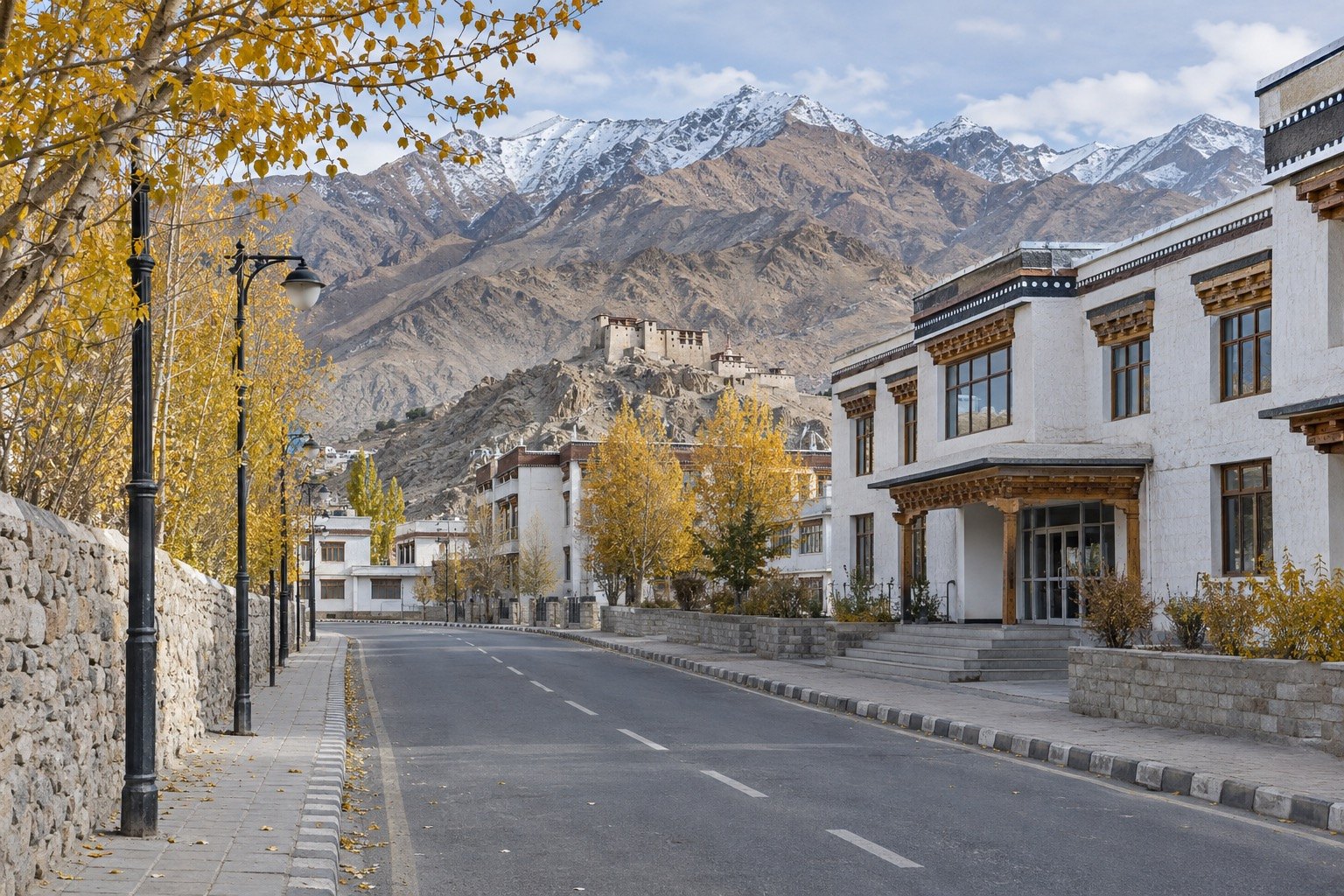
Ladakh's Chief Electoral Officer on 11 November 2026 barred political dharnas, protests, sit-ins, rallies and similar gatherings within the municipal limits of Leh and Kargil until the municipal committee elections there are over. The order cites the Model Code of Conduct, saying such gatherings could intimidate voters and disturb public order. Polling for the two committees is on 21 November.
Syllabus: GS2 · Constitution; GS2 · Federalism & Local Government; Prelims · Polity & Governance
Why this matters for UPSC
GS2 polity: freedom of assembly under Article 19(1)(b) and its limits in Article 19(3). Prelims can ask the grounds for curbs and the Model Code's legal status; Mains, protest curbs during elections.
Why it matters
A resident of Leh or Kargil who wants to join a sit-in over the hill council polls cannot hold it inside the town until the municipal election process is over. Candidates and voters, in turn, are meant to campaign and vote without crowds bearing down on them. The order sits on a familiar fault line in a democracy: poll officials want a calm campaign, while protest is how citizens press demands, including demands about the elections themselves. The curb covers whole towns until the municipal polls end. That raises the question every limit on assembly faces: is the reason strong enough, and is the ban no wider or longer than needed?
Prelims pointers
- Article 19(1)(b) gives citizens the right to assemble peaceably and without arms; Article 19(1)(a) separately guarantees freedom of speech and expression.
- Article 19(3) curbs on assembly: sovereignty and integrity of India, public order. Article 19(2) curbs on speech add security of the State and friendly relations with foreign States.
- Article 243ZA vests superintendence, direction and control of municipal electoral rolls and elections in the State Election Commission referred to in Article 243K; a State Legislature may legislate on them.
- Article 243ZB applies the Constitution's municipal provisions to Union Territories, reading references to the Governor as the Administrator appointed under Article 239.
- The Model Code of Conduct is not a statutory document, and breaching many of its provisions attracts no punitive action, says the Election Commission of India's manual.
- After the Goswami Committee on electoral reforms, bills to make some Model Code breaches punishable under the Representation of the People Act, 1951 were moved but not passed.
- The Model Code applies from the announcement of the poll schedule; the lapsed bills would have moved its start to the date of the election notification.
Practise a UPSC-style question
With reference to the right to assemble under the Constitution of India, consider the following statements:
1. Article 19(1)(b) guarantees citizens the right to assemble peaceably and without arms.
2. Article 19(3) permits reasonable restrictions on this right in the interests of friendly relations with foreign States.
3. Article 19(3) permits reasonable restrictions on this right in the interests of public order.
Which of the statements given above is/are correct?
- (a) 1 and 2 only
- (b) 2 and 3 only
- (c) 1 and 3 only
- (d) 1, 2 and 3
Show the answer
Answer: (c) 1 and 3 only
Answer: (c) 1 and 3 only. Article 19(3) names two grounds for curbing assembly, and friendly relations is not one of them.
Statement 1: correct. Article 19(1)(b) gives citizens the right to assemble peaceably and without arms.
Statement 2: incorrect. Friendly relations with foreign States is a ground in Article 19(2), for speech; Article 19(3) names sovereignty and integrity of India and public order.
Statement 3: correct. Public order is one of the two grounds on which Article 19(3) lets a law reasonably restrict assembly.
Eliminate: Statement 2 lends a speech ground from Article 19(2) to assembly. Out: (a), (b), (d).
Trap: Swapped attribution. A ground that belongs to Article 19(2) on speech is pinned on Article 19(3) on assembly, because both clauses share public order.
Remember: Article 19(3) curbs on assembly: sovereignty and integrity of India, and public order.
More from the 13 November 2026 edition
- MoRTH publishes draft Rent-A-Cab Scheme, 2026 to replace the 1989 Scheme Polity
- WHO Global Tuberculosis Report 2026: first End TB milestone reached late World & IR
- ISRO ground-tests redesigned PSLV third stage after two mission anomalies Sci-Tech
- ZSI and CMFRI describe Indian Bramble Shark, Echinorhinus roinee, as new species Environment
- NITI Aayog and IIM Ahmedabad assess all 14 PLI schemes Economy
- PLI ACC scheme: 22 bids for 10 GWh of grid-storage cell capacity Economy
- DRI seizes 12.87 tonnes of red sanders at Chennai Port Environment
- 22 Indian beaches get Blue Flag for 2026-27, Maharashtra's first three Environment