
Cabinet approves Nutrient Based Subsidy rates for Rabi 2026-27: Rs 62,370 crore
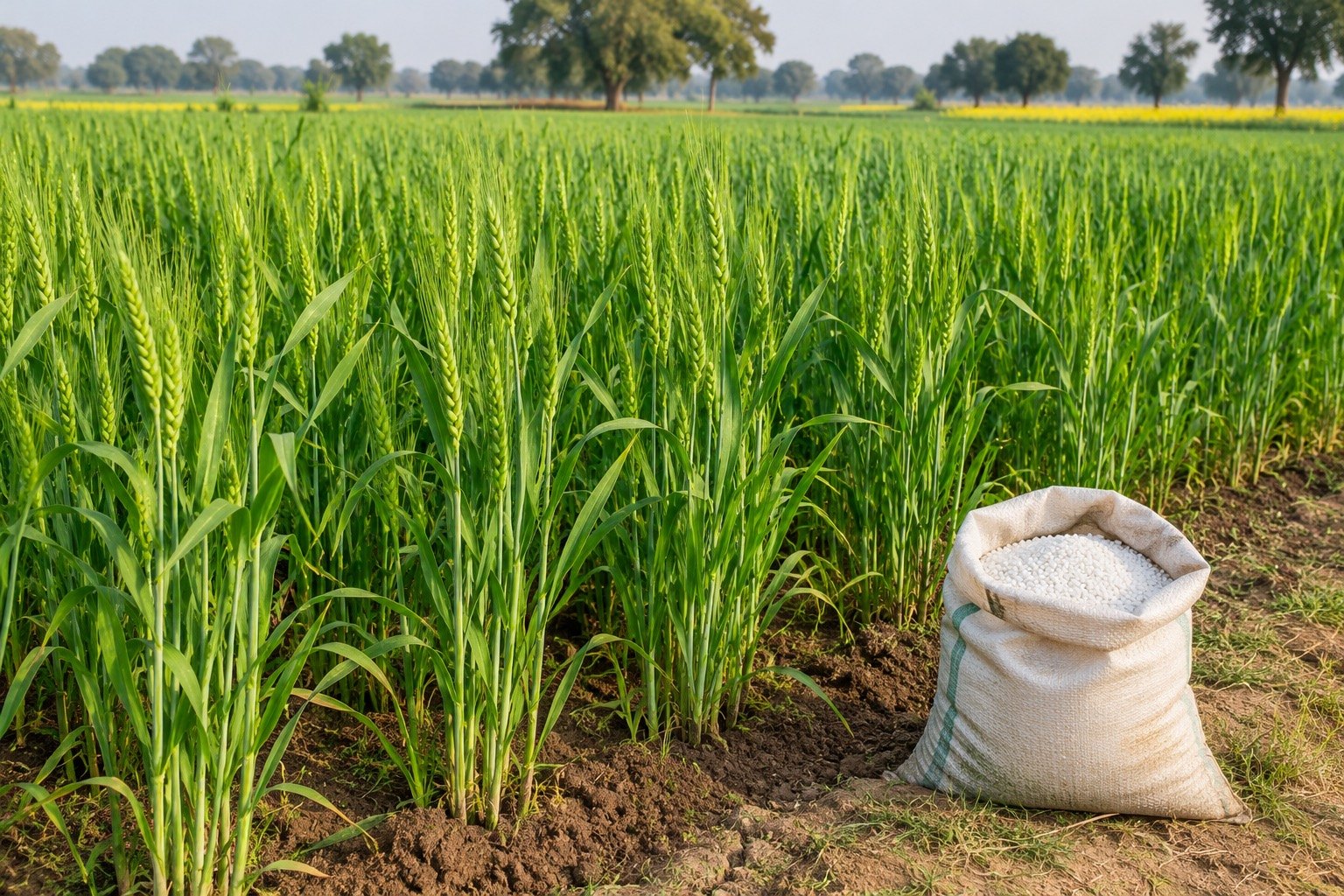
The Union Cabinet on 11 November 2026 approved Nutrient Based Subsidy (NBS) rates on phosphatic and potassic (P&K) fertilisers, including DAP and NPKS grades, for Rabi 2026-27. The rates apply from 1 October 2026 to 31 March 2027. The government puts the tentative outlay at about Rs 62,370.02 crore, up from Rs 37,952.29 crore for Rabi 2025-26.
Syllabus: GS3 · Government Budgeting; GS3 · MSP, Subsidies & Food Security; Prelims · Economy & Social Development
Why this matters for UPSC
GS3 agriculture: direct and indirect farm subsidies. Prelims can ask how NBS pays per nutrient and why urea is outside it.
Why it matters
A farmer buying DAP or an NPK complex for the Rabi sowing pays the price printed on the bag, and that price depends on how much of the company's cost the subsidy covers. When world prices of fertilisers and raw materials climb and the subsidy stays put, companies either raise prices or bring in less stock. A larger outlay lets the Centre carry more of that rise, so the bag stays within reach. There is a soil angle too. If phosphatic and potassic fertilisers turn dear while urea's price is held by the government, farmers lean harder on urea, and the nutrient imbalance the scheme is meant to correct grows. The extra cost lands on the Union budget.
Prelims pointers
- NBS took effect on 1 April 2010; its subsidy on P&K fertilisers is fixed per kg of N, P, K and S and revised annually or bi-annually.
- Urea is not under NBS: it is sold at a statutorily notified MRP regardless of cost, and the Centre pays the gap; P&K prices are set by companies.
- NBS covered 25 P&K grades until Rabi 2023-24; three more, including a Urea-SSP complex (5-15-0-10), were added from Kharif 2024, making 28.
- Under NBS, DAP is graded 18-46-0-0, MOP 0-0-60-0 and ammonium sulphate 20.5-0-0-23; ammonium sulphate was brought under the scheme for Rabi 2025-26.
- A P&K fertiliser fortified or coated with boron or zinc earns an extra subsidy per tonne over the NBS rate.
- Under fertiliser DBT, the full subsidy is released to companies on actual retail sales recorded on PoS devices, with buyers identified through Aadhaar, KCC or voter ID.
Practise a UPSC-style question
With reference to the Nutrient Based Subsidy (NBS) scheme in India, consider the following statements:
1. Urea is covered by the scheme, with its subsidy fixed per kilogram of nitrogen.
2. The subsidy is fixed per kilogram of nitrogen, phosphorus, potassium and sulphur contained in a fertiliser.
3. Companies fix the maximum retail price of phosphatic and potassic fertilisers, subject to government oversight.
Which of the statements given above is/are correct?
- (a) 1 and 2 only
- (b) 2 and 3 only
- (c) 1 and 3 only
- (d) 1, 2 and 3
Show the answer
Answer: (b) 2 and 3 only
Answer: (b) 2 and 3 only. NBS fixes support per nutrient for P&K fertilisers, whose prices companies set; urea is outside it.
Statement 1: incorrect. Urea is sold at a statutorily notified MRP regardless of cost, and the Centre pays producers the gap; it is not under NBS.
Statement 2: correct. Since 1 April 2010, NBS has fixed a subsidy per kg of N, P, K and S contained in each P&K grade.
Statement 3: correct. The P&K sector is decontrolled under NBS: companies set a reasonable MRP, which the Department of Fertilizers checks against cost data.
Eliminate: Statement 1 is the surest call, since urea has a government-notified price, so any code with 1 goes. Out: (a), (c), (d).
Trap: Wrong scope. Statement 1 stretches NBS to urea, the one major fertiliser priced by notification, because both are fertiliser subsidies.
Remember: NBS covers P&K grades with a per-nutrient subsidy; urea has a notified MRP.
More from the 12 November 2026 edition
- Swachh Survekshan 2025-26 awards: 4,751 cities assessed, Swachh Shehar Jodi added National
- MHA trims visa categories to nine; Tourist Visa becomes Visitor Visa National
- First BIMSTEC Health Ministers' Meeting adopts regional public health action plan World & IR
- Finance Ministry makes electric vehicles the default for central staff cars Environment
- Cabinet approves Yuge Yugeen Bharat Museum in North and South Blocks National
- Cabinet extends Stand-Up India and Mudra guarantee fund to 2031 Economy
- DGFT prohibits export of lithium-ion battery black mass Economy
- DGTR opens suo motu anti-dumping probe into aluminium extrusion imports Economy
- Downstream alliance sets 10-day deadline for Dibang dam safeguards Environment
- M. John Harrison wins Booker Prize 2026, its oldest winner at 81 Miscellany
- Centre extends PLI scheme for medical devices to 2035-36, invites applications Economy
- Supreme Court's Central Empowered Committee seeks river sand phase-out, dam desilting Environment