
Two-child election norm has lost relevance, Supreme Court holds
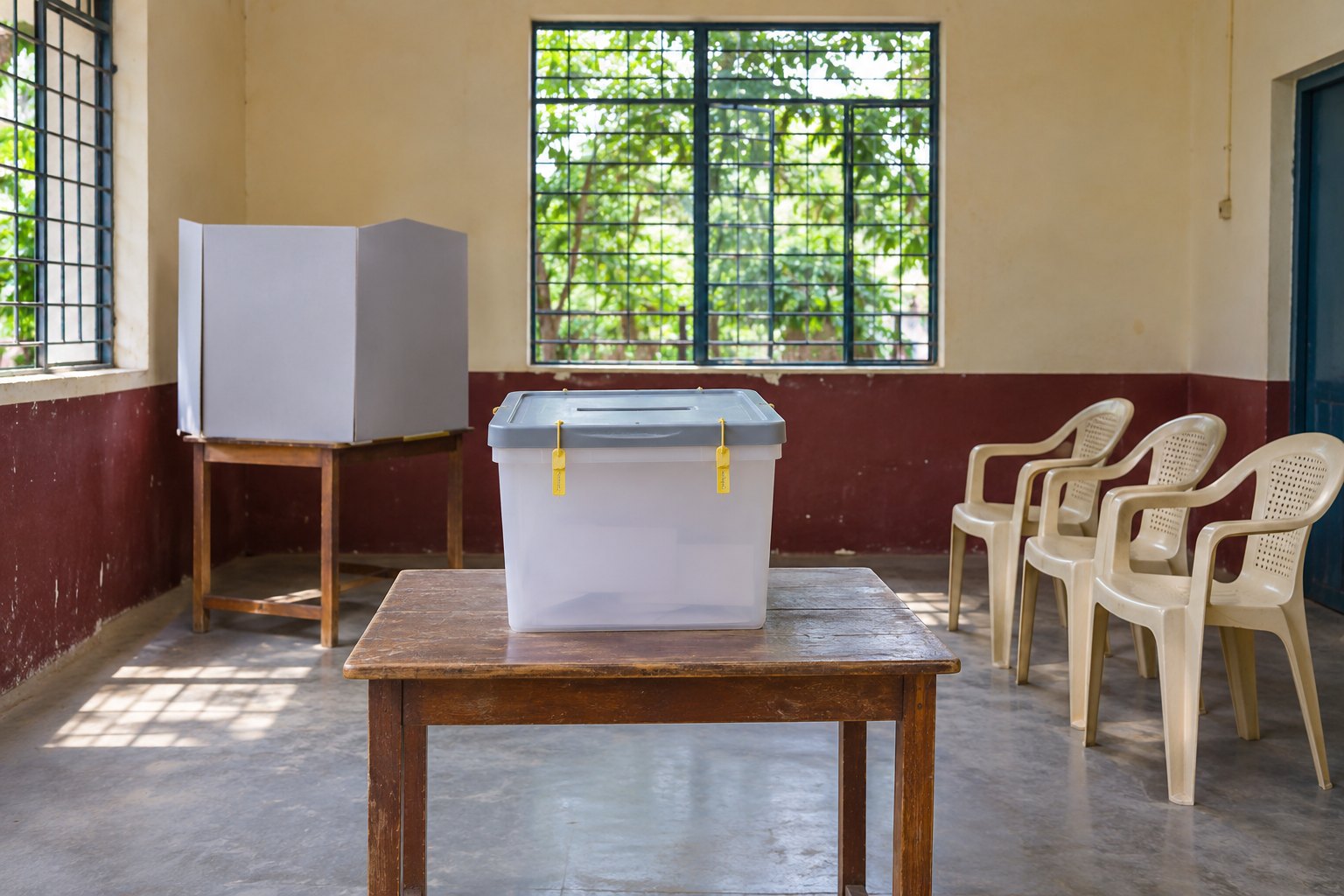
The Supreme Court held on 4 November 2026 that laws making a two-child norm a condition for contesting elections have lost relevance. It noted a drop in India's total fertility rate from 3 to 1.9. A Division Bench headed by Justice P.S. Narasimha referred whether the norm should continue to a larger Bench.
Syllabus: GS2 · Constitution; Prelims · Polity & Governance; Prelims · Economy & Social Development
Why this matters for UPSC
GS2 polity and GS1 population: Article 21, Article 243F and the two-child norm for contesting elections. Prelims can ask about replacement-level fertility and the NFHS; Mains, whether family size should limit political rights.
Why it matters
A citizen with three children who wants to stand for election can be turned away under such a law, however able. The judgment questions that exclusion, but nothing changes on the ground yet: the laws remain on the books until a larger Bench decides. If that Bench agrees with this one, States would have to give up a rule that ties the right to contest to the size of a family. The case also marks a turn in thinking about population. A country having fewer babies than it needs to replace itself will, over time, have fewer young workers and more elderly people to support. Laws meant to curb births can then work against its future needs.
Prelims pointers
- Under Article 243F, a person disqualified by any law for elections to the State Legislature is also disqualified from Panchayat membership.
- By a proviso to Article 243F, no one who has reached 21 can be disqualified from Panchayat membership merely for being under 25.
- Under Article 243F, a dispute over a Panchayat member's disqualification goes to the authority, and follows the manner, that the State Legislature lays down by law.
- Article 21 bars depriving any person of life or personal liberty except according to procedure established by law, not 'due process of law'.
- Replacement-level fertility is a TFR of 2.1 children per woman; NFHS-5 (2019-21) recorded 2.0, down from 2.2 in NFHS-4 (2015-16).
- The NFHS is run by the Ministry of Health and Family Welfare, not the statistics ministry, at intervals of about three years; five rounds were complete by 2022.
Practise a UPSC-style question
With reference to Article 21 of the Constitution of India, consider the following statements:
1. Article 21 protects a person from deprivation of life or personal liberty except by due process of law.
2. Article 21 protects a person from deprivation of life or personal liberty except according to procedure established by law.
Which of the statements given above is/are correct?
- (a) 1 only
- (b) 2 only
- (c) Both 1 and 2
- (d) Neither 1 nor 2
Show the answer
Answer: (b) 2 only
Answer: (b) 2 only. Article 21 uses the phrase "procedure established by law".
Statement 1: incorrect. The text of Article 21 does not use the phrase "due process of law"; it says "procedure established by law".
Statement 2: correct. Article 21 says no person shall be deprived of life or personal liberty except according to procedure established by law.
Eliminate: statement 2 is the exact wording of Article 21, so it is correct. Out: (a), (d).
Eliminate: statement 1 uses a phrase the Article lacks. Out: (c).
Trap: Look-alike names. "Due process of law" and "procedure established by law" sound alike, and the question swaps one for the other.
Remember: Article 21: life and personal liberty, "procedure established by law".
More from the 5 November 2026 edition
- Supreme Court calls additional sales tax reference academic; Kodar ruling stands Polity
- Finance Ministry extends Swachh Bharat Mission (Grameen) Phase-II to March 2028 National
- Cabinet extends Fast Track Special Courts scheme till 2031 National
- Cabinet approves VISTAR scheme to overhaul India's official statistics National
- Cabinet approves pathway for all Agniveers to become regular soldiers Defence
- Cabinet approves Rs 14,500 crore VGF scheme for 92 GWh energy storage Economy
- Cabinet clears Rs 2,814-crore capex scheme for critical mineral processing Economy
- RBI eases FEMA reporting for service exports and imports by individuals Economy
- IRDAI sets four-layer motor insurance cover for private cars, two-wheelers Economy
- Supreme Court: foreign divorce on irretrievable breakdown not valid in India Polity
- Election Commission: SIR-dropped voters filing Form 6 face no Section 31 action Polity
- IndiaAI Mission releases indigenous foundation models EKA-1 and Dhir Sci-Tech