
Supreme Court calls additional sales tax reference academic; Kodar ruling stands
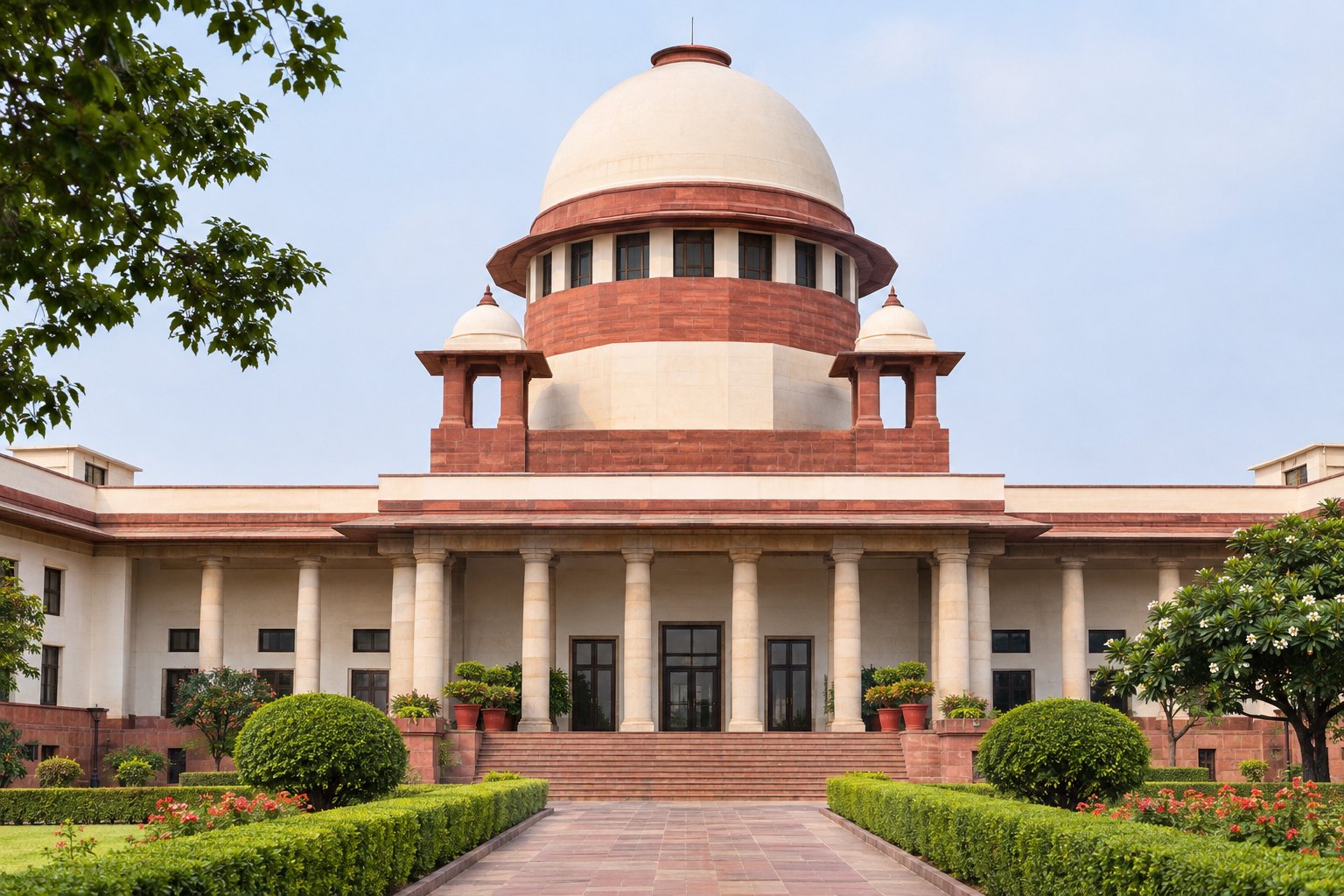
A seven-judge Constitution Bench of the Supreme Court on 4 November 2026 declined to answer a reference on States' power to levy additional sales tax, holding it academic. The question had waited nearly 27 years. The Bench said the 1974 ruling in S. Kodar vs State of Kerala continues to hold the field.
Syllabus: GS2 · Constitution; GS2 · Federalism & Local Government; GS3 · Government Budgeting
Why this matters for UPSC
GS2 polity: the Seventh Schedule, Entry 54 of List II and Article 246A. Prelims can ask which goods States still tax; Mains, States' taxing power after GST.
Why it matters
A trader who paid an extra levy on top of sales tax in the years before GST now has a settled answer. Such a levy counts as a sales tax that a State may impose, not as an income tax that belongs to the Centre. Any old assessment still in dispute will be judged by the 1974 rule, so neither side waits on a fresh view from a larger Bench. The larger issue is federal: how far a State's own sales tax power reaches, a power that GST has narrowed to a few goods. The case also shows how long a constitutional reference can lie pending; by the time seven judges sat, the law they were asked to read had changed.
Prelims pointers
- Entry 54 of List II now covers taxes on the sale of petroleum crude, high speed diesel, petrol, natural gas, aviation turbine fuel and alcoholic liquor for human consumption.
- Entry 54 excludes sales of these goods in the course of inter-State trade or commerce and in the course of international trade or commerce.
- Entry 54 of List II, on taxes on the sale of certain goods, is a State subject; Entry 82 of List I, on taxes on income, belongs to Parliament.
- Article 246A, inserted in 2016, empowers both Parliament and State Legislatures to make GST laws, notwithstanding Articles 246 and 254.
- Under Article 246A, Parliament has exclusive power to make GST laws where the supply takes place in the course of inter-State trade or commerce.
- Article 366(12A) defines GST as any tax on the supply of goods, services or both, except taxes on supply of alcoholic liquor for human consumption.
- The 101st Amendment omitted Entries 52 and 55 of the State List; Entry 53, on taxes on the consumption or sale of electricity, remains.
Practise a UPSC-style question
With reference to Entry 54 of the State List in the Seventh Schedule, as it now stands, consider the following statements:
1. It covers taxes on the sale of natural gas and aviation turbine fuel.
2. It covers taxes on the sale of these goods in the course of inter-State trade or commerce.
Which of the statements given above is/are correct?
- (a) 1 only
- (b) 2 only
- (c) Both 1 and 2
- (d) Neither 1 nor 2
Show the answer
Answer: (a) 1 only
Answer: (a) 1 only. Entry 54 names these goods but leaves out inter-State and international sales.
Statement 1: correct. Since the 101st Amendment Act, 2016, Entry 54 covers sale of petroleum crude, high speed diesel, petrol, natural gas, aviation turbine fuel and alcoholic liquor for human consumption.
Statement 2: incorrect. The entry itself excludes sales in the course of inter-State trade or commerce and of international trade or commerce.
Eliminate: statement 2 contradicts the entry's own exclusion. Out: (b), (c).
Eliminate: statement 1 matches the list of goods in Entry 54. Out: (d).
Trap: Wrong scope. A State power over certain sales is stretched to cover inter-State sales, which the entry keeps out.
Remember: Entry 54 = six goods, intra-State sales only.
More from the 5 November 2026 edition
- Finance Ministry extends Swachh Bharat Mission (Grameen) Phase-II to March 2028 National
- Cabinet extends Fast Track Special Courts scheme till 2031 National
- Cabinet approves VISTAR scheme to overhaul India's official statistics National
- Cabinet approves pathway for all Agniveers to become regular soldiers Defence
- Cabinet approves Rs 14,500 crore VGF scheme for 92 GWh energy storage Economy
- Cabinet clears Rs 2,814-crore capex scheme for critical mineral processing Economy
- Two-child election norm has lost relevance, Supreme Court holds Polity
- RBI eases FEMA reporting for service exports and imports by individuals Economy
- IRDAI sets four-layer motor insurance cover for private cars, two-wheelers Economy
- Supreme Court: foreign divorce on irretrievable breakdown not valid in India Polity
- Election Commission: SIR-dropped voters filing Form 6 face no Section 31 action Polity
- IndiaAI Mission releases indigenous foundation models EKA-1 and Dhir Sci-Tech