
RBI eases FEMA reporting for service exports and imports by individuals
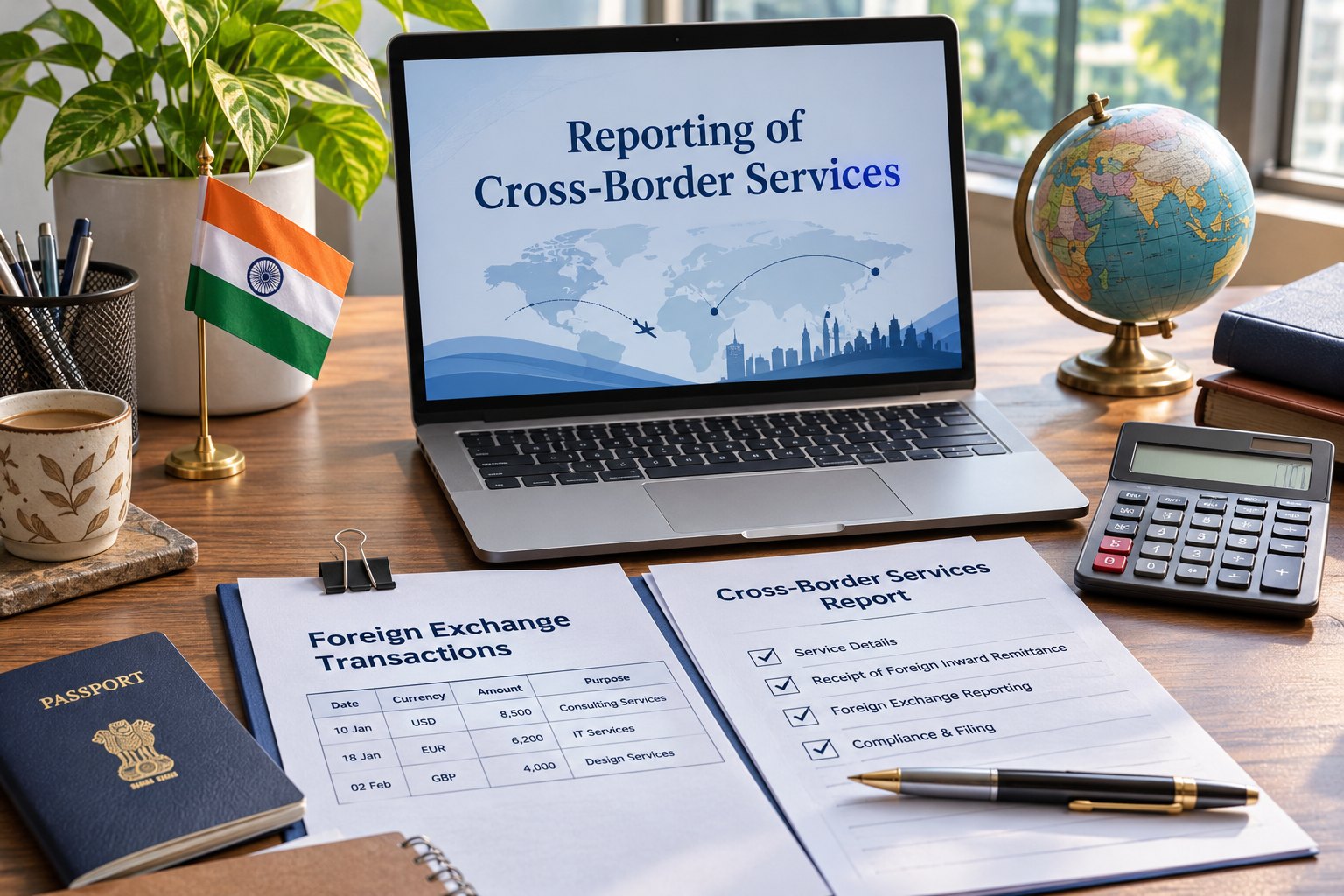
The Reserve Bank of India (RBI) has eased reporting of services trade under the Foreign Exchange Management Act, 1999 (FEMA). The change applies from 1 October 2026. A resident individual exporting services is now deemed to have filed the Export Declaration Form once the Authorised Dealer has the payment details. Individuals importing services leave IDPMS reporting.
Syllabus: GS3 · Indian Economy & Growth; Prelims · Current Affairs & IR; GS3 · Liberalisation & Industry
Why this matters for UPSC
GS3 economy: foreign exchange management and trade in services under FEMA, 1999. Prelims can ask about the EDF, IDPMS and Authorised Dealers; Mains, easing compliance for exporters.
Why it matters
A freelance translator paid by a client abroad no longer has to file a separate export declaration for each job: telling the bank about the incoming payment is enough. For people who sell skills online, that removes a form that was easy to miss and could leave them out of step with the foreign exchange law. Small firms with modest receipts get the same relief, and individuals who pay for foreign software or courses no longer create a filing for their bank. Banks carry less paperwork. The cost is thinner tracking of small cross-border flows, so the regulator now leans on payment records that banks already hold instead of declarations from each trader.
Prelims pointers
- The RBI, not the Union Government, frames India's foreign exchange regulations on the export and import of goods and services, using powers under FEMA, 1999.
- FEMA regulations are notified in the Official Gazette, but a commencement clause can make them apply from an earlier date.
- Look-alike forms: the Export Declaration Form records exports; the Import Data Processing and Monitoring System holds import entries made by Authorised Dealers.
- Foreign payments for exported services reach the exporter through an Authorised Dealer, which credits the exporter's account.
Practise a UPSC-style question
With reference to the reporting of trade in services under India's foreign exchange rules, consider the following statements:
1. The Import Data Processing and Monitoring System (IDPMS) is the system in which details of service imports are entered.
2. Under the RBI's export-import regulations, the Authorised Dealer, and not the importer, enters service-import details in IDPMS.
Which of the statements given above is/are correct?
- (a) 1 only
- (b) 2 only
- (c) Both 1 and 2
- (d) Neither 1 nor 2
Show the answer
Answer: (c) Both 1 and 2
Answer: (c) Both 1 and 2. IDPMS records imports, and the Authorised Dealer makes the entry from details the importer furnishes.
Statement 1: correct. The RBI's export-import regulations require details of import of services to be entered in the Import Data Processing and Monitoring System.
Statement 2: correct. The regulation places the entry on the Authorised Dealer, who works from the details furnished by the importer.
Eliminate: Statement 2 is true, as the RBI text names the Authorised Dealer as the one who enters the details. Out: (a), (d).
Eliminate: Statement 1 is true as well, since IDPMS is where service imports are recorded. Out: (b).
Trap: Swapped attribution. A student may assume the importer files straight into IDPMS; the duty sits with the Authorised Dealer.
Remember: Importer furnishes details; the Authorised Dealer enters them in IDPMS.
More from the 5 November 2026 edition
- Supreme Court calls additional sales tax reference academic; Kodar ruling stands Polity
- Finance Ministry extends Swachh Bharat Mission (Grameen) Phase-II to March 2028 National
- Cabinet extends Fast Track Special Courts scheme till 2031 National
- Cabinet approves VISTAR scheme to overhaul India's official statistics National
- Cabinet approves pathway for all Agniveers to become regular soldiers Defence
- Cabinet approves Rs 14,500 crore VGF scheme for 92 GWh energy storage Economy
- Cabinet clears Rs 2,814-crore capex scheme for critical mineral processing Economy
- Two-child election norm has lost relevance, Supreme Court holds Polity
- IRDAI sets four-layer motor insurance cover for private cars, two-wheelers Economy
- Supreme Court: foreign divorce on irretrievable breakdown not valid in India Polity
- Election Commission: SIR-dropped voters filing Form 6 face no Section 31 action Polity
- IndiaAI Mission releases indigenous foundation models EKA-1 and Dhir Sci-Tech