
Cabinet approves Rs 14,500 crore VGF scheme for 92 GWh energy storage
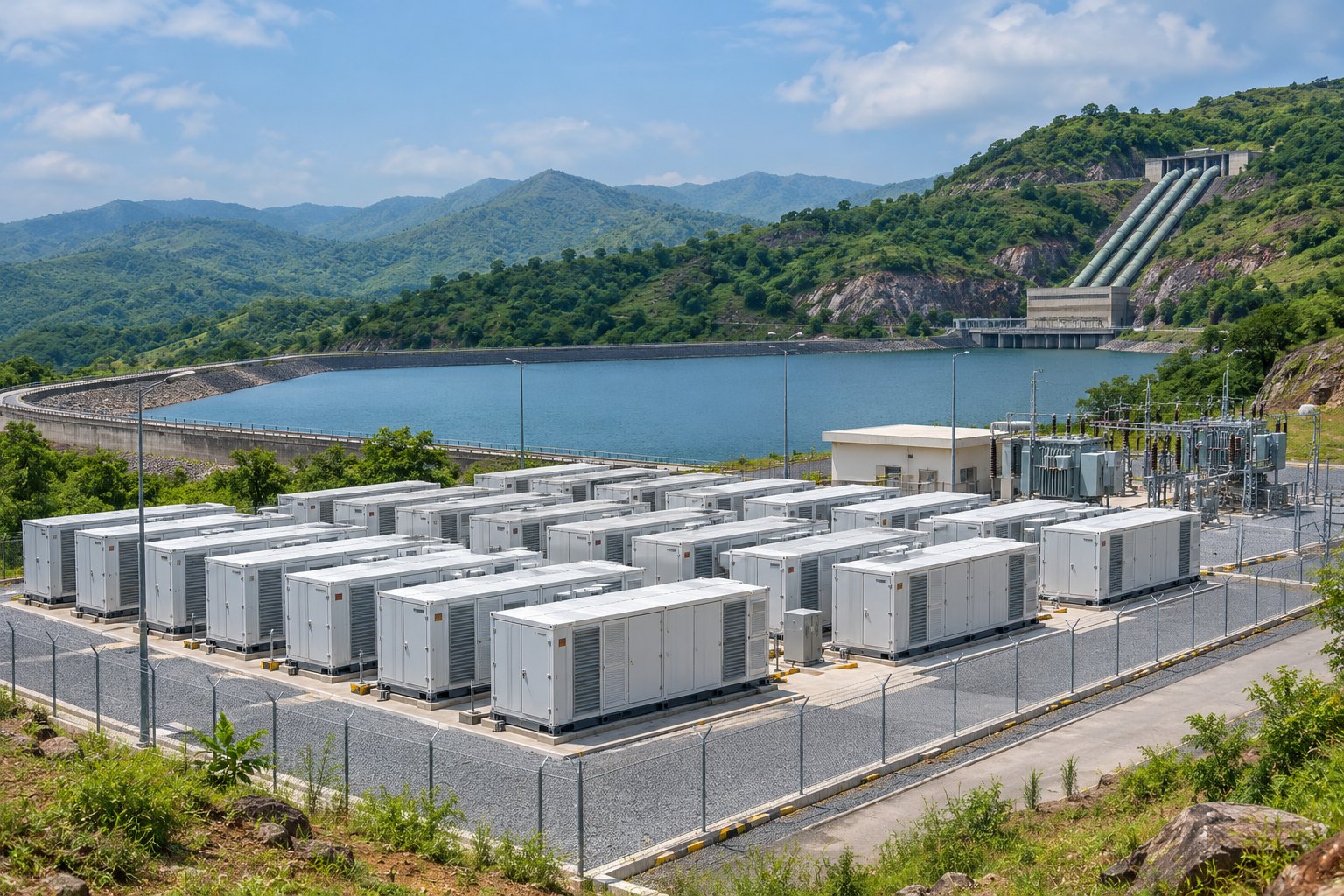
The Union Cabinet on 4 November 2026 approved a Rs 14,500 crore Viability Gap Funding scheme to build 92 GWh of grid-scale energy storage. The scheme runs from 2026-27 to 2030-31. It backs 60 GWh of pumped storage, 30 GWh of batteries and 2 GWh of other technologies. Total investment is estimated at Rs 97,600 crore.
Syllabus: Prelims · Economy & Social Development; GS3 · Infrastructure; GS3 · Investment Models
Why this matters for UPSC
GS3 infrastructure and investment models: grid-scale energy storage and Viability Gap Funding. Prelims can ask the storage technologies and the domestic content rule; Mains, storage in renewable integration.
Why it matters
A family in a city that draws much of its power from solar plants still switches on lights and fans after sunset, when those plants stop generating. That evening demand now has to be met by conventional plants kept ready for the purpose. Storage changes the pattern: cheap daytime solar power can be saved and returned in the evening, so less clean power goes to waste and fewer conventional units must stand by. A grant that lowers the cost of storage helps discoms buy that service at a lower tariff, which in turn keeps consumer bills in check. The domestic content rule also means part of the spending reaches Indian battery makers and their workers.
Prelims pointers
- A pumped storage plant is a net consumer of electricity: pumping and generating both lose energy, so its value lies in shifting power to peak hours.
- Storage is sized in two units: GWh for the energy held and GW for the power delivered at once; a 1 GW, four-hour battery holds 4 GWh.
- The 2023 VGF scheme covered batteries alone (4,000 MWh by 2030-31, up to 40% of capital cost); the 2026 scheme adds pumped storage and alternative technologies.
- A domestic content rule tied to a subsidised purchase works on the demand side; production incentives paid to manufacturers work on the supply side.
- The Levelised Cost of Storage divides a storage system's lifetime cost by the energy it delivers, so batteries and pumped storage can be compared.
- Under the 2023 BESS scheme, VGF was paid in five tranches linked to stages of project implementation.
Practise a UPSC-style question
With reference to Viability Gap Funding (VGF), consider the following statements:
1. It is a government grant that meets part of a project's capital cost when its revenue alone cannot make it viable.
2. Under India's 2023 VGF scheme for battery energy storage, support could reach up to 40% of a project's capital cost.
Which of the statements given above is/are correct?
- (a) 1 only
- (b) 2 only
- (c) Both 1 and 2
- (d) Neither 1 nor 2
Show the answer
Answer: (c) Both 1 and 2
Answer: (c) Both 1 and 2. VGF closes the gap between cost and recoverable revenue, and the 2023 scheme allowed up to 40%.
Statement 1: correct. VGF is a capital grant that covers the part of a project's cost its tariffs or user charges cannot repay, so that lenders will finance it.
Statement 2: correct. The Union Cabinet's 2023 scheme offered VGF of up to 40% of the capital cost for 4,000 MWh of Battery Energy Storage Systems by 2030-31.
Eliminate: statement 1 is the standard meaning of VGF, so options without it go. Out: (b), (d).
Eliminate: statement 2 matches the 2023 Cabinet release, so it stands too. Out: (a).
Trap: Near-miss figure. A student who recalls the 40% domestic content rule of the 2026 scheme may think the figure belongs only there and reject statement 2.
Remember: 2023 BESS scheme: VGF up to 40% of capital cost; 2026 scheme: 40% domestic content for BESS.
Explainers on this topic
More from the 5 November 2026 edition
- Supreme Court calls additional sales tax reference academic; Kodar ruling stands Polity
- Finance Ministry extends Swachh Bharat Mission (Grameen) Phase-II to March 2028 National
- Cabinet extends Fast Track Special Courts scheme till 2031 National
- Cabinet approves VISTAR scheme to overhaul India's official statistics National
- Cabinet approves pathway for all Agniveers to become regular soldiers Defence
- Cabinet clears Rs 2,814-crore capex scheme for critical mineral processing Economy
- Two-child election norm has lost relevance, Supreme Court holds Polity
- RBI eases FEMA reporting for service exports and imports by individuals Economy
- IRDAI sets four-layer motor insurance cover for private cars, two-wheelers Economy
- Supreme Court: foreign divorce on irretrievable breakdown not valid in India Polity
- Election Commission: SIR-dropped voters filing Form 6 face no Section 31 action Polity
- IndiaAI Mission releases indigenous foundation models EKA-1 and Dhir Sci-Tech