
National Highways Fee Rules amended to add annual Local Pass for residents
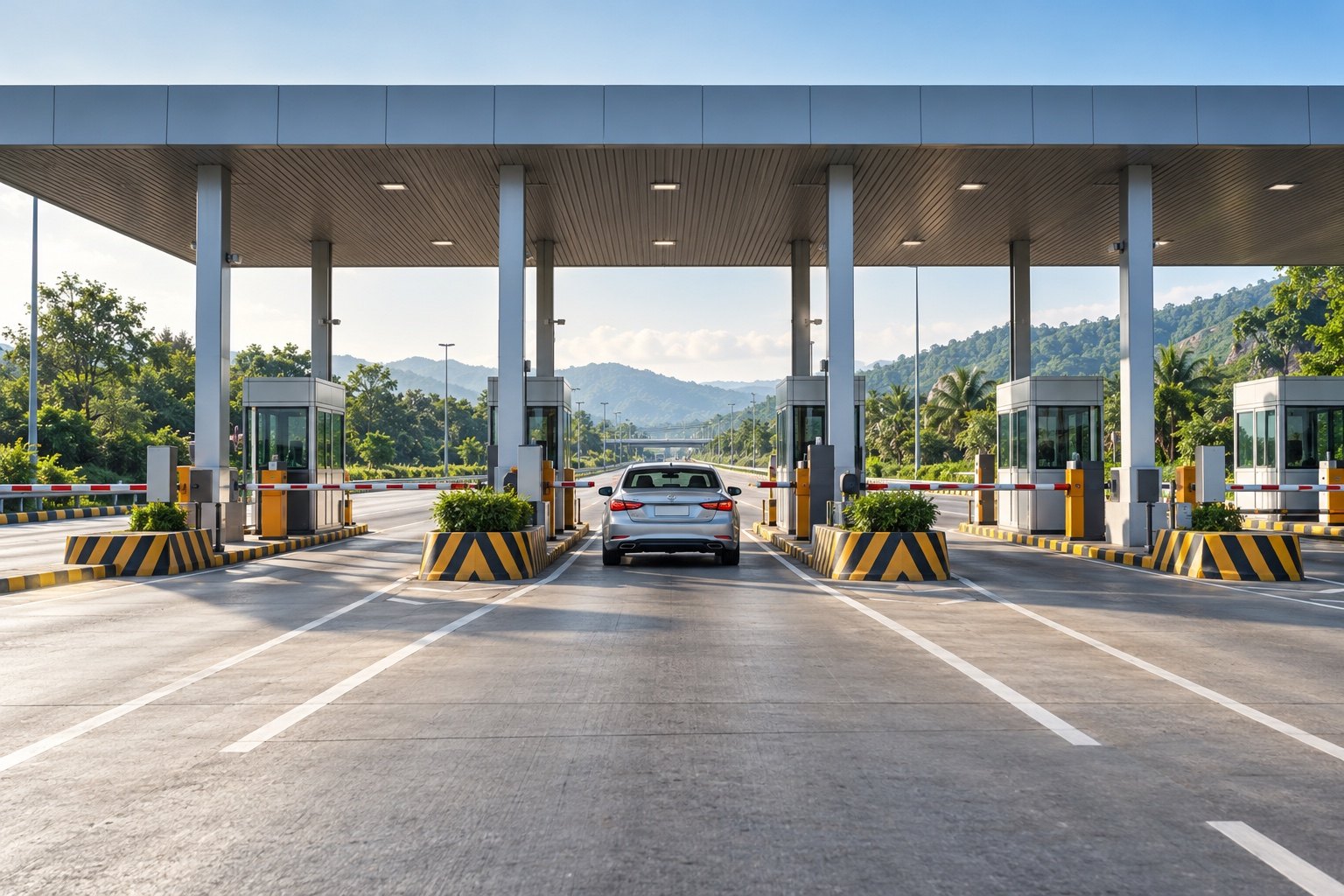
The Union Government has amended the National Highways Fee Rules to add an annual Concessional Local Pass. It is meant for non-commercial vehicle owners living within 20 km of a fee plaza. The pass costs Rs 1,500 or Rs 3,000 a year, depending on whether the plaza lies outside or inside town limits. Sales begin on 1 November 2026.
Syllabus: GS3 · Infrastructure; GS2 · Government Policies; GS3 · Investment Models
Why this matters for UPSC
GS3 Infrastructure (roads) and investment models: Prelims can ask what the National Highways Fee Rules, 2008 provide and how FASTag works; Mains can ask about user-fee financing and electronic toll collection.
Why it matters
A shopkeeper who lives beside a toll plaza and drives past it every day now has a choice. Instead of renewing a pass each month, the owner can pay once a year and stop worrying about lapses. For a household that commutes through one plaza, that lowers the yearly cost of an unavoidable trip. Residents near a plaza often resent paying a long-distance toll for a short local journey, and this concession eases that friction. It also shows the wider balancing act in highway policy: tolls repay the cost of building and running roads, while concessions keep them fair to people who live along them. Those with a service road, or on closed-system expressways, get no such relief.
Prelims pointers
- Under the 2008 Fee Rules, a vehicle may cross a fee plaza up to fifty times within a month at two-thirds of the fee payable.
- The 2008 Fee Rules set the local pass's base rate at Rs 150 a month for 2007-08, revised every year thereafter.
- User fee on national highways is collected under the Fee Rules and also under the concession agreement of each highway project.
- FASTag works on Radio Frequency Identification (RFID); the tag sits on the windscreen and toll is debited while the vehicle moves.
- Indian Highways Management Company Limited (IHMCL), promoted by NHAI, implements the FASTag programme; NPCI provides its clearing and settlement services.
- The 'One Vehicle One FASTag' rule allows only one active FASTag per vehicle; older tags linked to it are deactivated.
Practise a UPSC-style question
With reference to the local monthly pass under the National Highways Fee (Determination of Rates and Collection) Rules, 2008, consider the following statements:
1. The pass is meant for a vehicle registered for non-commercial purposes and used as such for commuting.
2. The vehicle's owner, driver or person in charge must reside within 20 km of the fee plaza named in the pass.
3. The pass is refused on a stretch that offers commuters a service road or an alternative road.
Which of the statements given above is/are correct?
- (a) 1 and 2 only
- (b) 2 and 3 only
- (c) 1 and 3 only
- (d) 1, 2 and 3
Show the answer
Answer: (d) 1, 2 and 3
Answer: (d) 1, 2 and 3. All three restate conditions the 2008 Fee Rules lay down for the local pass.
Statement 1: correct. The 2008 Rules offer the pass to a mechanical vehicle registered for non-commercial purposes and used as such for commuting.
Statement 2: correct. The pass is issued only if the driver, owner or person in charge lives within 20 km of the plaza.
Statement 3: correct. No such pass is issued where a service road or alternative road is open to the commuter.
Eliminate: Statement 3 is the surest, since the Rules bar the pass where an untolled road exists. Out: (a).
Eliminate: Statements 1 and 2 are both conditions of the same pass. Out: (b), (c).
Trap: Sounds right. A student may suspect that excluding plazas with a service road is an invented condition, but the 2008 Rules carry it, and the 2026 Local Pass repeats it.
Remember: Local pass under the 2008 Fee Rules: non-commercial vehicle, 20 km residence, no service road or closed system.
Explainers on this topic
More from the 28 October 2026 edition
- UNFCCC NDC Synthesis Report: new pledges cut emissions only 6% by 2035 Environment
- Project Cheetah cub found injured outside Kuno dies of pellet injuries Environment
- NHRC women's safety advisory seeks action reports within two months Polity
- Maharashtra wildlife board approves Kolamarka, Tansa sanctuaries and 14 conservation reserves Environment
- Telangana and Maharashtra agree to joint committee on Tummidihatti barrage Polity
- ECI suspends six Agra officials over lapses in Council teachers' poll Polity
- Violent Arunachal shutdown cancels hearing on Subansiri Upper hydro project Environment
- SC directs States, UTs to fund bar rooms, washrooms for women advocates Polity