
UNFCCC NDC Synthesis Report: new pledges cut emissions only 6% by 2035
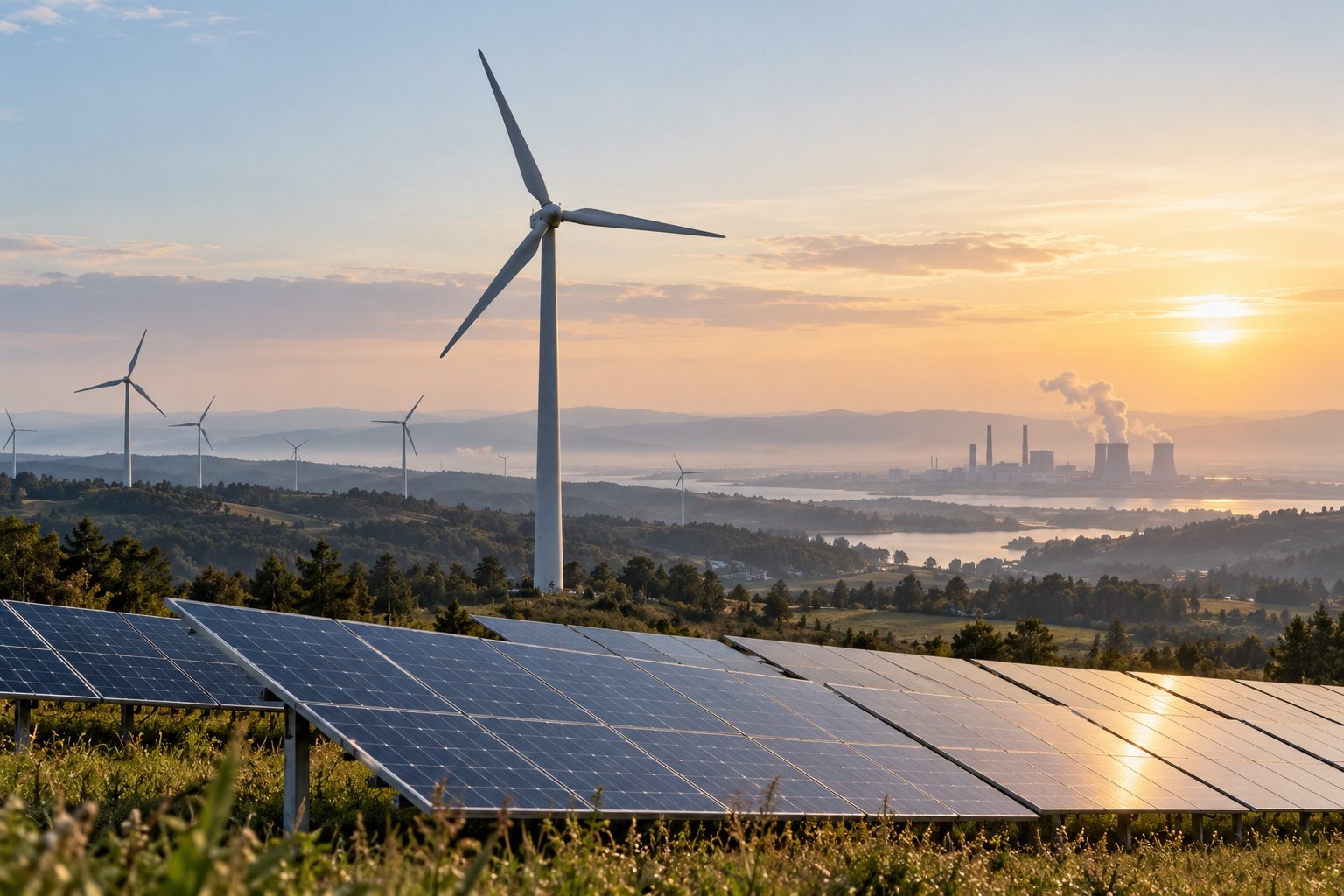
The secretariat of the United Nations Framework Convention on Climate Change (UNFCCC) released its 2026 report on Nationally Determined Contributions (NDCs) on 27 October 2026. The new pledges of 154 Parties would cut global emissions only about 6% below 2019 levels by 2035. Pathways that hold warming to 1.5 °C need a cut of about 60%.
Syllabus: Prelims · Environment & Ecology; GS3 · Environment & Conservation; GS2 · Groupings & Agreements
Why this matters for UPSC
GS3 environment and conservation, and GS2 international agreements. Prelims can ask what Article 4 of the Paris Agreement requires of NDCs, who prepares the NDC Synthesis Report, and India's targets; Mains, about the ambition gap and equity.
Why it matters
A farmer in Vidarbha or a fisher on the Odisha coast does not read climate treaties, but lives with their results. When the sum of national promises falls short, the world stays on course for hotter summers, heavier downpours and costlier disasters. That gap shapes the next round of talks: poorer countries press richer ones for money and technology so that their conditional pledges can be met, while every government faces pressure to do more before 2035. For India, the gap means balancing growth, cheap power and jobs against a shrinking global carbon budget.
Prelims pointers
- Article 4.1 seeks early peaking of emissions, with developing countries peaking later, and a balance of emissions and removals by sinks in the second half of this century.
- India's NDC for 2031-35 considered the first global stocktake, CBDR-RC and equity, the government says (PIB, 25 March 2026).
- Under Article 4.4, developed countries should lead with economy-wide absolute targets; developing countries are encouraged to move towards such targets over time.
- Article 14 provides the global stocktake: the first in 2023, then every five years, to assess collective progress.
- Article 15 sets up a committee to facilitate implementation and promote compliance; it is expert-based, facilitative and reports annually to the CMA.
- India's first NDC (2015) targeted a 33-35% cut in emissions intensity and 40% non-fossil power capacity by 2030; the government says both were met early.
- The IPCC's Sixth Assessment Report (AR6) is the scientific basis the NDC Synthesis Report uses to compare pledges with 1.5 °C and 2 °C pathways.
Practise a UPSC-style question
With reference to nationally determined contributions (NDCs), consider the following statements:
1. Under Article 4 of the Paris Agreement, each Party shall communicate a nationally determined contribution every ten years.
2. Each Party's successive nationally determined contribution is to represent a progression beyond its then current contribution.
Which of the statements given above is/are correct?
- (a) 1 only
- (b) 2 only
- (c) Both 1 and 2
- (d) Neither 1 nor 2
Show the answer
Answer: (b) 2 only
Answer: (b) 2 only. NDCs come every five years, and each must go beyond the last.
Statement 1: incorrect. Article 4.9 of the Paris Agreement requires an NDC every five years, informed by the global stocktake under Article 14.
Statement 2: correct. Article 4.3 says each successive NDC will represent a progression beyond the current one and reflect the Party's highest possible ambition.
Eliminate: statement 2 is the core of the Agreement's ratchet, so it is right. Out: (a), (d).
Eliminate: statement 1 gives ten years where Article 4.9 says five. Out: (c).
Trap: Near-miss figure. The ten-year cycle sounds plausible for a treaty review, but the Paris Agreement's NDC cycle, like its stocktake, runs every five years.
Remember: NDCs every five years (Art 4.9); each a progression with highest possible ambition (Art 4.3).
Explainers on this topic
More from the 28 October 2026 edition
- Project Cheetah cub found injured outside Kuno dies of pellet injuries Environment
- National Highways Fee Rules amended to add annual Local Pass for residents Economy
- NHRC women's safety advisory seeks action reports within two months Polity
- Maharashtra wildlife board approves Kolamarka, Tansa sanctuaries and 14 conservation reserves Environment
- Telangana and Maharashtra agree to joint committee on Tummidihatti barrage Polity
- ECI suspends six Agra officials over lapses in Council teachers' poll Polity
- Violent Arunachal shutdown cancels hearing on Subansiri Upper hydro project Environment
- SC directs States, UTs to fund bar rooms, washrooms for women advocates Polity