
Siwan blast: who licenses firecracker making under the Explosives Rules, 2008
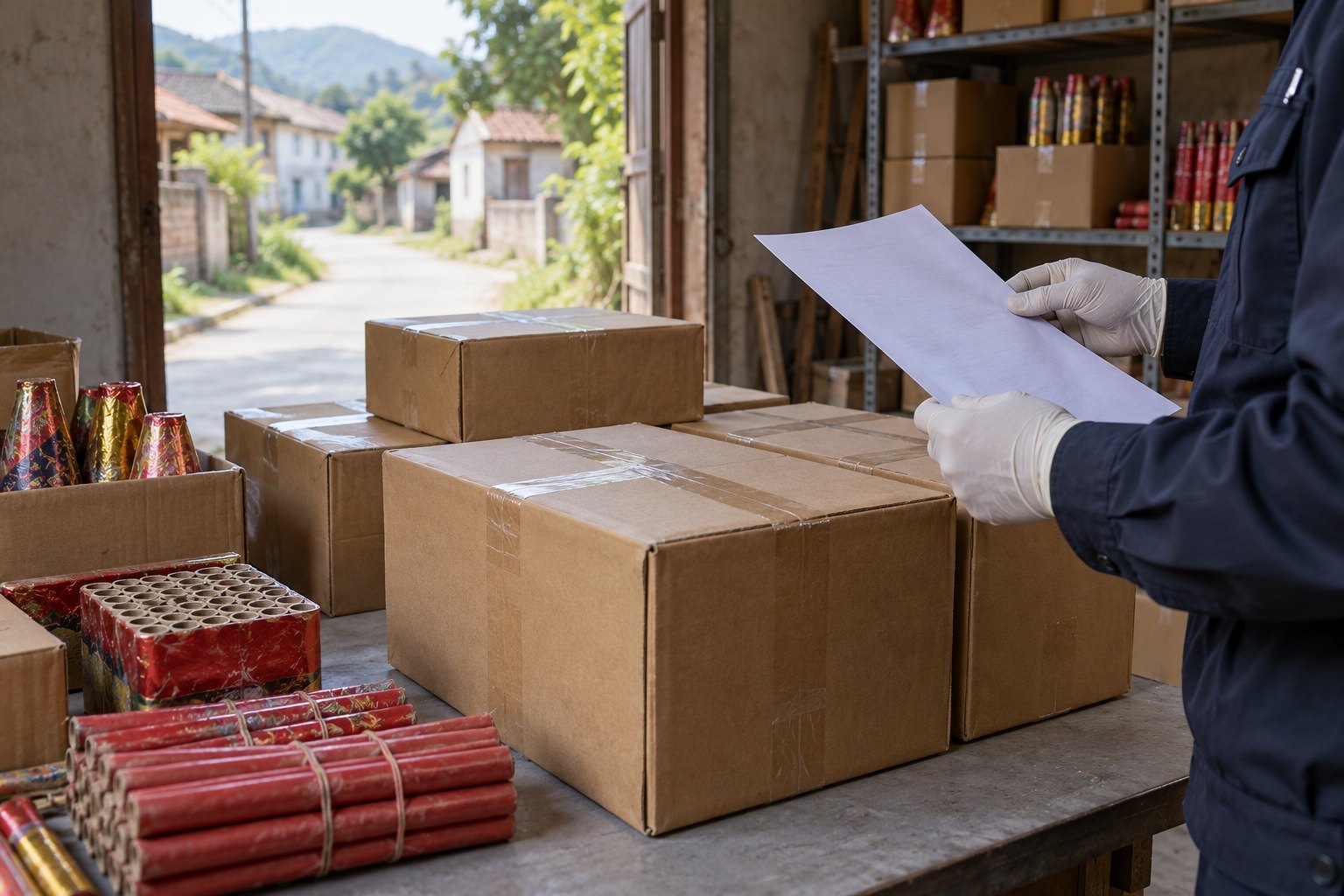
A blast at a house storing firecrackers in Alampur, Siwan, Bihar, killed five on 23 October 2026, the Superintendent of Police said. Whether the house held a licence to make firecrackers under the Explosives Rules, 2008 is unconfirmed; villagers said several houses there had made them for about 20 years. The local station house officer and chowkidar were suspended.
Syllabus: GS4 · Ethics in Public Administration; GS2 · Governance & e-Governance; GS3 · Disaster Management
Why this matters for UPSC
Prelims can ask what the Explosives Act, 1884 covers and who licenses fireworks under the Explosives Rules, 2008. GS III Mains can ask about disaster management, and GS II and GS IV about the District Magistrate's and police's duty to prevent such blasts.
Why it matters
In villages where fireworks are made at home, the danger sits inside the family's own rooms. One spark in stored powder can bring down walls and kill children who have no part in the trade. Neighbours, people on the road and the rescuers who must wait for the blasts to end share the risk. A district usually learns about such a unit only after it explodes. If a licence was issued but never inspected, or an unlicensed unit ran openly for years, the failure belongs to the administration as much as to the owner. The larger question is whether district offices know where explosives are made and stored before something goes wrong, and whether the police, the licensing office and the disaster authority share that knowledge.
Prelims pointers
- Explosives Act, 1884, section 4: an explosive expressly includes fireworks, fuses, rockets, percussion caps, detonators and cartridges, besides gunpowder and coloured fires.
- Explosives Act, 1884, section 6A: no person under eighteen years of age may manufacture, sell, transport, import or export any explosive.
- Explosives Act, 1884, section 6E: a licensing authority may suspend or revoke a licence for public safety or breach of conditions, recording its reasons in writing.
- Licence to make fireworks or gunpowder, per PESO's guidelines: District Magistrate up to 15 kg at a time; Controller of Explosives 15-500 kg; Chief Controller above 500 kg.
- Fireworks units need no Industrial Licence under the Industries (Development and Regulation) Act, 1951, which other explosives factories require before a PESO licence.
- Explosives Rules, 2008: sound-emitting fireworks may not exceed 125 dB(AI) or 145 dB(C)pk at 4 metres from the point of bursting.
- Explosives Act, 1884, section 6F: an appeal lies against a licensing authority's order refusing, varying, suspending or revoking a licence, but not against an order of the Central Government.
- NDMA's Chemical Disasters guidelines (April 2007) include guidelines for chemical disaster management at State and district levels, and cover isolated storages of hazardous chemicals.
Practise a UPSC-style question
With reference to the Explosives Act, 1884, consider the following statements:
1. Rules for licensing the manufacture and sale of explosives under the Act are made by State Governments.
2. The Act's definition of an explosive expressly includes fireworks, fuses and rockets.
3. The Act bars a person below eighteen years of age from manufacturing or selling any explosive.
Which of the statements given above is/are correct?
- (a) 1 and 2 only
- (b) 2 and 3 only
- (c) 1 and 3 only
- (d) 1, 2 and 3
Show the answer
Answer: (b) 2 and 3 only
Answer: (b) 2 and 3 only. The Act covers fireworks and bars minors, but its licensing rules are central.
Statement 1: incorrect. Section 5 of the Explosives Act, 1884 empowers the Central Government to make licensing rules; the Explosives Rules, 2008 are central rules.
Statement 2: correct. Section 4 defines an explosive to include fog-signals, fireworks, fuses, rockets, percussion caps, detonators and cartridges.
Statement 3: correct. Section 6A bars a person who has not completed eighteen years from manufacturing, selling, transporting, importing or exporting any explosive.
Eliminate: Statement 1 is wrong because section 5 gives the rule-making power to the Centre. Out: (a), (c), (d).
Trap: Swapped attribution. Licences are often granted locally by the District Magistrate, so the rule-making power is easily pinned on the States.
Remember: Explosives Act, 1884: Centre makes the rules; fireworks are explosives; no one under 18 may deal in them.
Explainers on this topic
More from the 24 October 2026 edition
- IAEA tells UN General Assembly nuclear power could triple by 2060 World & IR
- Haryana directs HERC under Section 108 to halt parallel power licence Polity
- NSO proposes PLFS redesign from 2027 to count platform workers Economy
- Karnataka HC: six guidelines curb mechanical FIRs, arrests over social-media posts Polity
- IMD forecasts Bay of Bengal cyclone heading for north Andhra, south Odisha Environment
- NMC withdraws 2023 medical education standards regulations, ends annual renewal Polity
- Orissa High Court: road pandals may stand if movement stays open Polity
- MHA tells Supreme Court of over 21,900 digital arrest complaints in 2026 National
- Jharkhand HC quashes Sentence Review Board's 'preordained' refusal of premature release Polity
- Allahabad HC: POCSO compensation cannot be refused for lack of injury Polity
- MoRTH draft proposes mandatory emergency braking (AEBS) in cars from 2030 National
- Kerala HC: State liable for wild-animal attacks despite not owning animals Environment