
Supreme Court directs Centre to publicise Section 164A interim relief scheme
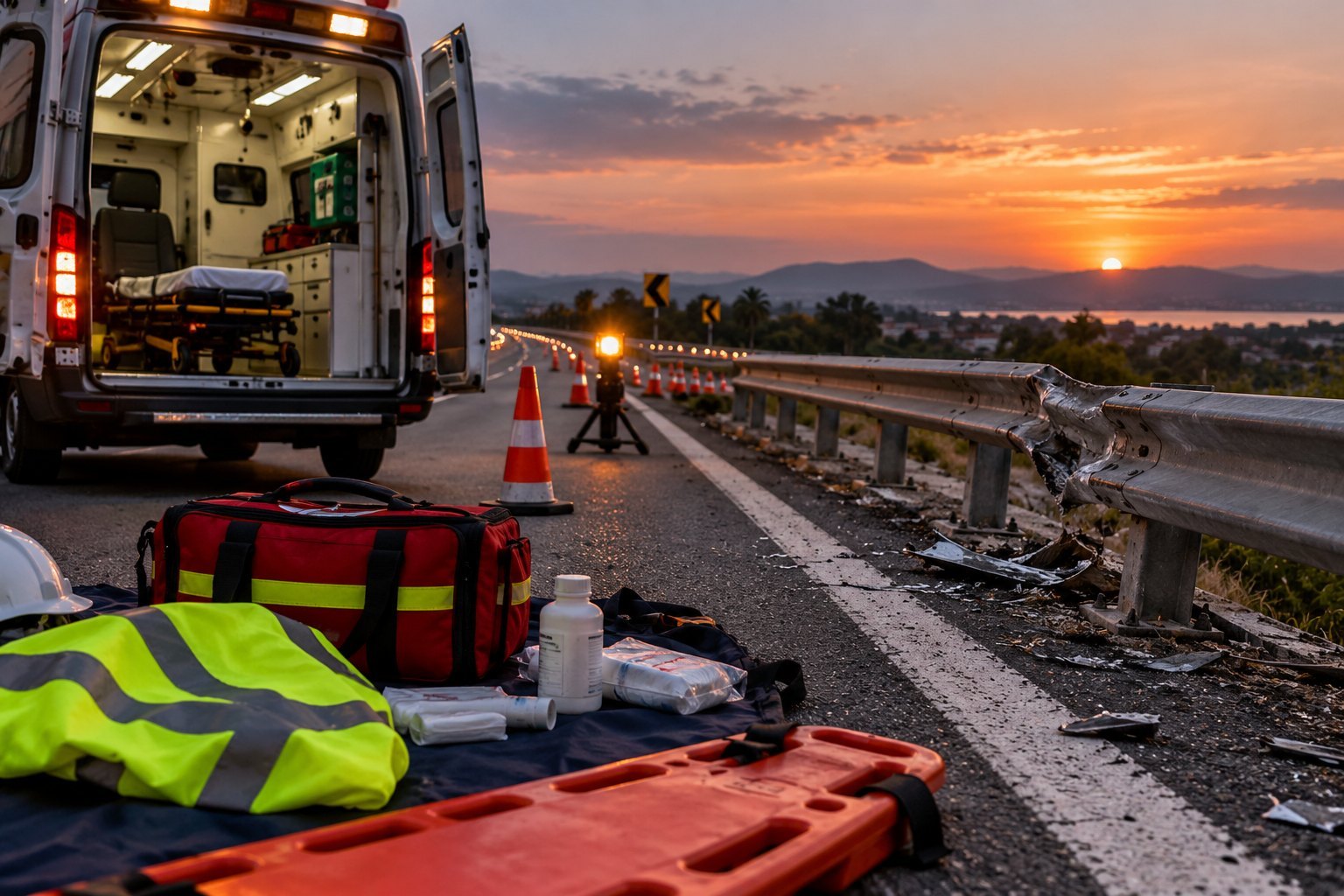
The Supreme Court on 16 October 2026 directed the Union Government to give wide publicity to the Compensation to Victims (Interim Relief) Scheme, 2026, framed under Section 164A of the Motor Vehicles Act, 1988. It ordered the scheme's publication in the Official Gazette at the earliest and asked the Centre whether it covers accidents involving uninsured vehicles.
Syllabus: GS2 · Executive & Judiciary; GS2 · Welfare of Vulnerable Sections; GS2 · Governance & e-Governance
Why this matters for UPSC
GS2 welfare schemes and the judiciary's role; GS3 road safety. Prelims can ask what Section 164A, Section 162 and the Motor Vehicle Accident Fund under the Motor Vehicles Act, 1988 provide; Mains, about delayed accident compensation.
Why it matters
A family whose earner is killed or badly hurt in a road crash can wait years for a Tribunal's final award, while hospital bills, rent and school fees fall due. Interim relief pays part of the money early, through the vehicle's insurer, and the amount is adjusted later. But a right that nobody knows about goes unclaimed: even the Court's amicus curiae said he had not known of this one. Publicity and a Gazette notice turn it into something a victim can ask for and a lawyer can cite. If crashes involving uninsured vehicles stay outside it, those victims must still wait for the full case to end. The case shows a wider problem: welfare laws passed by Parliament that stay unused for years.
Prelims pointers
- Section 164A, Motor Vehicles Act, 1988: the Central Government may make interim relief schemes for compensation claimants, with a procedure to recover the money from the vehicle's owner.
- Section 162: general insurers must provide for treatment of road accident victims, including in the golden hour; the Centre must frame a cashless treatment scheme, which may create a fund.
- Section 164B: the Centre constitutes the Motor Vehicle Accident Fund to give compulsory insurance cover to all road users; the CAG audits it and its accounts are laid before Parliament.
- Motor Vehicle Accident Fund uses: cashless treatment under the Section 162 scheme, and compensation for death or grievous hurt in hit-and-run accidents under Section 161 schemes.
- Cashless Treatment of Road Accident Victims Scheme, 2025 (MoRTH, notified 5 May 2025): up to Rs 1.5 lakh per victim for 7 days at designated hospitals, outside AB-PM-JAY.
- Section 212: rules made under the Motor Vehicles Act, 1988 are published in the Official Gazette and take effect on publication unless a later date is set.
- Parmanand Katara v Union of India (1989): the Supreme Court held that every injured person brought to a hospital must be given medical aid at once to preserve life.
Practise a UPSC-style question
With reference to the Motor Vehicles Act, 1988, consider the following statements:
1. Section 164A empowers the Central Government to make schemes for interim relief to claimants seeking compensation.
2. A scheme under Section 164A must provide for recovering the disbursed funds from the State Government.
3. Section 162 obliges the Central Government to make a scheme for cashless treatment of accident victims during the golden hour.
Which of the statements given above is/are correct?
- (a) 1 and 2 only
- (b) 2 and 3 only
- (c) 1 and 3 only
- (d) 1, 2 and 3
Show the answer
Answer: (c) 1 and 3 only
Answer: (c) 1 and 3 only. Both schemes are the Centre's duty or power; recovery under Section 164A runs against the vehicle owner, not the State.
Statement 1: correct. Section 164A(1) says the Central Government may make schemes for interim relief to claimants praying for compensation under that Chapter.
Statement 2: incorrect. Section 164A(2) says the scheme must provide a procedure to recover the funds from the owner of the motor vehicle, or other prescribed sources, not from the State Government.
Statement 3: correct. Section 162(2) says the Central Government shall make a scheme for cashless treatment of accident victims during the golden hour.
Eliminate: Statement 2 is the surest: Section 164A(2) names the vehicle's owner, or other sources the Centre prescribes, as the place to recover the money, not the State Government. Out: (a), (b), (d).
Trap: Swapped attribution. The recovery duty is moved from the vehicle owner to the State Government, a body that plays no part in Section 164A.
Remember: Section 164A = Centre's interim relief scheme, money recovered from the vehicle owner; Section 162 = golden-hour cashless scheme.
More from the 21 October 2026 edition
- India, US review ties in Mumbai, hold trilateral with UAE World & IR
- ECI lets EROs decide SIR discrepancy notices; hearings made exceptional Polity
- Tamil Nadu funds 25 extra work days beyond VB-G RAM G's 125 National
- Japan launches MMX probe to bring back a sample from Phobos Sci-Tech
- Chhattisgarh's Sirpur enters India's UNESCO World Heritage Tentative List National
- SC directs Northeast panel to recommend law changes against racial harassment Polity
- No tax deducted on interest from NDB's Maharajah rupee bonds Economy
- India at UN renews offer of a multilateral No First Use pact World & IR
- Delhi HC: RTI security exemptions shield PM's IAF flight records Polity
- Dissent against a court verdict is not enmity: Karnataka High Court Polity
- SCO Council of Heads of Government adopts 2027 budget in Dushanbe World & IR
- UN dues: India tells Fifth Committee the Charter requires full, timely payment World & IR