
UN dues: India tells Fifth Committee the Charter requires full, timely payment
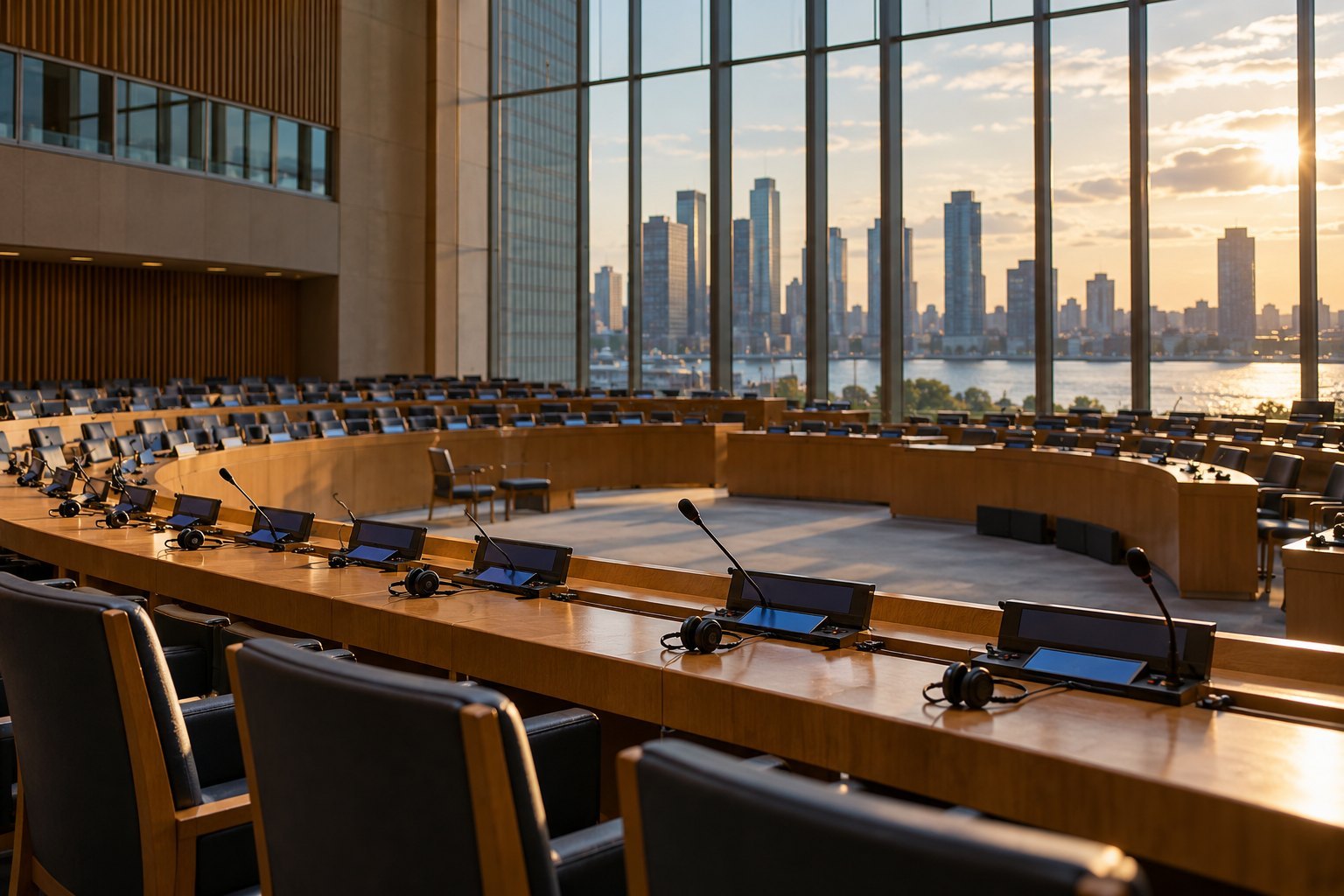
India told the UN General Assembly's Fifth Committee on 19 October 2026 that, as a major troop-contributing country, it holds that the UN Charter requires Member States to pay their contributions in full and on time. As of 30 September 2026, members owed $1.462 billion to the regular budget and about $4.1 billion to peacekeeping, per the UN Secretariat.
Syllabus: Prelims · Current Affairs & IR; GS2 · Groupings & Agreements; GS2 · International Institutions
Why this matters for UPSC
GS2 international institutions: Prelims can ask what Article 17 and Article 19 of the UN Charter provide and what the Committee on Contributions does; Mains, how arrears weaken UN peacekeeping and India's stake as a troop contributor.
Why it matters
When rich members pay late, the UN cannot plan. It runs short of cash in the middle of the year, borrows from its own reserves and holds back spending on the work members asked it to do. Peacekeeping feels it most: when missions run short, the countries that send soldiers and police, mostly developing countries such as India, wait to be repaid and in effect lend the UN money. A UN that lives from one collection to the next also gives its largest payers leverage over what it does, which is why India and others say payment cannot come with conditions.
Prelims pointers
- Article 17(3) of the UN Charter: the General Assembly approves financial and budgetary arrangements with the specialized agencies and examines their administrative budgets.
- Article 18(2) of the UN Charter: budgetary questions are important questions, decided by a two-thirds majority of members present and voting.
- Article 19 waiver: the General Assembly may still let a member in arrears vote if the failure to pay arises from conditions beyond its control.
- Committee on Contributions: meets for three to four weeks a year, usually in June; also advises on assessments for new Members and appeals for a change.
- Fifth Committee sessions: main part October to December on the next year's programme budget; a May resumed part on peacekeeping's administrative and budgetary aspects.
- UN peacekeeping budget: its financial period runs from 1 July to 30 June, unlike the calendar-year regular budget.
- Peacekeeping Reserve Fund: under resolution 76/272, it is the first choice for borrowing by active peacekeeping operations, with $40 million kept for new or expanding missions.
Practise a UPSC-style question
With reference to Article 17 of the UN Charter, consider the following statements:
1. The Security Council considers and approves the budget of the United Nations.
2. The expenses of the Organization are borne by the Members as apportioned by the General Assembly.
Which of the statements given above is/are correct?
- (a) 1 only
- (b) 2 only
- (c) Both 1 and 2
- (d) Neither 1 nor 2
Show the answer
Answer: (b) 2 only
Answer: (b) 2 only. Article 17 gives the budget and its apportionment to the General Assembly, not the Security Council.
Statement 1: incorrect. Article 17(1) says the General Assembly, not the Security Council, considers and approves the UN budget.
Statement 2: correct. Article 17(2) says Members bear the expenses as apportioned by the General Assembly.
Eliminate: Statement 2 is the Charter's own wording, so it is correct. Out: (a), (d).
Eliminate: Statement 1 names the Security Council, which has no budget role under Article 17. Out: (c).
Trap: Swapped attribution. The question pins the General Assembly's budget power on the better-known Security Council.
Remember: Article 17: the General Assembly approves the UN budget and apportions its expenses.
More from the 21 October 2026 edition
- India, US review ties in Mumbai, hold trilateral with UAE World & IR
- ECI lets EROs decide SIR discrepancy notices; hearings made exceptional Polity
- Tamil Nadu funds 25 extra work days beyond VB-G RAM G's 125 National
- Japan launches MMX probe to bring back a sample from Phobos Sci-Tech
- Chhattisgarh's Sirpur enters India's UNESCO World Heritage Tentative List National
- SC directs Northeast panel to recommend law changes against racial harassment Polity
- No tax deducted on interest from NDB's Maharajah rupee bonds Economy
- India at UN renews offer of a multilateral No First Use pact World & IR
- Delhi HC: RTI security exemptions shield PM's IAF flight records Polity
- Supreme Court directs Centre to publicise Section 164A interim relief scheme Polity
- Dissent against a court verdict is not enmity: Karnataka High Court Polity
- SCO Council of Heads of Government adopts 2027 budget in Dushanbe World & IR