
SC directs Northeast panel to recommend law changes against racial harassment
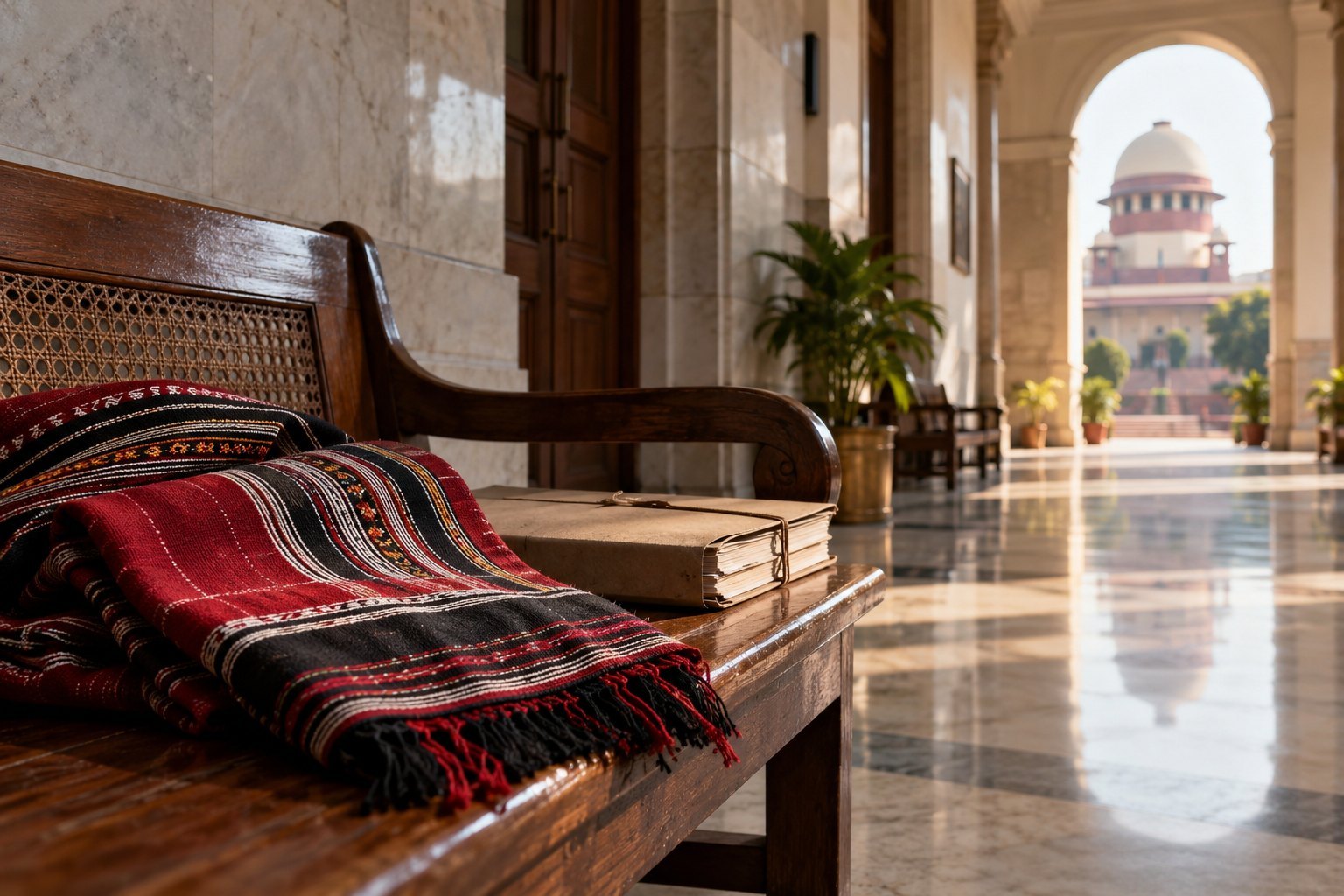
The Supreme Court, by an order of 14 October 2026, directed the Monitoring Committee set up by the Union Home Ministry to recommend, by 18 December, changes in law to protect people from the Northeast against violence and harassment elsewhere in India. It also ordered that every complainant's full details, including the address, be recorded on receipt.
Syllabus: GS2 · Constitution; GS2 · Separation of Powers; GS1 · Indian Society & Diversity
Why this matters for UPSC
GS2: laws and bodies that protect vulnerable sections, and how far a court may push the executive towards legislation. Prelims can ask Article 15, Article 19(1)(d) and (e), and Section 196 of the Bharatiya Nyaya Sanhita, 2023.
Why it matters
A student from Manipur in Delhi or a worker from Nagaland in Bengaluru who is abused or attacked needs two things: police who act on the complaint, and a law that names what happened. The order deals with both. In some cases before the committee, the police could not later trace the person who complained, so the case went nowhere; taking down an address on day one keeps it alive. A clearer offence of racial abuse, if Parliament makes one, would let police record the motive, not only the assault. The larger question is whether a citizen from one region feels equal and safe in another, which is what holds a diverse country together.
Prelims pointers
- Article 15(1): the State shall not discriminate against any citizen on grounds only of religion, race, caste, sex, place of birth or any of them.
- Article 19(1)(d) and (e): every citizen may move freely throughout India and reside and settle anywhere; Article 19(5) permits reasonable restrictions for the general public or Scheduled Tribes.
- Article 51A(e): a Fundamental Duty to promote harmony and common brotherhood transcending religious, linguistic and regional or sectional diversities.
- BNS Section 196: promoting enmity between groups on grounds of religion, race, place of birth, residence, language, caste or community; up to three years, five in a place of worship.
- BNS Section 197: imputations prejudicial to national integration, including asserting that a racial or regional group should be denied its rights as citizens.
- Seventh Schedule: public order (entry 1) and police (entry 2) are in the State List; criminal law is entry 1 of the Concurrent List.
Practise a UPSC-style question
With reference to the Constitution of India, consider the following statements:
1. The right to reside and settle in any part of the territory of India is guaranteed by Article 21.
2. Article 15(1) bars the State from discriminating against any citizen on grounds only of religion, race, caste, sex or place of birth.
Which of the statements given above is/are correct?
- (a) 1 only
- (b) 2 only
- (c) Both 1 and 2
- (d) Neither 1 nor 2
Show the answer
Answer: (b) 2 only
Answer: (b) 2 only. The right to reside anywhere sits in Article 19, not Article 21.
Statement 1: incorrect. Article 19(1)(e) gives every citizen the right to reside and settle in any part of India; Article 21 protects life and personal liberty.
Statement 2: correct. Article 15(1) says the State shall not discriminate against any citizen on grounds only of religion, race, caste, sex, place of birth or any of them.
Eliminate: Statement 2 is the text of Article 15(1). Out: (a), (d).
Eliminate: Statement 1 is incorrect, as the right is in Article 19(1)(e). Out: (c).
Trap: Swapped attribution. A right from Article 19 is pinned on Article 21, which is often read widely and so sounds plausible.
Remember: Article 19(1)(d) move, 19(1)(e) reside; Article 15 bars discrimination by race or place of birth.
More from the 21 October 2026 edition
- India, US review ties in Mumbai, hold trilateral with UAE World & IR
- ECI lets EROs decide SIR discrepancy notices; hearings made exceptional Polity
- Tamil Nadu funds 25 extra work days beyond VB-G RAM G's 125 National
- Japan launches MMX probe to bring back a sample from Phobos Sci-Tech
- Chhattisgarh's Sirpur enters India's UNESCO World Heritage Tentative List National
- No tax deducted on interest from NDB's Maharajah rupee bonds Economy
- India at UN renews offer of a multilateral No First Use pact World & IR
- Delhi HC: RTI security exemptions shield PM's IAF flight records Polity
- Supreme Court directs Centre to publicise Section 164A interim relief scheme Polity
- Dissent against a court verdict is not enmity: Karnataka High Court Polity
- SCO Council of Heads of Government adopts 2027 budget in Dushanbe World & IR
- UN dues: India tells Fifth Committee the Charter requires full, timely payment World & IR