
India, Czech Republic agree to widen defence industrial cooperation
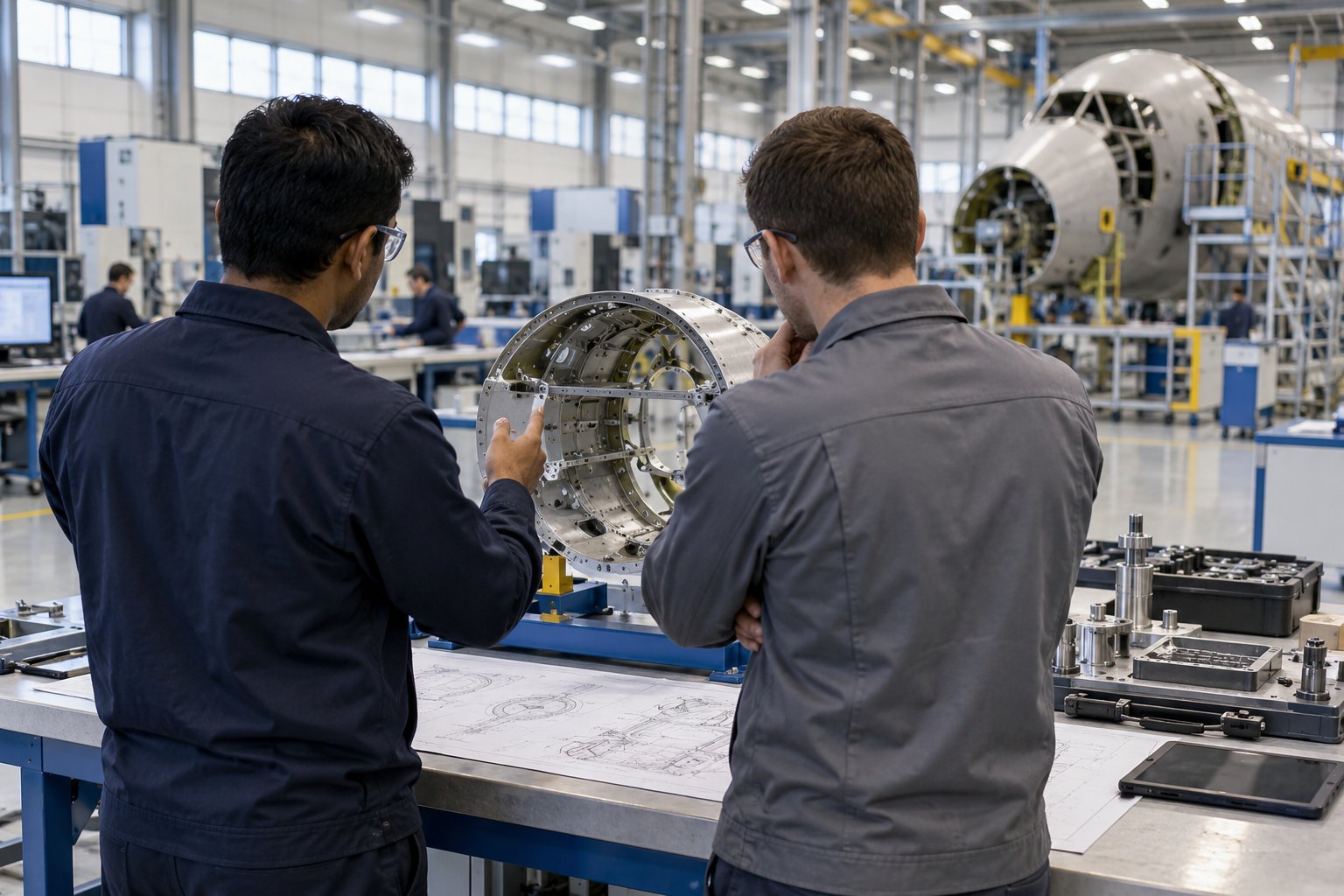
Defence Minister Rajnath Singh and Czech First Deputy Prime Minister Karel Havlíček agreed in New Delhi on October 13, 2026 to expand defence industrial cooperation, including under the India-Czech Joint Defence Committee, to promote Make in India and Aatmanirbhar Bharat. Both sides welcomed existing joint ventures. No new contracts or projects were announced.
Syllabus: Prelims · Current Affairs & IR; GS3 · Indian Achievements in S&T; GS2 · Groupings & Agreements
Why this matters for UPSC
GS2 bilateral relations and GS3 indigenisation of defence technology. Prelims can ask about the Czech Republic's neighbours, its EU and NATO membership and Make in India; Mains, about foreign partners in defence manufacturing.
Why it matters
An Indian engineering firm that partners a Czech manufacturer can build defence equipment in India instead of the armed forces buying it ready-made from abroad. That keeps factory jobs, skills and spending at home, and spares the forces from waiting on a foreign supplier for parts in a crisis. The joint ventures welcomed in the talks are this kind of arrangement. Czechia brings an established industrial and engineering base, and a seat in both NATO and the European Union. For India, such partners are one route to cutting dependence on defence imports, the larger aim behind Make in India and Aatmanirbhar Bharat. The test will be whether the Joint Defence Committee turns this intent into actual projects, since none was announced.
Prelims pointers
- Czech Republic (Czechia): capital Prague; neighbours Germany, Poland, Austria and Slovakia; rivers drain to the North, Baltic and Black Seas.
- Elbe: flows out of Czechia and reaches the North Sea through the port of Hamburg in Germany.
- NATO: Czechia, Hungary and Poland joined in 1999, the first former Warsaw Pact members to join; Slovakia joined in 2004.
- European Union: Czechia a member since 1 May 2004 and in the Schengen area since 2007; its currency is the Czech koruna, not the euro.
- India-Czech Joint Defence Committee: set up under the defence cooperation agreement signed in Prague in October 2003.
- Make in India: launched 25 September 2014, Ministry of Commerce and Industry; aims to make India a manufacturing, design and innovation hub.
- India-Czechoslovakia diplomatic relations date from 18 November 1947; India recognised the Czech Republic on its creation in 1993.
Practise a UPSC-style question
With reference to the Czech Republic (Czechia), consider the following statements:
1. Czechia has adopted the euro as its currency and is a member of the euro area.
2. Czechia joined the North Atlantic Treaty Organization (NATO) in 1999, together with Poland and Hungary.
Which of the statements given above is/are correct?
- (a) 1 only
- (b) 2 only
- (c) Both 1 and 2
- (d) Neither 1 nor 2
Show the answer
Answer: (b) 2 only
1 is incorrect: Czechia is a member of the European Union, but its currency is the Czech koruna and it is not in the euro area. 2 is correct: Czechia, Hungary and Poland joined NATO in 1999, the first former Warsaw Pact members to do so.
More from the 14 October 2026 edition
- Cooperation Ministry mandates uniform audit report for Multi-State societies Economy
- CCEA approves strategic buyer for 60.72% of IDBI Bank Economy
- India approved to join Southern Indian Ocean Fisheries Agreement Economy
- India–Mauritius tax treaty gets principal purpose test against treaty shopping Economy
- Greater India Society at 100: India's cultural links across Asia National
- Cabinet extends National Social Assistance Programme to 2030-31, renames it National
- Indian Navy to end first command of CMF's Combined Task Force 154 Defence
- Putin signs law ratifying India-Russia temporary labour agreement World & IR
- India rejects UN Indigenous Peoples Rapporteur's reference, cites Forest Rights Act World & IR
- India tells UNGA Third Committee UN rights bodies must shun selectivity World & IR
- 158 refugees get citizenship in Ahmedabad, 126 under the CAA Polity
- India-Canada reset: PMs back early CEPA to double trade by 2030 World & IR