
Marine heatwaves: what they are and how India tracks them
Why in news: On 4 November 2026 INCOIS warned of marine heatwaves over Indian seas and issued swell surge alerts for both coasts.
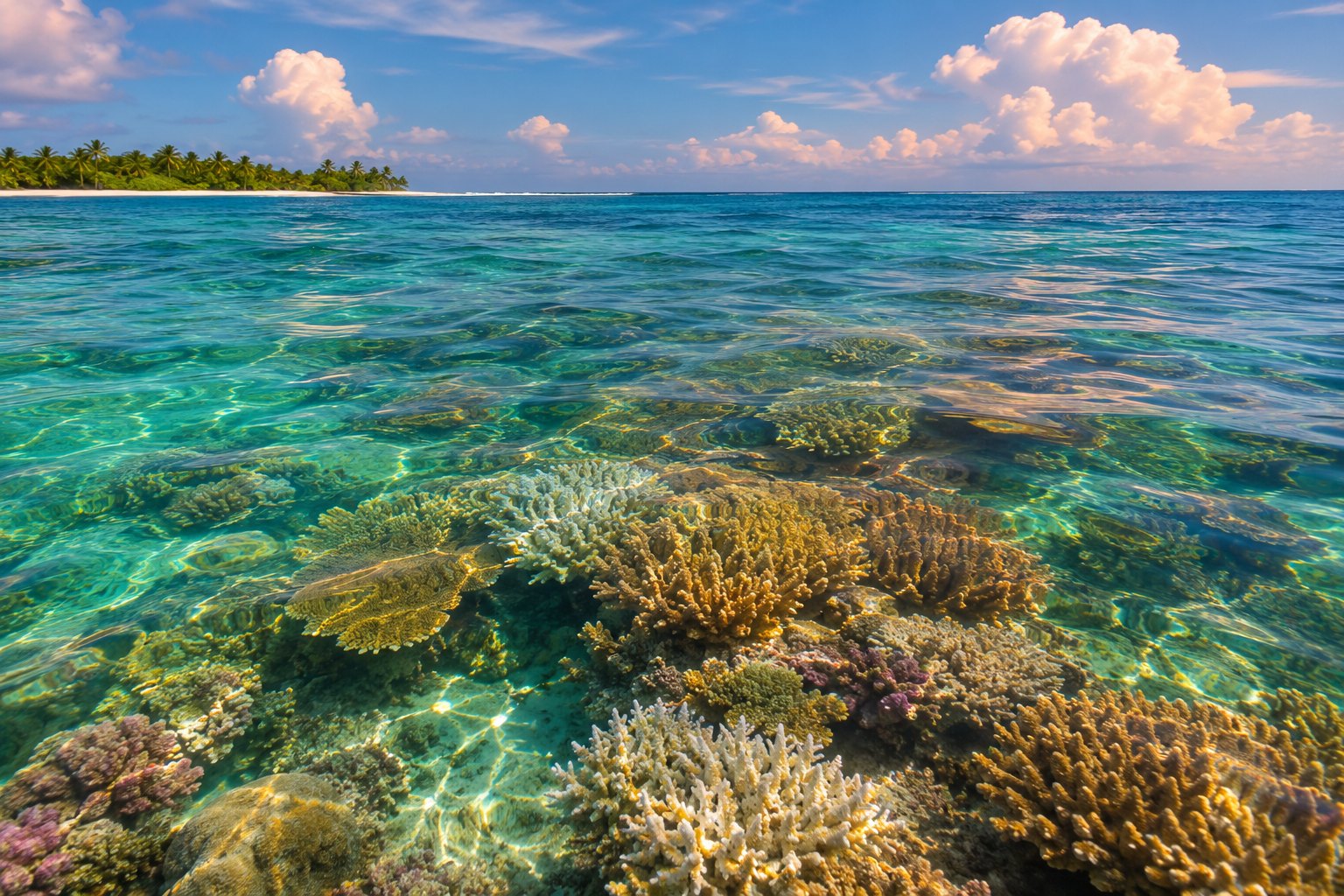
A marine heatwave is a spell of five or more days when sea temperature stays above the 90th percentile of its local baseline. INCOIS, Hyderabad, under the Ministry of Earth Sciences, tracks such spells daily and grades them moderate to extreme. On 4 November 2026 it warned of heatwaves across the Arabian Sea, Bay of Bengal and Indian Ocean.
Syllabus: Prelims · Environment & Ecology; GS1 · Geophysical Phenomena; GS3 · Environment & Conservation
Why this matters for UPSC
GS3 environment and disaster management: marine heatwaves and INCOIS's ocean warnings. Prelims can ask the definition and INCOIS's services; Mains, effects on corals and fisheries.
In short
A marine heatwave is a prolonged spell of unusually warm sea water, judged against the local normal for that time of year; INCOIS tracks it daily for Indian waters.
Marine heatwaves are becoming a routine ocean hazard; INCOIS's warnings are only worth their science if they reach fishers and reef managers in time.
Why it matters
A fisher on the Kerala or Odisha coast plans each trip on where the fish are. A marine heatwave can drive shoals away or kill them, so an early warning decides whether a boat goes out at all. Reef managers in Lakshadweep or the Gulf of Mannar can watch stressed corals and limit other pressures on them while the heat lasts. Disaster managers gain lead time too, since a hotter sea can feed a stronger cyclone. The larger issue is a warming ocean, where heat that used to be rare is becoming a regular hazard. A coastal economy of fishing, tourism and ports has to plan for it the way farmers plan for a failed monsoon.
Prelims pointers
- INCOIS's early-warning services include tsunami warnings, storm-surge alerts, high-wave and swell surge advisories, oil-spill trajectory forecasts and search and rescue support (PIB, 2026).
- Potential Fishing Zone (PFZ) advisories for fishermen are issued by INCOIS, a Ministry of Earth Sciences body, not by the environment ministry.
- INCOIS issues coral bleaching alerts from satellite sea temperature; the National Centre for Coastal Research (NCCR), Chennai, also under MoES, monitors bleaching on the ground.
- NCCR's coral bleaching studies cover Palk Bay, the Andaman Islands and Lakshadweep Island.
- INCOIS has commissioned HPC-Tarang, a high-performance computer for operational ocean forecasting, and aims to extend ocean state forecasts from 10 to 45 days.
- India's coral areas hit by the Fourth Global Coral Bleaching Event include Lakshadweep, the Gulf of Kachchh, the Gulf of Mannar and the Andaman and Nicobar Islands.
- Marine heatwaves can last from days to years and can reach the sea floor, not only surface waters (NOAA).
- NOAA, like INCOIS, compares sea temperatures with a 1991-2020 baseline when it maps marine heatwaves.
Practise a UPSC-style question
With reference to how INCOIS identifies a marine heatwave, consider the following statements:
1. INCOIS builds its daily climatology from sea surface temperature data for the period 1981-2010.
2. Sea surface temperature must stay above the 90th percentile of local daily climatology for five or more days.
3. A break of more than two days below the threshold makes the next warm spell a separate event.
Which of the statements given above is/are correct?
- (a) 1 and 2 only
- (b) 2 and 3 only
- (c) 1 and 3 only
- (d) 1, 2 and 3
Show the answer
Answer: (b) 2 and 3 only
Answer: (b) 2 and 3 only. The INCOIS procedure uses a 1991-2020 baseline, so only statement 1 fails.
Statement 1: incorrect. The baseline is 1991-2020, built from NOAA's Optimum Interpolation sea surface temperature data.
Statement 2: correct. The INCOIS procedure requires five or more days above the 90th percentile of the daily climatology.
Statement 3: correct. A gap of more than two days without meeting the criteria makes the next spell a new event.
Eliminate: statement 1 is incorrect, as the baseline period is 1991-2020. Out: (a), (c), (d).
Trap: Near-miss figure. 1981-2010 was an older standard climate normal, so it looks right to a student who half-remembers.
Remember: INCOIS marine heatwave = 90th percentile, 5+ days, 1991-2020 baseline.
More Explainers
- Zero FIR: Section 173 of the BNSS and where it stops Polity
- Enforcement Directorate's PMLA powers depend on a scheduled offence Polity
- Preventive detention: Article 22 and the National Security Act, 1980 Polity
- Prohibition of Child Marriage Act, 2006 and Bal Vivah Mukt Bharat National
- Liberalised Remittance Scheme (LRS) under FEMA, 1999 Economy
- Carbon sinks: why the Amazon now releases more carbon than it absorbs Environment
- Pharmacovigilance and materiovigilance: how India tracks harm from medicines and devices National
- UGC equity regulations, 2026, against discrimination in higher education Polity
- Space debris and India's Debris Free Space Mission goal for 2030 Sci-Tech
- Somnath temple: Prabhas Patan's jyotirlinga, its destruction and 1951 rebuilding National
- Food safety enforcement: FSSAI, State Commissioners and central licensing Polity
- Safe harbour for internet intermediaries under Section 79 of the IT Act Polity