
Pharmacovigilance and materiovigilance: how India tracks harm from medicines and devices
Why in news: In October 2026 the IPC released, under a Central Information Commission order, data showing 9,373 serious medical device adverse events since 2020.
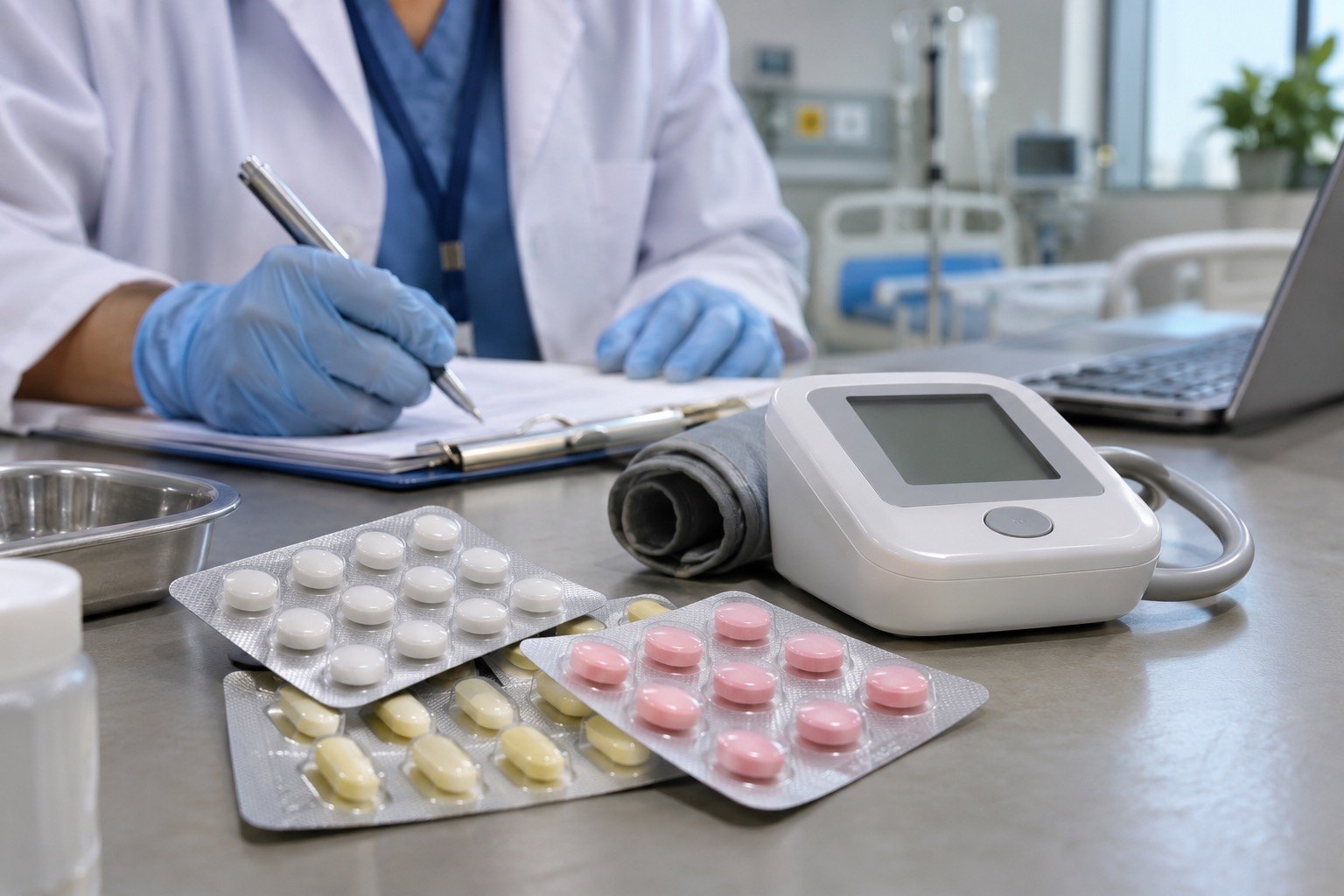
Pharmacovigilance watches for harm from medicines after they reach patients; materiovigilance does the same for medical devices. India runs both through the Indian Pharmacopoeia Commission (IPC), Ghaziabad: the Pharmacovigilance Programme of India (PvPI) since 2010 and the Materiovigilance Programme of India (MvPI) since 2015. IPC data released under an RTI order now count 9,373 serious device adverse events since 2020.
Syllabus: Prelims · Current Affairs & IR; GS3 · Science & Technology; GS2 · Health, Education & Human Resources
Why this matters for UPSC
GS2 health and GS3 science: how India monitors the safety of medicines and medical devices. Prelims can ask which body coordinates or regulates; Mains, transparency and post-market surveillance.
In short
Pharmacovigilance and materiovigilance are the post-market safety watch on medicines and medical devices, run in India by the IPC under two Health Ministry programmes, with the CDSCO as regulator.
India has built the reporting network; its test now is turning reports into regulatory action and publishing product-level findings once causality is settled.
Why it matters
A patient fitted with a heart stent, or kept alive on a ventilator, depends on someone noticing when a device of that kind starts failing elsewhere. Reporting is how that early warning travels: a nurse or engineer files a form, a national centre spots a pattern, and the regulator can warn hospitals, order a recall or tighten a licence. When few reports reach the regulator, or when the public cannot see which product failed, the same fault can keep harming people. Doctors also lose the evidence they need to choose safer products. The larger issue is trust in a fast-growing health market: safety data that is collected but rarely acted on or shared protects neither patients nor honest manufacturers.
Prelims pointers
- The Indian Pharmacopoeia Commission, an autonomous central body, sets the official standards for drugs; it also hosts the coordinating centres of both vigilance programmes.
- Under both programmes the IPC gathers and analyses reports, while the CDSCO, the regulator, takes regulatory action on the cases sent to it.
- In 2017 the WHO made India a WHO Collaborating Centre for Pharmacovigilance in Public Health Programmes and Regulatory Services.
- A serious adverse event under the Medical Devices Rules, 2017 is one causing death, a life-threatening illness or injury, permanent impairment, or hospitalisation.
- In vitro diagnostic devices, such as test kits, have their own parameters in the Medical Devices Rules, 2017 but use the same four classes, A to D.
- PvPI reports can be made through monitoring centres, a toll-free helpline and the ADR PvPI mobile app; MvPI forms go to SCTIMST.
Practise a UPSC-style question
With reference to the Pharmacovigilance Programme of India (PvPI), consider the following statements:
1. It was launched in 2010 with the Indian Pharmacopoeia Commission as its first National Coordination Centre.
2. Since 2011, its National Coordination Centre has been the Indian Pharmacopoeia Commission at Ghaziabad.
3. The WHO has recognised India as a WHO Collaborating Centre for Pharmacovigilance in Public Health Programmes and Regulatory Services.
Which of the statements given above is/are correct?
- (a) 1 and 2 only
- (b) 2 and 3 only
- (c) 1 and 3 only
- (d) 1, 2 and 3
Show the answer
Answer: (b) 2 and 3 only
Answer: (b) 2 and 3 only. The first coordinating centre was AIIMS, not the IPC.
Statement 1: incorrect. The Health Ministry launched PvPI in July 2010 with AIIMS, New Delhi as its National Coordination Centre.
Statement 2: correct. A Health Ministry order of April 2011 shifted the coordinating centre from AIIMS to the IPC, Ghaziabad.
Statement 3: correct. In July 2017 the WHO made India a Collaborating Centre for Pharmacovigilance in Public Health Programmes and Regulatory Services.
Eliminate: statement 1 credits the IPC with the role AIIMS held in 2010. Out: (a), (c), (d).
Trap: Outdated fact. The IPC is today's coordinator, so the question pins it on the programme's first year, when AIIMS held the role.
Remember: PvPI 2010 began at AIIMS; the IPC, Ghaziabad has coordinated it since 2011.
More Explainers
- Zero FIR: Section 173 of the BNSS and where it stops Polity
- Enforcement Directorate's PMLA powers depend on a scheduled offence Polity
- Preventive detention: Article 22 and the National Security Act, 1980 Polity
- Prohibition of Child Marriage Act, 2006 and Bal Vivah Mukt Bharat National
- Liberalised Remittance Scheme (LRS) under FEMA, 1999 Economy
- Carbon sinks: why the Amazon now releases more carbon than it absorbs Environment
- UGC equity regulations, 2026, against discrimination in higher education Polity
- Space debris and India's Debris Free Space Mission goal for 2030 Sci-Tech
- Somnath temple: Prabhas Patan's jyotirlinga, its destruction and 1951 rebuilding National
- Food safety enforcement: FSSAI, State Commissioners and central licensing Polity
- Safe harbour for internet intermediaries under Section 79 of the IT Act Polity
- Article 33: why police cannot protest like other citizens Polity