
Supreme Court sets aside Bihar remission notification; Article 21 covers victims
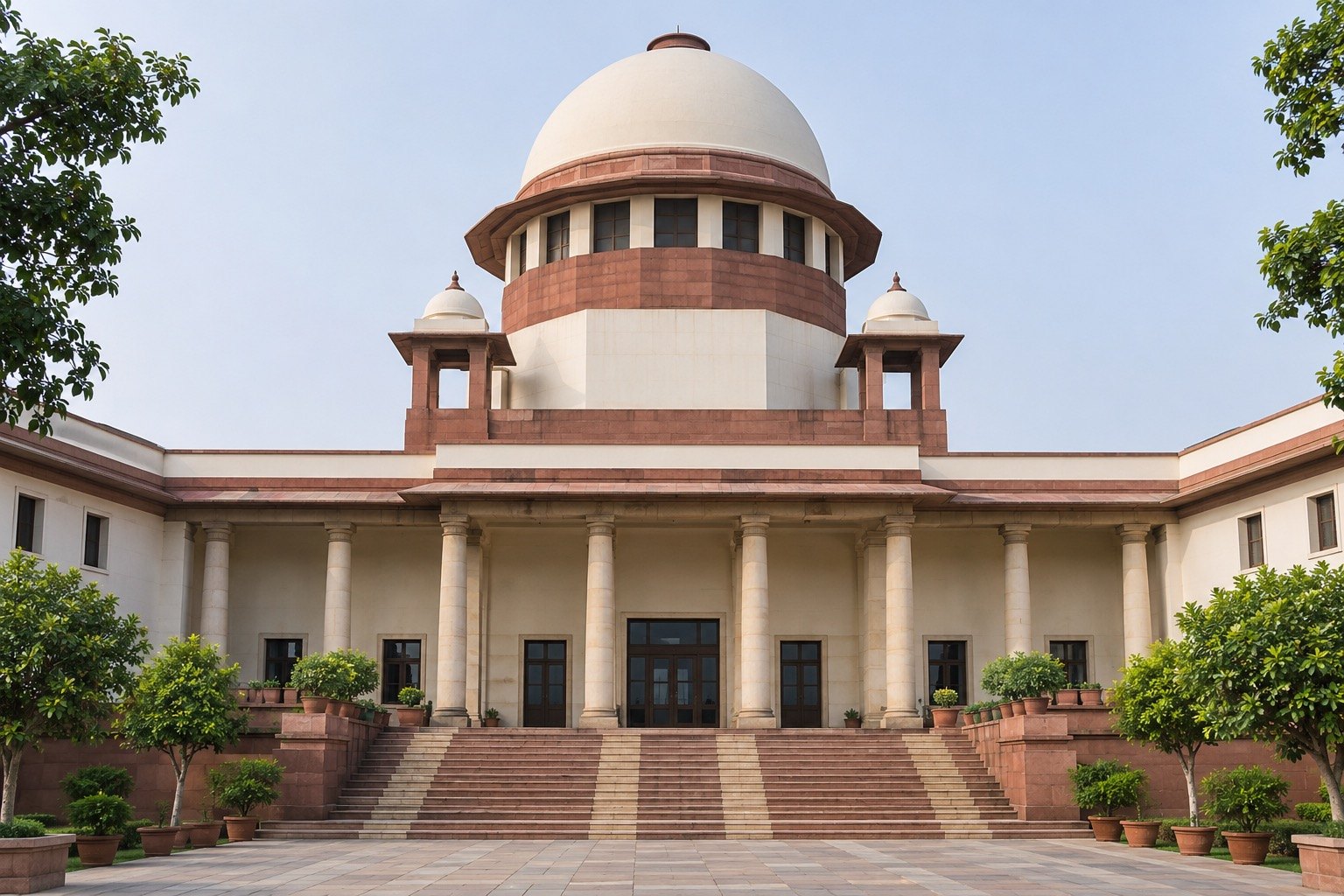
On 26 November 2026, the Supreme Court cancelled the early release of former MP Anand Mohan, a life convict for the 1994 murder of a Gopalganj district magistrate. It set aside Bihar's remission notification as arbitrary and ordered his surrender within a month. Article 21, it held, also protects victims, their families and society.
Syllabus: GS2 · Constitution; Prelims · Polity & Governance; GS2 · Executive & Judiciary
Why this matters for UPSC
GS2 polity: pardon powers under Articles 72 and 161 and remission under the BNSS. Prelims can ask who may remit or commute; Mains, judicial review and victims' rights.
Why it matters
Families of murder victims, and officers who face violence while on duty, now have a firmer claim to be heard before a killer walks free early. A State cannot release a life convict by abruptly rewriting its rules: a change must be reasoned and consistent with what went before, or a court can strike it down. Good conduct in prison still counts, but it cannot be the whole test. The case belongs to a larger debate on how far the executive's mercy may go before it looks like favour. It also asks how to weigh a prisoner's reform against the rights of the people he harmed.
Prelims pointers
- Article 72 lets the President grant pardons, reprieves, respites or remissions, or suspend, remit or commute sentences, including in every court-martial case.
- Article 161 gives a State's Governor the same powers, but for offences against laws within the State's executive power; it has no court-martial clause.
- Under the BNSS, 2023, the appropriate Government is the Central Government for offences under Union-power laws and the State Government in other cases.
- Before deciding a remission plea, the appropriate Government may ask the presiding judge of the convicting or confirming court for an opinion with reasons.
- If a remission condition is broken, the BNSS lets the government cancel the remission; police may then re-arrest the person without warrant.
- Pardon under Articles 72 and 161 is a constitutional power of the President or Governor; BNSS remission is a statutory power of the appropriate Government, limited by Section 475.
Practise a UPSC-style question
With reference to the Bharatiya Nagarik Suraksha Sanhita (BNSS), 2023, consider the following statements:
1. The appropriate Government needs the convict's consent before it commutes a death sentence to life imprisonment.
2. For an offence against a law on a matter within the Union's executive power, the appropriate Government is the Central Government.
3. The appropriate Government may commute a sentence of rigorous imprisonment to simple imprisonment.
Which of the statements given above is/are correct?
- (a) 1 and 2 only
- (b) 2 and 3 only
- (c) 1 and 3 only
- (d) 1, 2 and 3
Show the answer
Answer: (b) 2 and 3 only
Answer: (b) 2 and 3 only. The BNSS needs no consent for commutation and names the Centre for Union-law offences.
Statement 1: incorrect. The BNSS, 2023 lets the appropriate Government commute a death sentence to life imprisonment without the consent of the person sentenced.
Statement 2: correct. The BNSS defines the appropriate Government as the Central Government where the offence is against a law on a Union executive matter, and the State Government otherwise.
Statement 3: correct. Rigorous imprisonment may be commuted to simple imprisonment for any term the court could have imposed.
Eliminate: Statement 1 reverses the consent rule, so every option that keeps statement 1 goes. Out: (a), (c), (d).
Trap: Reversed direction. Mercy sounds like something a convict asks for and agrees to, so a consent rule feels natural, but commutation under the BNSS works without the convict's consent.
Remember: BNSS commutation needs no consent; the Centre acts for Union-law offences, the State for the rest.
More from the 27 November 2026 edition
- MIB tells Netflix to keep Pakistan-origin content off Indian streams Polity
- India's pavilion wins Visitors' Lion at the 61st Venice Biennale National
- BRO track widening at Sheshnag Lake on Amarnath route draws protests Environment
- Supreme Court directs FSSAI to mandate front-of-pack nutrient warnings National
- European Parliament objects to EU listing of two Alang ship recycling yards Environment
- Jharkhand resolution seeks withdrawal of MMDR amendment curbing State mineral taxes Polity
- RBI's half-yearly reserves report: 84% of its gold now held in India Economy
- Election Commission orders Form 8 fix for wrong roll entries after SIR Polity
- IASST Guwahati develops bivalent antivenom against two North-East pit vipers Sci-Tech
- IN-SPACe report finds India's satellite supply chain heavily import-dependent Sci-Tech
- Colombo Security Conclave: six-nation Indian Ocean security grouping meets in Male World & IR
- USTR finds India's excess capacity actionable under Section 301, proposes tariffs Economy