
Jharkhand resolution seeks withdrawal of MMDR amendment curbing State mineral taxes
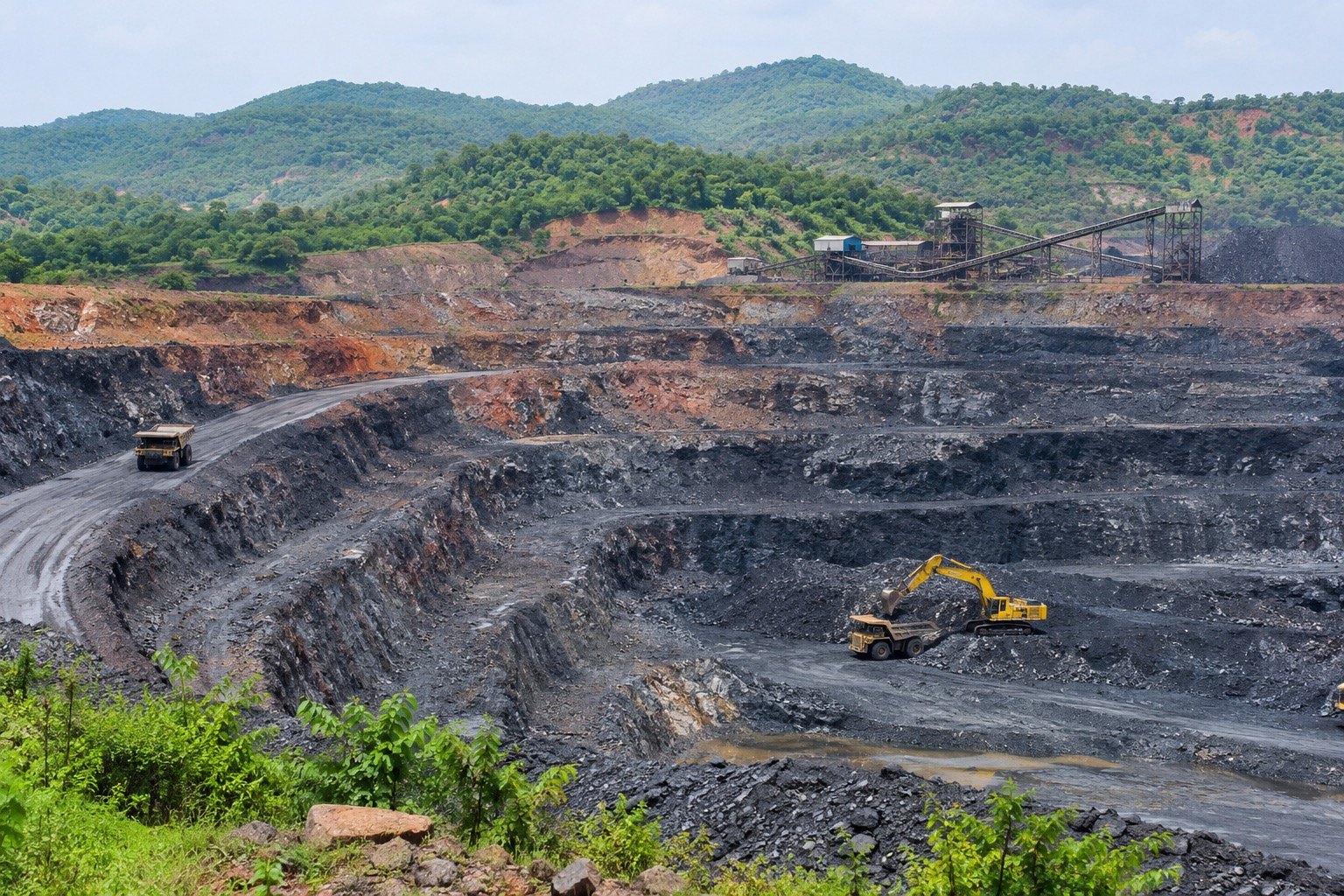
Jharkhand Chief Minister Hemant Soren on 26 November 2026 moved an Assembly resolution against the Mines and Minerals (Development and Regulation) Amendment Act, 2026. It seeks withdrawal of the law, which curbs State taxes on mining. Soren claims the State would lose about ₹13,000 crore a year. If adopted, the resolution goes to the Centre.
Syllabus: GS2 · Constitution; GS3 · Indian Economy & Growth; GS2 · Federalism & Local Government
Why this matters for UPSC
GS2 polity: Centre-State relations and the Seventh Schedule. Prelims can ask which List and Entry gives a taxing power; Mains, fiscal federalism over minerals.
Why it matters
A woman in a Jharkhand village who receives a monthly payment from a State welfare scheme depends on money the State raises, and part of that has come from cess on mining land. If the State can no longer levy it, the government must find the money elsewhere, cut spending or seek more from the Centre. Mining companies and the industries that buy coal, iron ore or limestone see the other side: one predictable set of charges across States, which can keep the price of cement, steel and power from rising. The quarrel is a test of how far Parliament can reach into a State's own taxing field, an old question in India's federal design.
Prelims pointers
- Entry 50 of List II is a State taxing entry with a built-in check: a central law relating to mineral development can condition or even prohibit the tax.
- Entry 49 of List II covers taxes on lands and buildings; under the 2024 ruling, mineral value or royalty can be the measure of such a tax.
- Regulation of mines and mineral development is in Entry 54 of List I and Entry 23 of List II; the State entry is subject to the Union entry.
- The 2024 ruling: Parliament cannot tax mineral rights under Entry 54 of List I, a general entry, nor through its residuary powers.
- India Cement (1990), a seven-judge Bench, held royalty a tax; Kesoram (2004) called that an inadvertent error; the 2024 ruling overruled India Cement.
- Royalty is paid by a mining lessee to the lessor under the lease; a statute letting the government recover it as arrears does not make it a tax.
Practise a UPSC-style question
With reference to the Seventh Schedule of the Constitution, consider the following statements:
1. Entry 50 of List II lets States tax mineral rights, subject to limitations Parliament imposes by a law on mineral development.
2. Taxes on lands and buildings, including mineral-bearing land, fall under Entry 54 of the Union List.
3. Regulation of mines appears in both the Union List and the State List, with the State entry subject to the Union entry.
Which of the statements given above is/are correct?
- (a) 1 and 2 only
- (b) 2 and 3 only
- (c) 1 and 3 only
- (d) 1, 2 and 3
Show the answer
Answer: (c) 1 and 3 only
Answer: (c) 1 and 3 only. Statement 2 moves a State List entry into the Union List.
Statement 1: correct. Entry 50 of List II covers taxes on mineral rights, subject to any limitations Parliament places by a law relating to mineral development.
Statement 2: incorrect. Taxes on lands and buildings sit in Entry 49 of List II; the 2024 ruling placed mineral-bearing land within those lands.
Statement 3: correct. Entry 54 of List I and Entry 23 of List II both cover regulation of mines, and Entry 23 is subject to Entry 54.
Eliminate: statement 2 is wrong because land taxes are a State subject. Out: (a), (b), (d).
Trap: Swapped attribution. The land-tax power is pinned on the Union entry that covers mines regulation.
Remember: Entry 49 and Entry 50 of List II are State taxing entries; Entry 54 of List I is about regulating mines.
More from the 27 November 2026 edition
- MIB tells Netflix to keep Pakistan-origin content off Indian streams Polity
- India's pavilion wins Visitors' Lion at the 61st Venice Biennale National
- BRO track widening at Sheshnag Lake on Amarnath route draws protests Environment
- Supreme Court directs FSSAI to mandate front-of-pack nutrient warnings National
- Supreme Court sets aside Bihar remission notification; Article 21 covers victims Polity
- European Parliament objects to EU listing of two Alang ship recycling yards Environment
- RBI's half-yearly reserves report: 84% of its gold now held in India Economy
- Election Commission orders Form 8 fix for wrong roll entries after SIR Polity
- IASST Guwahati develops bivalent antivenom against two North-East pit vipers Sci-Tech
- IN-SPACe report finds India's satellite supply chain heavily import-dependent Sci-Tech
- Colombo Security Conclave: six-nation Indian Ocean security grouping meets in Male World & IR
- USTR finds India's excess capacity actionable under Section 301, proposes tariffs Economy