
Agasthyamalai: SC bars temporary residents, outsiders from Forest Rights Act claims
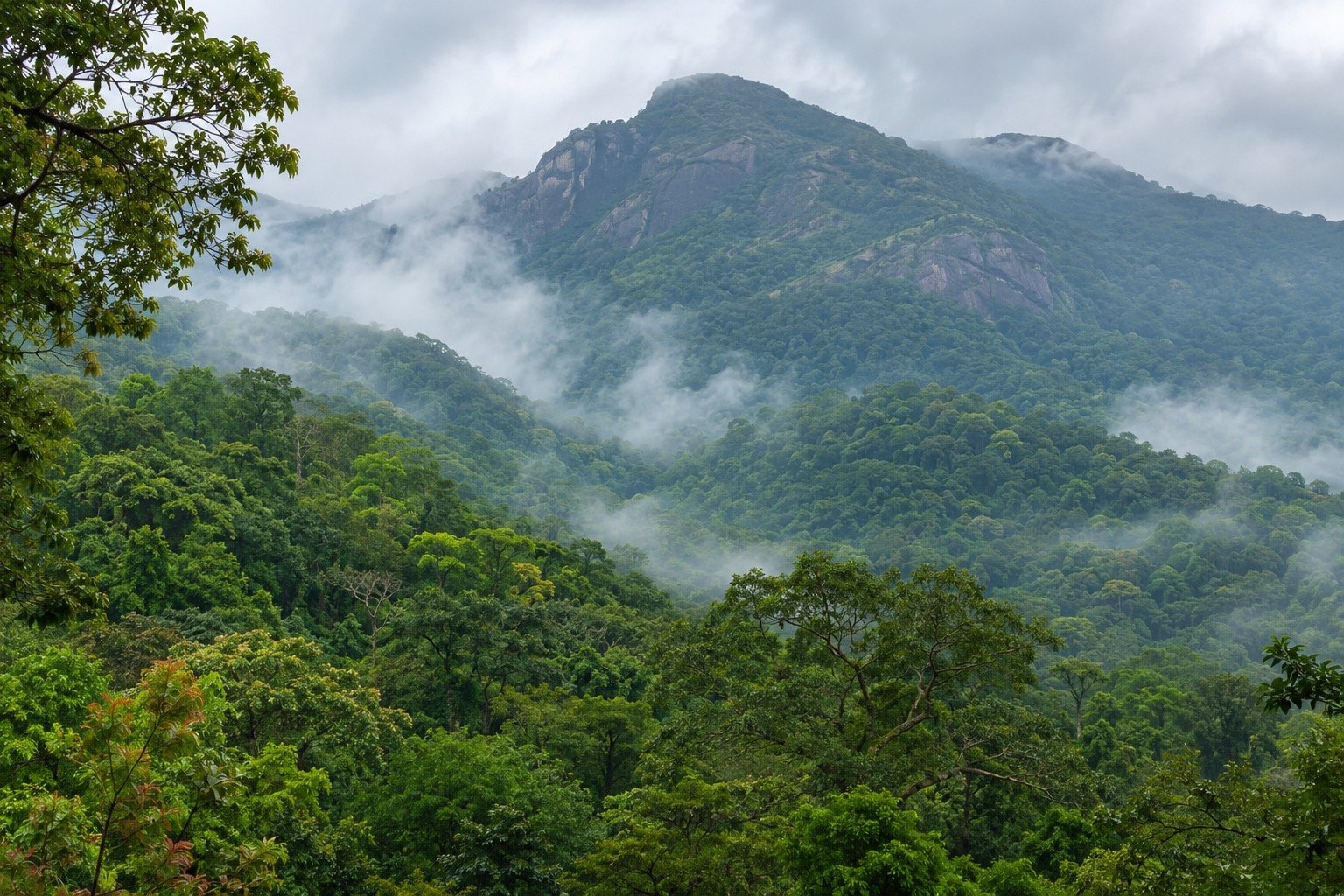
The Supreme Court ruled on 6 November 2026 that silk cotton growers who live temporarily in the Agasthyamalai forests, or wholly outside them, are not forest dwellers under the Forest Rights Act, 2006. Tamil Nadu's own affidavit counts 232 temporary residents and 2,767 outside cultivators. The Court gave the State 30 days to form its remaining gram sabhas.
Syllabus: Prelims · Polity & Governance; Prelims · Environment & Ecology; GS2 · Welfare of Vulnerable Sections
Why this matters for UPSC
GS2 vulnerable sections and GS3 conservation: the Forest Rights Act, 2006. Prelims can ask who counts as a forest dweller and which rights the Act recognises; Mains, rights versus forest conservation.
Why it matters
A tribal family that has long lived on and from the Agasthyamalai forest keeps its chance to claim land and produce under the Forest Rights Act. Someone who lives outside the forest and comes in only to tend a silk cotton plot gets no such claim. The order draws the line where the law draws it: the Act protects people whose home and living are the forest, and it does not shelter people who only farm there. Whether silk cotton counts as forest produce will decide what happens to most of the forest land there. Meanwhile the State's slowness in setting up gram sabhas has kept genuine claimants waiting, and the deadline now forces it to act.
Prelims pointers
- The Forest Rights Act, 2006 defines forest-dwelling Scheduled Tribes as Scheduled Tribe members who primarily reside in and depend on forests, and includes Scheduled Tribe pastoralist communities.
- Forest-dwelling Scheduled Tribes need no fixed residence period; other traditional forest dwellers need three generations, each of 25 years, of primary residence before 13 December 2005.
- Rights under the Act include ownership of and access to minor forest produce, community rights such as nistar, grazing and fishing, and protection of community forest resources.
- The Act also recognises habitat rights of primitive tribal groups and the conversion of forest villages and unsurveyed villages into revenue villages.
- The Act's list of rights excludes the traditional right of hunting or trapping wild animals or extracting any part of their bodies.
- The Agasthyamalai Biosphere Reserve spans Tirunelveli and Kanyakumari in Tamil Nadu and Thiruvananthapuram, Kollam and Pathanamthitta in Kerala; it has core, buffer and transition zones.
- Its Tamil Nadu part includes the Kalakad Mundanthurai Tiger Reserve; its Kerala part covers the Neyyar, Peppara and Shendurney sanctuaries.
Practise a UPSC-style question
With reference to the Forest Rights Act, 2006, consider the following statements:
1. Under the Act, one generation means a period of thirty years.
2. An other traditional forest dweller must have primarily resided in forest land for at least three generations before 13 December 2005.
Which of the statements given above is/are correct?
- (a) 1 only
- (b) 2 only
- (c) Both 1 and 2
- (d) Neither 1 nor 2
Show the answer
Answer: (b) 2 only
Answer: (b) 2 only. The Act counts a generation as 25 years, not thirty.
Statement 1: incorrect. The explanation to the definition in the Forest Rights Act, 2006 fixes a generation at twenty-five years.
Statement 2: correct. The Act requires at least three generations of primary residence before 13 December 2005, along with dependence on forest land.
Eliminate: Statement 1 is surest wrong, as a generation is 25 years. Out: (a), (c).
Eliminate: Statement 2 matches the Act's definition. Out: (d).
Trap: Near-miss figure. Thirty years sounds like a natural span for a generation, which tempts a student who remembers only the three-generation rule.
Remember: Three generations of 25 years each means 75 years before 13 December 2005.
Explainers on this topic
More from the 8 November 2026 edition
- CAQM invokes GRAP Stage III across Delhi-NCR at AQI 382 Environment
- India holds VAJRA-SAT drill for FMD serotype SAT-1 spreading in West Asia National
- Election Commission lets SIR-excluded electors return through enumeration forms Polity
- DRDO flight-tests quasi-ballistic missile Pralay in user trials off Odisha Defence
- Forest Advisory Committee recommends in-principle forest clearance for 1,000-MW Naying project Environment
- India and EU conclude talks on India's association with Horizon Europe World & IR