
Election Commission lets SIR-excluded electors return through enumeration forms
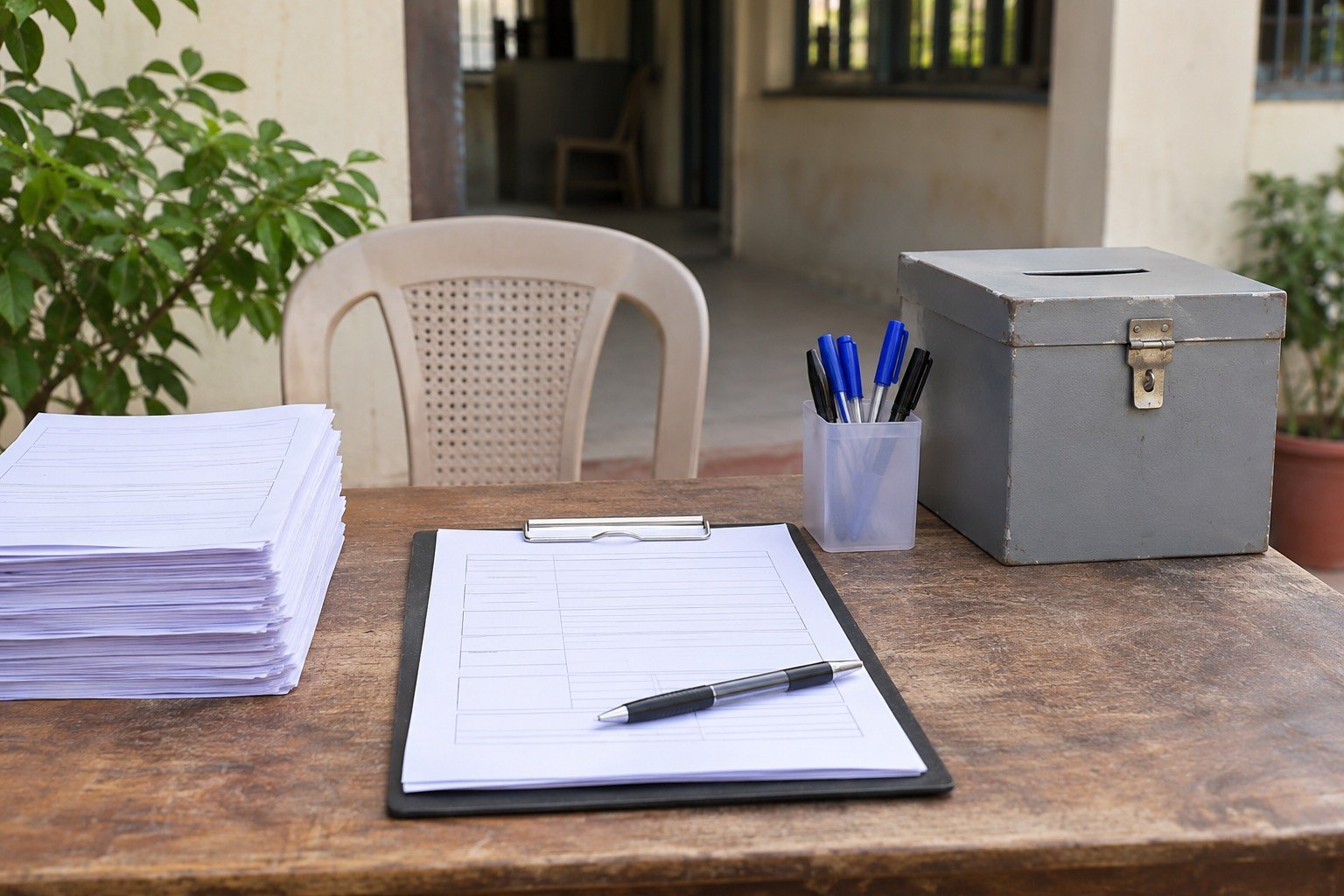
The Election Commission of India on 6 November 2026 let electors dropped from Special Intensive Revision draft rolls return through a fresh enumeration form instead of Form 6. They had been marked Absent, Shifted, Dead or Duplicate (ASDD). The order covers Delhi and six States. Restored electors get back their old EPIC numbers.
Syllabus: Prelims · Polity & Governance; GS2 · Representation of the People Act; GS2 · Constitutional Bodies
Why this matters for UPSC
GS2 polity: the Election Commission's powers over electoral rolls under Article 324 and the RP Act, 1950. Prelims can ask about Forms 6 and 8 and roll officers; Mains, balancing roll purity with inclusion.
Why it matters
A tenant who missed the BLO's visits and found her name gone from the draft roll no longer has to apply as if she were a new voter. She can file the same enumeration form her neighbours filled, explain the delay, and get her old identity card number back. That keeps her record as an existing voter and spares her a declaration that sat uneasily with her earlier registration. For the election machinery, the change narrows the gap between a clean roll and an inclusive one. A revision meant to remove dead and duplicate entries should not shut out living, eligible citizens because a form came back late. A vote begins with a name on the roll.
Prelims pointers
- Article 324 of the Constitution and the Representation of the People Act, 1950 empower the ECI to prepare and revise rolls; it orders revision before every election or as needed.
- Form 6 is for fresh enrolment, including a new elector turning 18 by the qualifying date; Form 8 is for a change of residence.
- In an SIR, no document goes with the enumeration form; documents are sought only on an ERO's notice, and giving Aadhaar is optional.
- Delhi's previous intensive revision was held in 2002; electors link themselves, a parent or a close relative to that roll.
- The toll-free Voter Helpline number is 1950.
Practise a UPSC-style question
With reference to the preparation of electoral rolls in India, consider the following statements:
1. Under Article 324, the power to prepare and revise electoral rolls rests with the Chief Electoral Officer of each State.
2. The Representation of the People Act, 1950 bars a person from being registered in more than one constituency.
Which of the statements given above is/are correct?
- (a) 1 only
- (b) 2 only
- (c) Both 1 and 2
- (d) Neither 1 nor 2
Show the answer
Answer: (b) 2 only
Answer: (b) 2 only. The power sits with the Election Commission, and the 1950 Act bars double registration.
Statement 1: incorrect. Article 324 and the Representation of the People Act, 1950 empower the Election Commission of India to prepare and revise rolls; CEOs work under it.
Statement 2: correct. The Representation of the People Act, 1950 bars registration in more than one constituency, or more than once in the same constituency.
Eliminate: statement 2 states the double-registration bar, which is correct. Out: (a), (d).
Eliminate: statement 1 names the CEO, not the Commission. Out: (c).
Trap: Swapped attribution. The CEO does supervise rolls in a State, so pinning the Article 324 power on that office sounds right but names the wrong authority.
Remember: Article 324 vests roll preparation in the Election Commission; CEOs act for it.
More from the 8 November 2026 edition
- CAQM invokes GRAP Stage III across Delhi-NCR at AQI 382 Environment
- India holds VAJRA-SAT drill for FMD serotype SAT-1 spreading in West Asia National
- DRDO flight-tests quasi-ballistic missile Pralay in user trials off Odisha Defence
- Forest Advisory Committee recommends in-principle forest clearance for 1,000-MW Naying project Environment
- Agasthyamalai: SC bars temporary residents, outsiders from Forest Rights Act claims Environment
- India and EU conclude talks on India's association with Horizon Europe World & IR