
DRDO flight-tests quasi-ballistic missile Pralay in user trials off Odisha
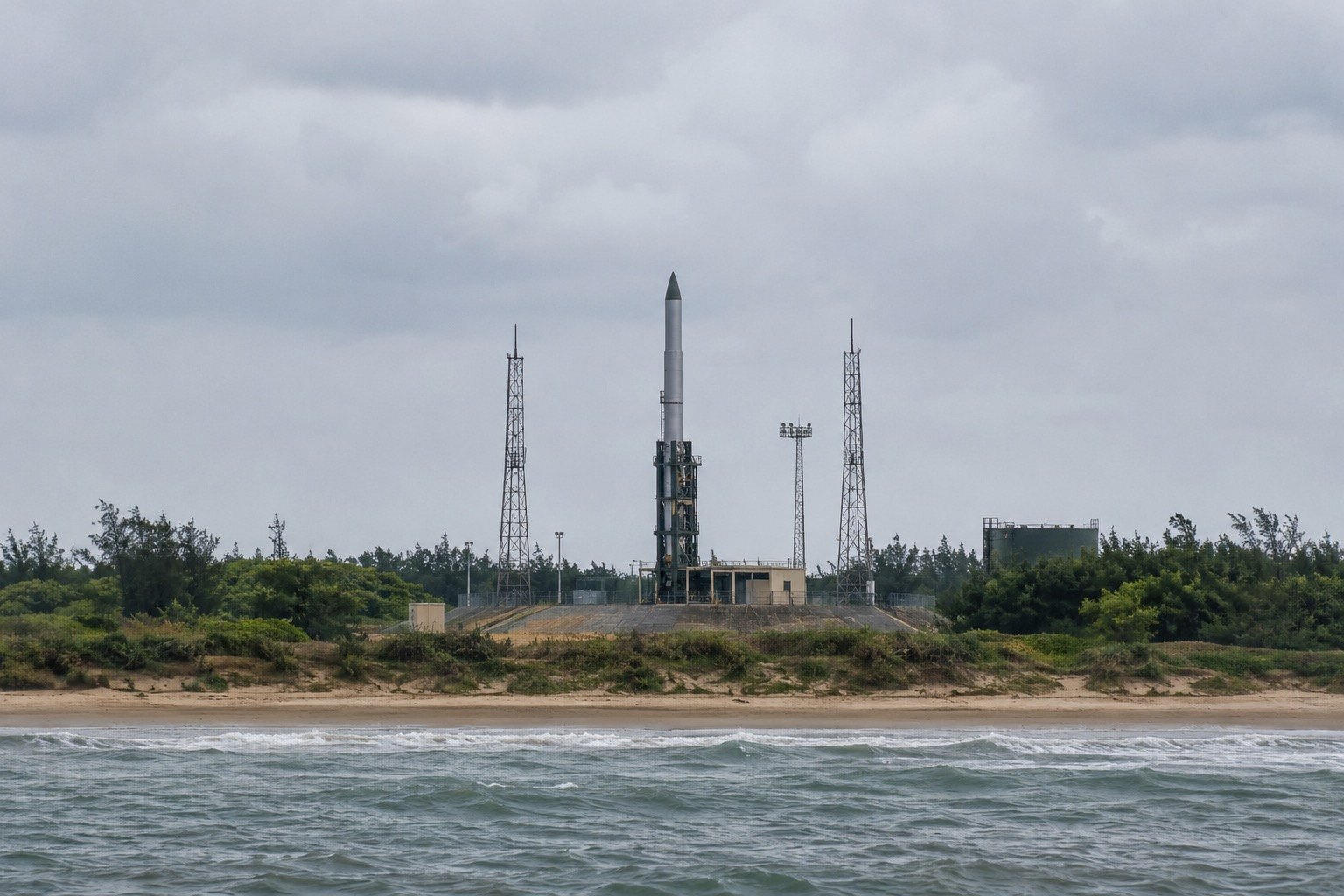
The Defence Research and Development Organisation (DRDO) flight-tested Pralay, a quasi-ballistic missile, on 5 November 2026 from Dr APJ Abdul Kalam Island off the coast of Odisha, in user evaluation trials. Range instruments of the Integrated Test Range, Chandipur, confirmed all objectives were met. Research Centre Imarat, Hyderabad, developed the missile and Bharat Dynamics Limited produced it.
Syllabus: Prelims · Current Affairs & IR; GS3 · Science & Technology; GS3 · Indian Achievements in S&T
Why this matters for UPSC
GS3 science and technology: indigenous defence technology and missile systems. Prelims can ask how quasi-ballistic, ballistic and cruise missiles differ, and who built Pralay.
Why it matters
An Army or Air Force commander planning a strike on a distant target needs a weapon that arrives fast and is hard to stop. A missile that stays low and can shift its path gives that option, since enemy radars and interceptors find such a flight harder to read. Because Indian laboratories designed it and Indian firms build it, repairs, spares and later upgrades do not wait on a foreign supplier. Orders also keep production lines and smaller suppliers busy at home. Once the forces take it into service, an adversary must plan for strikes its defences may struggle to counter. The larger issue is self-reliance in defence technology and the time it takes to move a weapon from laboratory to unit.
Prelims pointers
- A ballistic missile burns its motor only in the boost phase and then follows an unpowered, gravity-shaped arc, much of it at great height.
- A cruise missile stays powered through its flight, usually by an air-breathing jet engine, and flies within the atmosphere, often low.
- Look-alike: a quasi-ballistic missile uses a rocket motor like a ballistic missile, but a cruise missile, not it, keeps an engine running all through flight.
- A solid-propellant motor can be stored fuelled and fired at short notice; a liquid-fuelled motor usually needs loading before launch.
- A surface-to-surface missile is fired from land or sea at targets on the surface; a surface-to-air missile hits aircraft or incoming missiles.
- DRDO works under the Department of Defence Research and Development, Ministry of Defence; one officer is that department's Secretary and DRDO's Chairman.
Practise a UPSC-style question
With reference to missile types, consider the following statements:
1. A cruise missile burns a rocket motor only in its boost phase and then glides above the atmosphere.
2. A ballistic missile is powered early in flight and then follows an arc shaped largely by gravity.
Which of the statements given above is/are correct?
- (a) 1 only
- (b) 2 only
- (c) Both 1 and 2
- (d) Neither 1 nor 2
Show the answer
Answer: (b) 2 only
Answer: (b) 2 only. Only the description of the ballistic missile is right.
Statement 1: incorrect. A cruise missile stays powered through its flight, usually by a jet engine, and flies inside the atmosphere.
Statement 2: correct. A ballistic missile's motor burns only in the boost phase; the rest of the flight is an unpowered, gravity-shaped arc.
Eliminate: Statement 1 gives a cruise missile the ballistic missile's flight. Out: (a), (c).
Eliminate: Statement 2 is the textbook ballistic path. Out: (d).
Trap: Look-alike names. The first statement pins the ballistic flight profile on the cruise missile, so a student who knows only the words can be caught.
Remember: Ballistic: powered briefly, then a gravity arc. Cruise: powered all the way, low in the atmosphere.
More from the 8 November 2026 edition
- CAQM invokes GRAP Stage III across Delhi-NCR at AQI 382 Environment
- India holds VAJRA-SAT drill for FMD serotype SAT-1 spreading in West Asia National
- Election Commission lets SIR-excluded electors return through enumeration forms Polity
- Forest Advisory Committee recommends in-principle forest clearance for 1,000-MW Naying project Environment
- Agasthyamalai: SC bars temporary residents, outsiders from Forest Rights Act claims Environment
- India and EU conclude talks on India's association with Horizon Europe World & IR