
Supreme Court: OBC creamy layer income ruling will not apply retrospectively
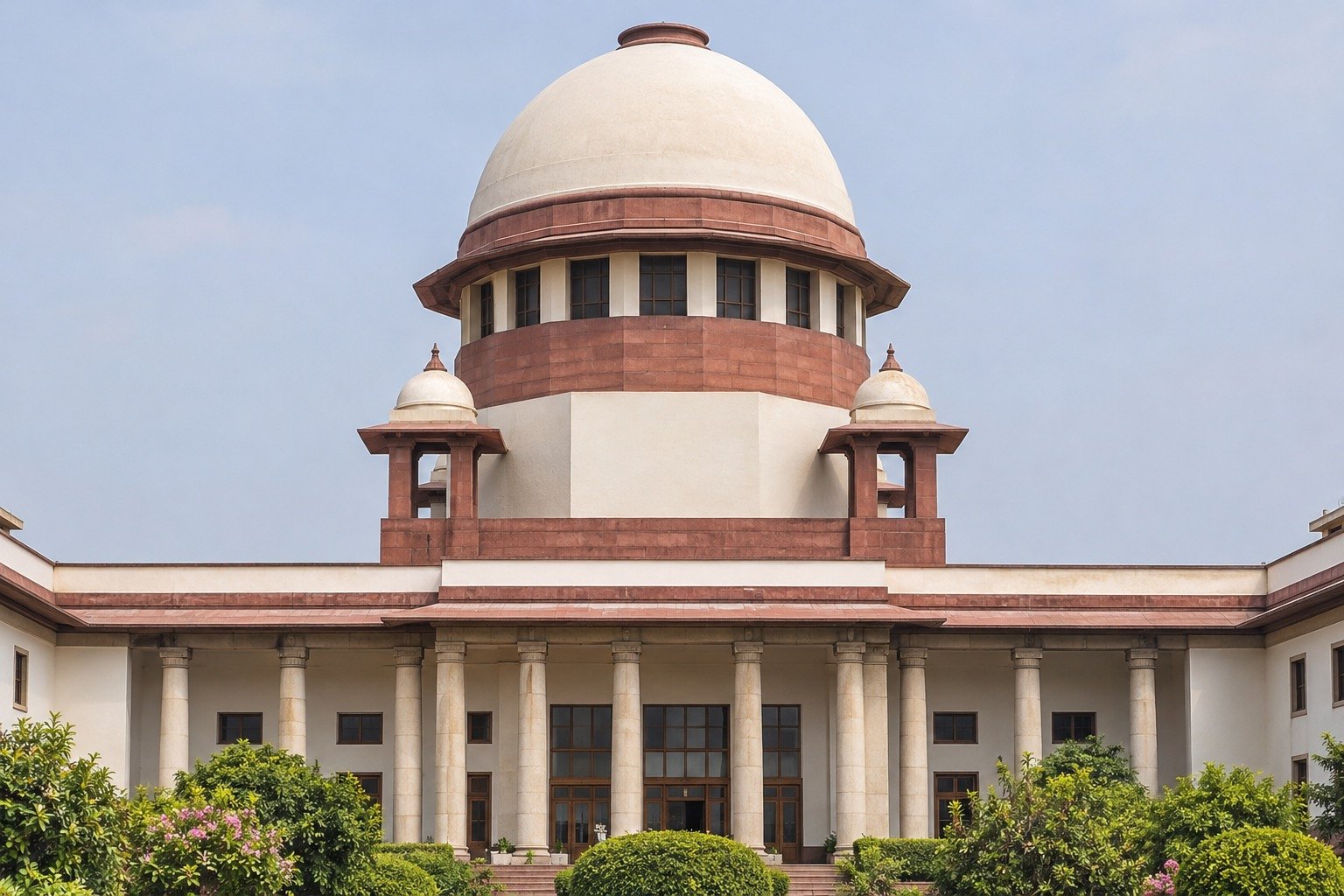
The Supreme Court held on 6 November 2026 that its March 2026 OBC creamy layer ruling will not apply retrospectively. That ruling keeps parents' salary and agricultural income out of the creamy layer income/wealth test. The Court refused the Centre two more years to act, and kept the 2025 batch under the ruling.
Syllabus: GS2 · Constitution; Prelims · Polity & Governance; GS2 · Executive & Judiciary
Why this matters for UPSC
GS2 polity and social justice: OBC reservation under Article 16(4) and the creamy layer test. Prelims can ask what Indra Sawhney held; Mains, whether income or status should define the creamy layer.
Why it matters
A candidate whose father was a senior engineer at Neyveli Lignite Corporation, a public sector company, was denied an OBC seat because the father's salary crossed the income limit. Children of similarly placed government servants were judged by their parents' rank, not their pay. The March ruling ends that unequal treatment, and the November order settles its reach. The Centre had sought prospective effect so that past recruitment would stay undisturbed; the Court held that the ruling will not apply retrospectively, yet the 2025 batch is allotted services under the corrected reading. The larger question is how India decides who has moved out of social backwardness: by a parent's standing in society and service, or by income alone.
Prelims pointers
- Article 16(3) lets Parliament, by law, prescribe a residence requirement for certain classes of employment under a State or Union territory.
- Article 15(4), inserted by the First Constitutional Amendment, 1951, enables special provisions for socially and educationally backward classes; Article 16(4) deals with reservation in public posts.
- Indra Sawhney v. Union of India (1992) held that total reservation should ordinarily not exceed 50%, save in extraordinary circumstances, and that backwardness under Article 16(4) is primarily social.
- The Mandal Commission drew on the 1931 Census, the last caste-based census, to estimate the OBC share of the population.
- Article 142 also lets the Supreme Court make orders to secure any person's attendance, the production of documents, or the punishment of its own contempt.
- A classification is valid under Article 14 only if it rests on an intelligible differentia and has a rational nexus with the object sought.
- Article 46, a Directive Principle, asks the State to promote with special care the educational and economic interests of the weaker sections.
Practise a UPSC-style question
With reference to the Constitution of India, consider the following statements:
1. Article 16(4) was inserted by the First Constitutional Amendment, 1951 to allow reservation in public posts.
2. Article 15(4) enables the State to make special provisions for socially and educationally backward classes of citizens.
3. Article 16(3) lets Parliament prescribe a residence requirement for certain classes of employment under a State or Union territory.
Which of the statements given above is/are correct?
- (a) 1 and 2 only
- (b) 2 and 3 only
- (c) 1 and 3 only
- (d) 1, 2 and 3
Show the answer
Answer: (b) 2 and 3 only
Answer: (b) 2 and 3 only. Article 15(4), not Article 16(4), came with the First Amendment.
Statement 1: incorrect. The First Constitutional Amendment, 1951 inserted Article 15(4); Article 16(4) on reservation of posts is a different clause.
Statement 2: correct. Article 15(4) allows special provisions for the advancement of socially and educationally backward classes, SCs and STs.
Statement 3: correct. Article 16(3) lets Parliament, by law, prescribe a residence requirement for employment under a State or Union territory.
Eliminate: Statement 1 is wrong, as the 1951 Amendment added Article 15(4). Out: (a), (c), (d).
Trap: Swapped attribution. The First Amendment is pinned on Article 16(4), the look-alike clause, when it added Article 15(4).
Remember: Article 15(4) is special provisions (1951 Amendment); Article 16(4) is reservation of posts.
More from the 7 November 2026 edition
- Centre orders weekly rice stock disclosure, doubles OMSS rice sale target Economy
- MeitY approves 12 more ECMS projects; approved investment reaches Rs 77,051 crore Economy
- NHAI standardises toll plaza design for barrier-less MLFF tolling Economy
- Supreme Court settles Himachal's Bhakra-Beas power dues with Punjab, Haryana Polity
- UNESCO's Memory of the World Asia-Pacific Register adds Mahabharata, Arthashastra, Rajatarangini National
- CAQM serves show-cause notices on Punjab DCs and SSPs over stubble burning Environment
- Kerala notifies Calicut University garden as Biodiversity Heritage Site Environment
- CERT-In names AI-assisted 'CRAFTY FALCON' group attacking financial firms' payment APIs Sci-Tech
- Home Ministry exemption order now requires visas for six persecuted minorities Polity