
MeitY approves 12 more ECMS projects; approved investment reaches Rs 77,051 crore
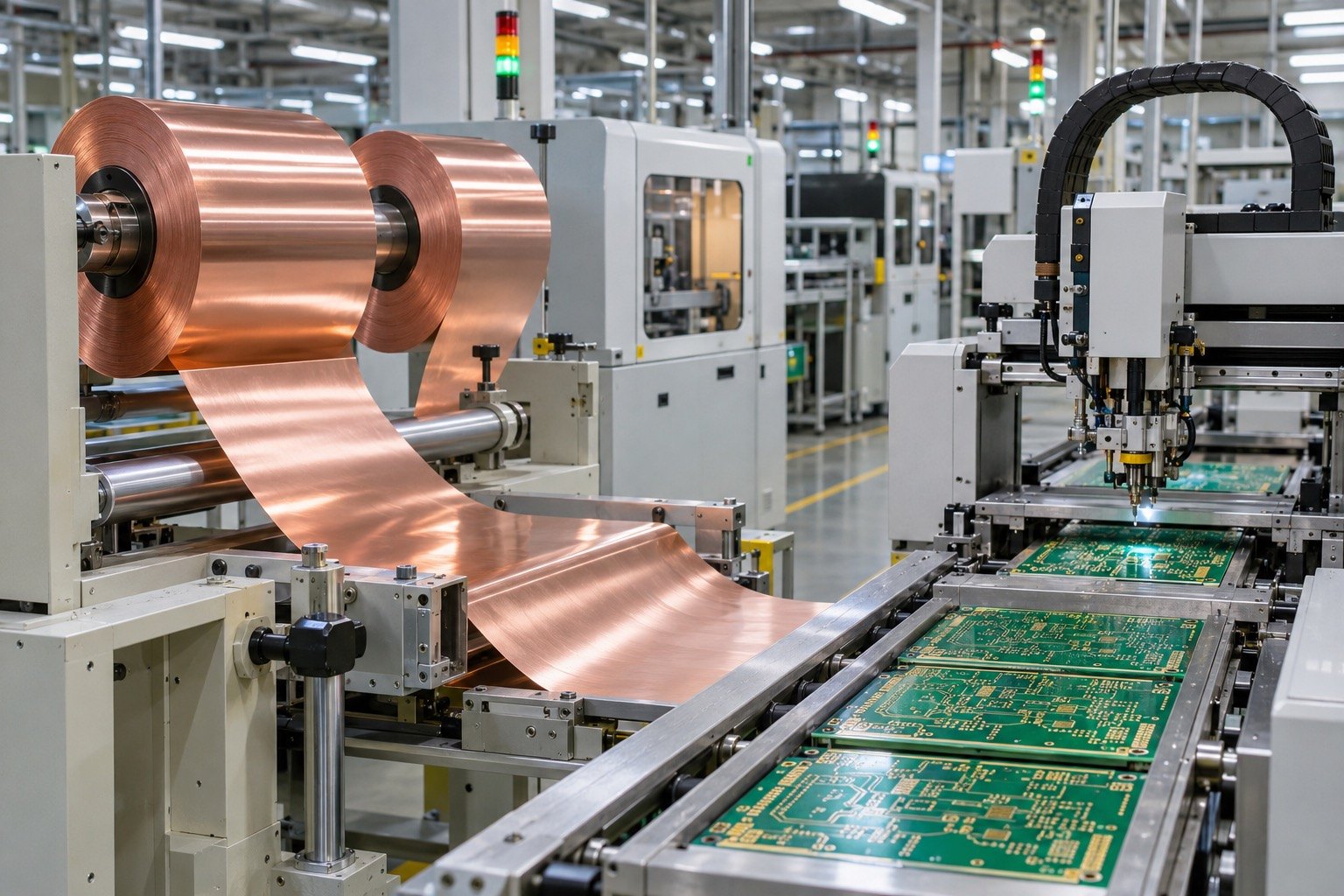
The Ministry of Electronics and Information Technology (MeitY) approved 12 more projects worth Rs 7,503 crore under the Electronics Component Manufacturing Scheme (ECMS) on 6 November 2026. They make inputs such as copper foil, battery materials, circuit boards and factory equipment. Per MeitY, approved investment across the scheme has reached Rs 77,051 crore.
Syllabus: GS3 · Indian Economy & Growth; Prelims · Current Affairs & IR; GS3 · Liberalisation & Industry
Why this matters for UPSC
GS3 economy: industrial policy and electronics manufacturing. Prelims can ask ECMS's ministry, outlay and incentive types; Mains, moving from assembly to components.
Why it matters
A worker on a phone assembly line in India handles a device whose circuit boards, battery materials and even factory machines were mostly bought abroad. Much of the value of each sale therefore leaves the country. When those parts are made in Indian plants, more of that value and more skilled jobs stay at home. Local suppliers also protect Indian assemblers when a foreign supplier is hit by export curbs, war or a shipping shock. Because support is paid mainly on sales, public money reaches only firms that actually build and run their plants. The real test now is execution: approvals turn into jobs only when factories open on time.
Prelims pointers
- ECMS is run by the Ministry of Electronics and Information Technology; the Union Cabinet approved it in March 2025 with an outlay of Rs 22,919 crore.
- ECMS has a tenure of six years, with a one-year gestation period.
- ECMS gives display and camera module sub-assemblies a turnover-linked incentive, flexible and HDI PCBs a hybrid incentive, and capital goods a capex incentive.
- Lithium-ion cells under ECMS are only those for digital applications; cells for energy storage and mobility are excluded from the scheme.
- Under ECMS, a part of the incentive is released only when a unit meets its employment target.
- Semicon 2.0, the second phase of the India Semiconductor Mission (ISM), backs the chip ecosystem with a Rs 1,27,500 crore outlay; ECMS separately backs electronic components and sub-assemblies.
Practise a UPSC-style question
With reference to the Electronics Component Manufacturing Scheme (ECMS), consider the following statements:
1. It is administered by the Ministry of Electronics and Information Technology.
2. A part of the incentive under it is linked to achieving employment targets.
3. Capital goods used in electronics manufacturing receive a capex incentive under it.
Which of the statements given above is/are correct?
- (a) 1 and 2 only
- (b) 2 and 3 only
- (c) 1 and 3 only
- (d) 1, 2 and 3
Show the answer
Answer: (d) 1, 2 and 3
Answer: (d) 1, 2 and 3. All three statements match the scheme as the Union Cabinet approved it in March 2025.
Statement 1: correct. ECMS is run by the Ministry of Electronics and Information Technology (MeitY), which approves projects tranche by tranche.
Statement 2: correct. The Cabinet's 2025 design links the payout of a part of the incentive to meeting employment targets.
Statement 3: correct. Capital goods for electronics manufacturing, with their sub-assemblies and parts, fall in the segment that gets a capex incentive.
Eliminate: statement 1 is surest, so options without it go. Out: (b).
Eliminate: statements 2 and 3 both hold, so only the code with all three stands. Out: (a), (c).
Trap: Swapped attribution. A student may credit a manufacturing scheme to the Commerce Ministry or DPIIT; ECMS belongs to MeitY.
Remember: ECMS is MeitY's; jobs-linked payout; capex incentive for capital goods.
More from the 7 November 2026 edition
- Centre orders weekly rice stock disclosure, doubles OMSS rice sale target Economy
- NHAI standardises toll plaza design for barrier-less MLFF tolling Economy
- Supreme Court settles Himachal's Bhakra-Beas power dues with Punjab, Haryana Polity
- Supreme Court: OBC creamy layer income ruling will not apply retrospectively Polity
- UNESCO's Memory of the World Asia-Pacific Register adds Mahabharata, Arthashastra, Rajatarangini National
- CAQM serves show-cause notices on Punjab DCs and SSPs over stubble burning Environment
- Kerala notifies Calicut University garden as Biodiversity Heritage Site Environment
- CERT-In names AI-assisted 'CRAFTY FALCON' group attacking financial firms' payment APIs Sci-Tech
- Home Ministry exemption order now requires visas for six persecuted minorities Polity