
UNESCO's Memory of the World Asia-Pacific Register adds Mahabharata, Arthashastra, Rajatarangini
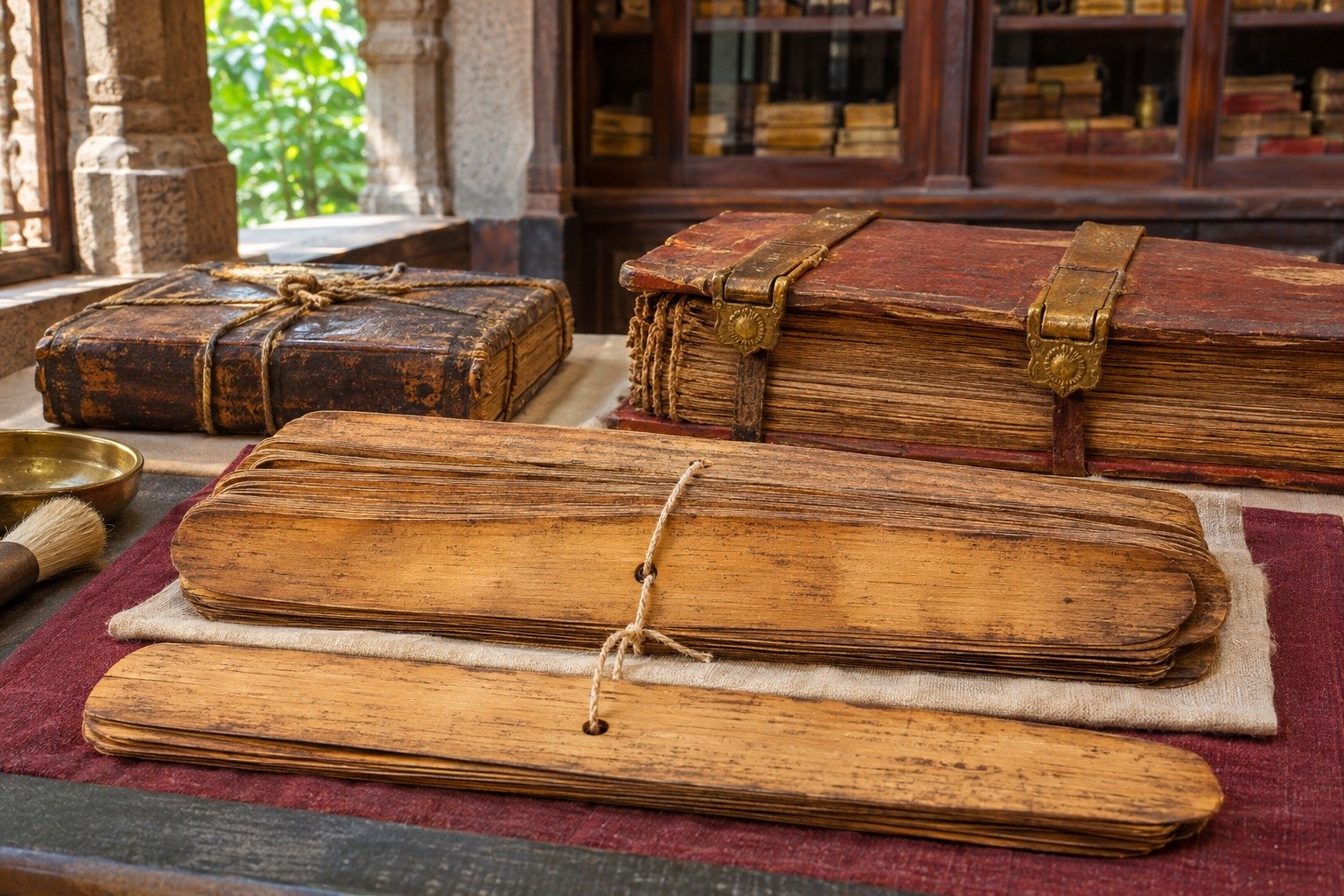
Manuscripts of the Mahabharata, Kautilya's Arthashastra and Kalhana's Rajatarangini have entered the Asia-Pacific Regional Register of UNESCO's Memory of the World (MoW) Programme, it was announced on 5 November 2026. The decision came at the register's 11th session in Jakarta, Indonesia. India now has six entries on this regional register, officials said.
Syllabus: GS1 · Art & Culture; Prelims · Current Affairs & IR; GS2 · International Institutions
Why this matters for UPSC
GS1 Indian culture: ancient literature and UNESCO's Memory of the World Programme. Prelims can ask which register holds which text; Mains, how to safeguard manuscript heritage.
Why it matters
A scholar studying the history of Kashmir depends on old copies of the Rajatarangini surviving in usable shape. Birch bark and palm leaf are fragile, and a document kept in one library can be lost for good to damp, insects or careless handling. A listing on a UNESCO register puts such a document on an international roll of heritage that the programme seeks to preserve, open to wider study and make better known. That raises the stakes for the libraries in Pune, Mysuru and Srinagar that look after these items. It also shows India turning to written records, beside monuments and living traditions, to present its knowledge traditions abroad.
Prelims pointers
- UNESCO's Director-General convenes the International Advisory Committee in ordinary session every two years; the committee also revises the programme's General Guidelines.
- UNESCO ties documentary heritage to all seventeen Sustainable Development Goals; its MoW vision holds that such heritage belongs to all and should stay permanently accessible.
- Additions to the MoW International Register are approved by the International Advisory Committee; entries on the Asia-Pacific Regional Register are approved by MOWCAP.
- The Gita and the Natyashastra are on the MoW International Register (2025); the Ramcharitmanas, Panchatantra and Sahrdayaloka-Locana are on the Asia-Pacific Regional Register (2024).
- The Asia-Pacific Regional Register calls nominations every two years, normally in even-numbered years, alternating with the International Register.
- The 2015 UNESCO Recommendation concerning the preservation of, and access to, documentary heritage, including in digital form, is the programme's main normative instrument.
- Anandavardhana's Sahrdayaloka sets out dhvani, or evoked meaning, as the inner secret of poetry; Tulsidas's Ramcharitmanas retells the Ramayana.
Practise a UPSC-style question
With reference to UNESCO's Memory of the World Programme, consider the following statements:
1. UNESCO launched the Memory of the World Programme in 1972 to protect documentary heritage.
2. Additions to the Memory of the World International Register are approved by the International Advisory Committee.
3. The Memory of the World Committee for Asia and the Pacific was set up in 2008.
Which of the statements given above is/are correct?
- (a) 1 only
- (b) 2 only
- (c) 3 only
- (d) 1, 2 and 3
Show the answer
Answer: (b) 2 only
Answer: (b) 2 only. Only the statement on the International Advisory Committee's role is right.
Statement 1: incorrect. UNESCO launched the Memory of the World Programme in 1992, not 1972.
Statement 2: correct. The International Advisory Committee advises UNESCO on the programme and approves additions to, or deletions from, the International Register.
Statement 3: incorrect. MOWCAP was set up in 1998; 2008 is when its Asia-Pacific Regional Register began.
Eliminate: Statement 3 is wrong, as MOWCAP dates from 1998. Out: (c), (d).
Eliminate: Statement 1 is wrong, as the programme began in 1992. Out: (a).
Trap: Near-miss figure. The years 1972 and 2008 are real-sounding dates placed on the wrong event, and 2008 is the register's start, not the committee's.
Remember: MoW Programme 1992; MOWCAP 1998; Asia-Pacific Regional Register 2008.
More from the 7 November 2026 edition
- Centre orders weekly rice stock disclosure, doubles OMSS rice sale target Economy
- MeitY approves 12 more ECMS projects; approved investment reaches Rs 77,051 crore Economy
- NHAI standardises toll plaza design for barrier-less MLFF tolling Economy
- Supreme Court settles Himachal's Bhakra-Beas power dues with Punjab, Haryana Polity
- Supreme Court: OBC creamy layer income ruling will not apply retrospectively Polity
- CAQM serves show-cause notices on Punjab DCs and SSPs over stubble burning Environment
- Kerala notifies Calicut University garden as Biodiversity Heritage Site Environment
- CERT-In names AI-assisted 'CRAFTY FALCON' group attacking financial firms' payment APIs Sci-Tech
- Home Ministry exemption order now requires visas for six persecuted minorities Polity