
PLI scheme for textiles reopens Round 4 with lower turnover bar
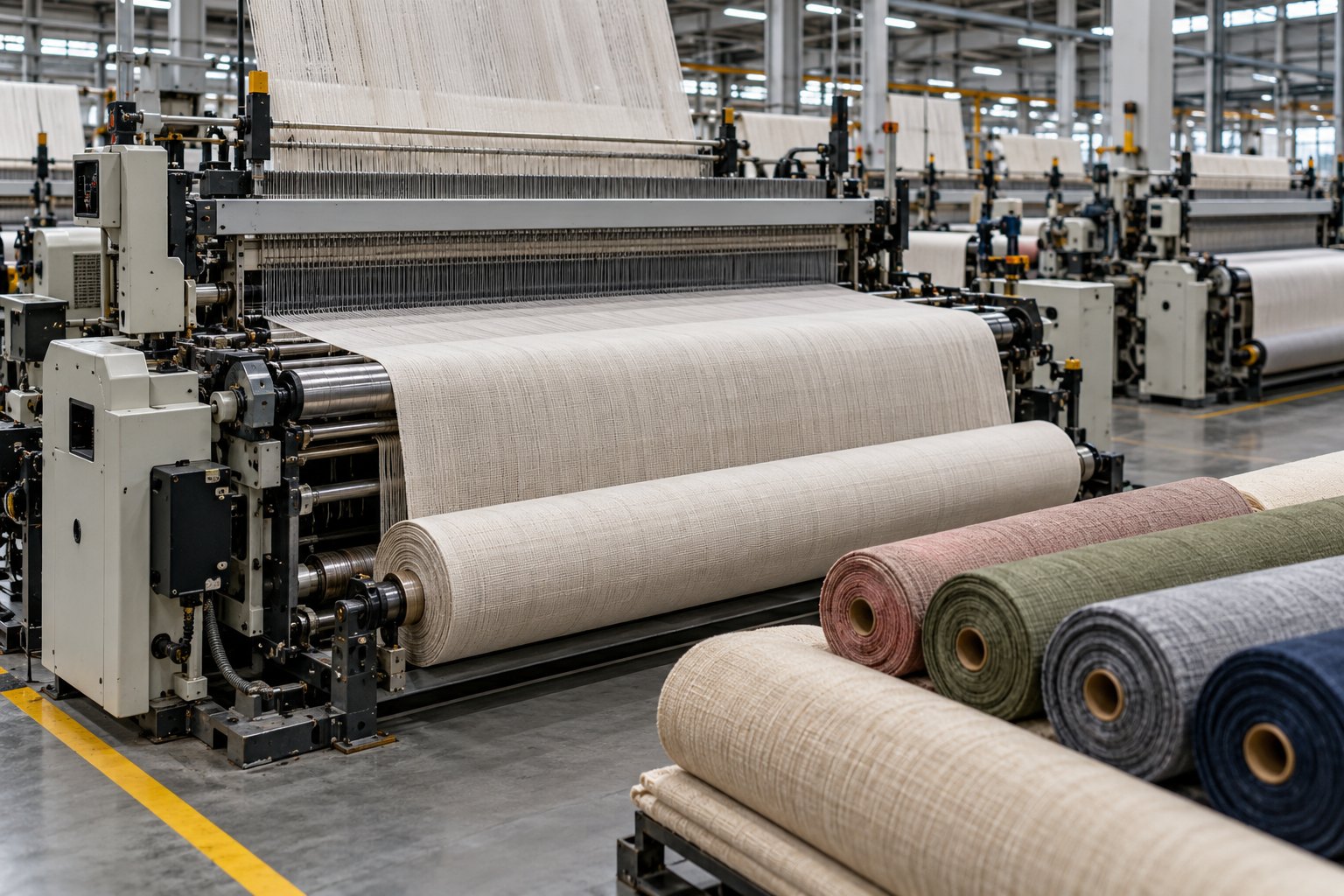
The Ministry of Textiles announced on 28 October 2026 that the Production Linked Incentive (PLI) Scheme for Textiles will take Round 4 applications. Part 2 applicants now qualify with half the earlier turnover: ₹100 crore instead of ₹200 crore. Round 4 approvals get a tenure up to Financial Year 2033-34. The portal opens on 1 November.
Syllabus: GS3 · Indian Economy & Growth; Prelims · Current Affairs & IR; GS3 · Liberalisation & Industry
Why this matters for UPSC
GS3, Indian economy and industrial policy: Prelims can ask the PLI Scheme for Textiles' ministry, segments, outlay and investment parts; Mains, whether production-linked incentives build scale in man-made fibre and technical textiles.
Why it matters
A mid-sized garment or fabric maker that was too small to qualify before can now apply for the government's output-linked incentive. If more such firms invest in synthetic fabrics and industrial textiles, more factories open, and textile work, which employs many women, moves into the formal economy. The longer window matters because a new plant takes years to build and reach full production; a short scheme can end before the investment pays off. The larger question is whether India can grow its share of the global market for synthetic and technical textiles, where it has lagged behind its strength in cotton.
Prelims pointers
- The PLI Scheme for Textiles has a budgetary outlay of ₹10,683 crore and is implemented by the Ministry of Textiles.
- Its three product groups are garments of MMF, fabrics of MMF, and ten technical-textile products.
- Part 1 needs at least ₹300 crore invested in plant, machinery, equipment and civil works; land and administrative buildings do not count.
- Part 2 was framed in 2021 with a lower minimum investment of ₹100 crore.
- Investment in Aspirational Districts, smaller Tier 3 and Tier 4 towns and villages gets priority.
- The 13-sector PLI package announced in the Union Budget 2021-22 carried a total outlay of ₹1.97 lakh crore.
Practise a UPSC-style question
With reference to the Production Linked Incentive (PLI) Scheme for Textiles, consider the following statements:
1. It covers MMF apparel, MMF fabrics and cotton yarn spun in India.
2. It is implemented by the Ministry of Textiles.
Which of the statements given above is/are correct?
- (a) 1 only
- (b) 2 only
- (c) Both 1 and 2
- (d) Neither 1 nor 2
Show the answer
Answer: (b) 2 only
Answer: (b) 2 only. The scheme covers MMF products and technical textiles, not cotton yarn, and the Ministry of Textiles runs it.
Statement 1: incorrect. Its product groups are MMF apparel, MMF fabrics and ten technical-textile segments; cotton yarn is not one of its product groups.
Statement 2: correct. The Ministry of Textiles notified the scheme in September 2021 and runs its application rounds, including Round 4 in 2026.
Eliminate: statement 1 is wrong because the third group is technical textiles, not cotton yarn. Out: (a), (c).
Eliminate: statement 2 is right, as the Ministry of Textiles runs the scheme. Out: (d).
Trap: Look-alike names. Cotton is India's best-known textile, so a student may assume the scheme backs it too; the scheme instead targets man-made fibre and technical textiles.
Remember: PLI for textiles: MMF apparel, MMF fabrics, technical textiles; Ministry of Textiles.
More from the 30 October 2026 edition
- US Freedom of Navigation report: three operations against India's maritime claims World & IR
- Narmada Control Authority's Review Committee adopts Sardar Sarovar dues settlement Polity
- Supreme Court asks NCLT, NCLAT heads for four-week infrastructure and staff plan Polity
- UNODC survey: Afghan opium cultivation quadruples in 2026 despite Taliban ban World & IR
- Madhya Pradesh translocates over 1,200 protected blackbucks and nilgai from Shajapur farmland Environment
- DRI seizes 45 live reptiles smuggled from Bangkok at Trichy airport Environment
- Japan and Bangladesh make Matarbari port the hub of upgraded BIG-B World & IR
- Indian Patent Office rejects BPaL TB regimen patent under Patents Act Sci-Tech