
Supreme Court: pre-trial detention cannot become punishment without trial
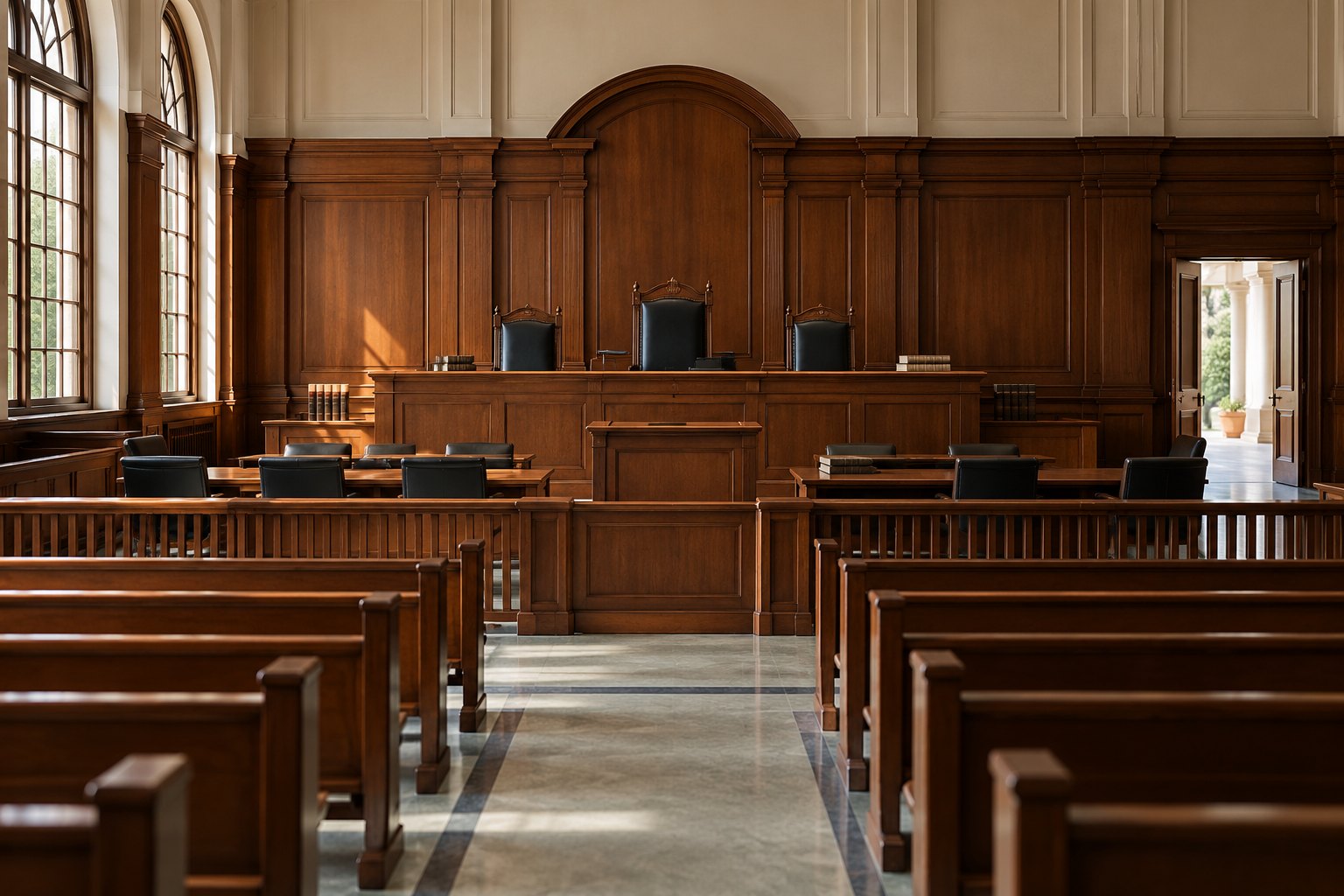
The Supreme Court on 16 October 2026 granted regular bail to two undertrials in a Prevention of Corruption Act, 1988 case. The case concerns Rajasthan's Jal Jeevan Mission tenders. Justices Dipankar Datta and Sheel Nagu held that prolonged pre-trial detention cannot turn into punishment without trial. That would breach the Article 21 right to personal liberty and speedy trial.
Syllabus: GS2 · Constitution; Prelims · Polity & Governance; GS2 · Executive & Judiciary
Why this matters for UPSC
GS2 polity and judiciary. Prelims can ask what Article 21, Article 136 and Section 479 of the BNSS provide; GS2 Mains, about undertrials, bail and judicial delay.
Why it matters
An undertrial is a person who has not been found guilty, yet such a person can spend many months in jail while a big case slowly reaches trial. Here one accused had been held for nearly eight months and the trial had not even begun; with 124 witnesses to hear, the court expected it to take a long time. If jail lasts that long before any verdict, a person who is later acquitted has already been punished. The order is a reminder that bail turns on how long a trial will take, not only on how serious the charge sounds. The larger issue is judicial delay, and the balance between fighting corruption in welfare schemes and protecting the liberty of every accused.
Prelims pointers
- Article 21: no person shall be deprived of life or personal liberty except according to procedure established by law; it protects every person, not citizens alone.
- Article 136: the Supreme Court may, in its discretion, grant special leave to appeal from any court or tribunal in India, except Armed Forces tribunals.
- Section 479, BNSS: an undertrial held for up to one-half of the maximum term is released on bail; a first-time offender, on bond, after one-third.
- Section 479 excludes offences punishable with death or life imprisonment, and the jail superintendent must apply to the court once the period is complete.
- Section 17A, Prevention of Corruption Act, 1988: police need prior approval of the government or removing authority to probe a public servant's official decision; reply within three months.
- Jal Jeevan Mission: launched on 15 August 2019, run by the Department of Drinking Water and Sanitation, Ministry of Jal Shakti, for rural household tap connections.
Practise a UPSC-style question
With reference to the Constitution of India, consider the following statements:
1. Article 20(2) bars prosecuting and punishing a person for the same offence more than once.
2. The Supreme Court has read the right to a speedy trial into Article 21.
Which of the statements given above is/are correct?
- (a) 1 only
- (b) 2 only
- (c) Both 1 and 2
- (d) Neither 1 nor 2
Show the answer
Answer: (c) Both 1 and 2
Answer: (c) Both 1 and 2. Article 20(2) is the double jeopardy bar and speedy trial is part of Article 21.
Statement 1: correct. Article 20(2) says no person shall be prosecuted and punished for the same offence more than once.
Statement 2: correct. Speedy trial is not in Article 21's words, but the Supreme Court reads it in; its 16 October 2026 order calls it guaranteed under Article 21.
Eliminate: statement 1 is the text of Article 20(2). Out: (b), (d).
Eliminate: statement 2 matches the Court's settled reading of Article 21. Out: (a).
Trap: Swapped attribution. Students often place double jeopardy in Article 22, which deals with arrest and preventive detention, and so reject statement 1.
Remember: Article 20(2) bars double jeopardy; Article 21 carries speedy trial by judicial reading.
More from the 23 October 2026 edition
- India questions UN rapporteur's funeral-rights report at Third Committee World & IR
- Illegal arrest: Bombay HC orders Rs 5 lakh, officers' suspension Polity
- Loss and Damage Fund makes first country allocation: $21.6 million to Nepal Environment
- India seeks text-based talks on UN Security Council reform World & IR
- Centre launches Khet Bachao Abhiyan for soil health and balanced fertiliser use Economy
- UN Women, World Bank brief maps parenthood leave gap in 190 economies World & IR
- Delhi High Court: hygienic public toilets part of the right to life Polity
- High Courts direct Juvenile Justice Boards: no child in adult jails Polity
- MP High Court: a spouse's consent cannot justify rehab detention Polity
- PM-DAKSH trained 1.87 lakh, placed 96,162 before PMKVY merger National
- Navy's First Training Squadron reaches Maldives under MAHASAGAR vision Defence
- J&K and Ladakh High Court: denying earned wages breaches Article 23 Polity