
Delhi High Court: hygienic public toilets part of the right to life
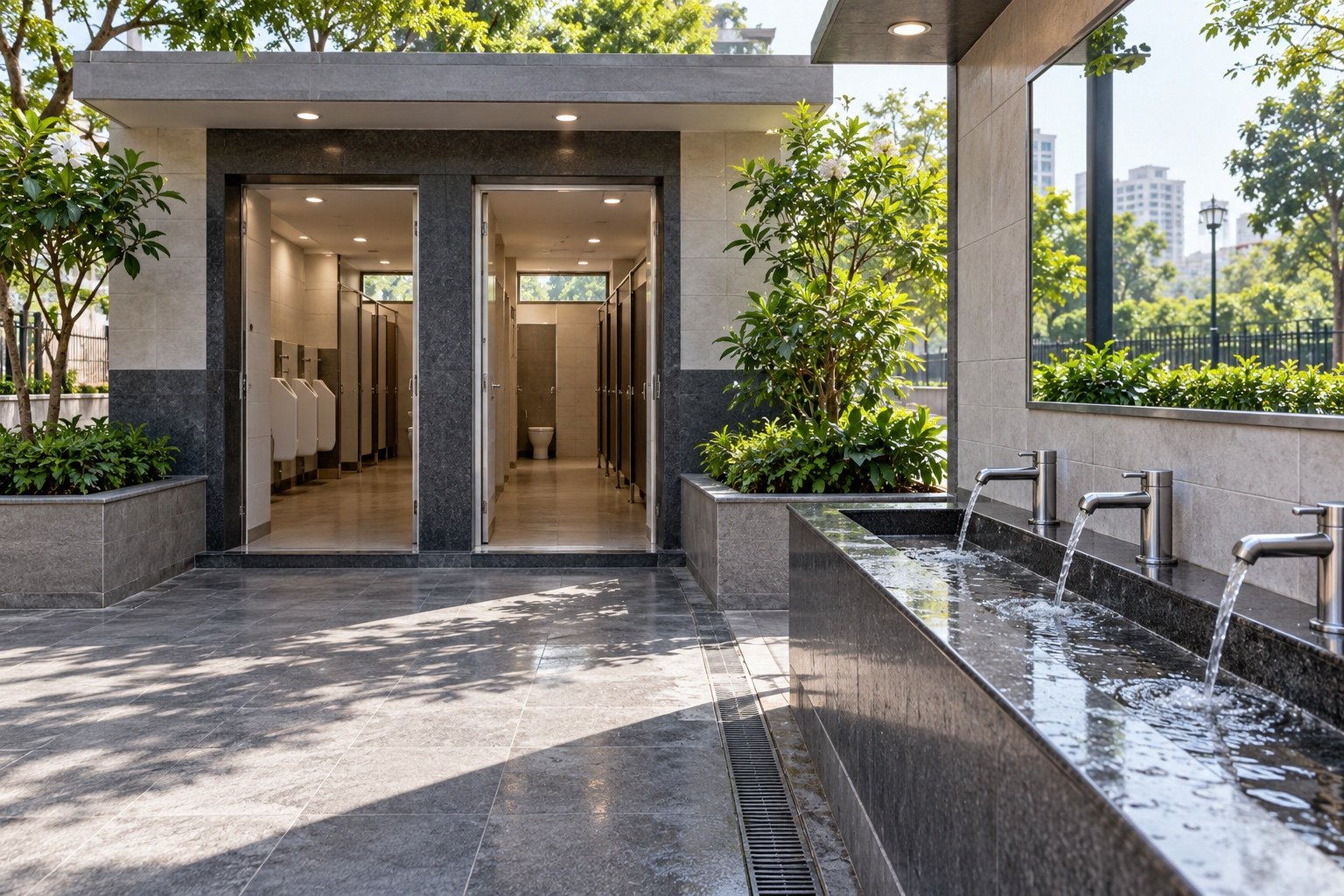
The Delhi High Court held on 16 October 2026 that access to hygienic public toilets is part of the right to life. It proposed surprise inspections of the Municipal Corporation of Delhi's public toilets by student teams from three social work colleges. Their reports, with photographs, would go to the MCD's Additional Commissioner in charge of sanitation.
Syllabus: GS2 · Constitution; GS2 · Federalism & Local Government; Prelims · Polity & Governance
Why this matters for UPSC
GS2: fundamental rights, Directive Principles and urban local bodies. Prelims can ask about Article 21, Article 47, the Twelfth Schedule and Article 243W; Mains, about judicial monitoring of municipal services and fixing accountability.
Why it matters
A public toilet decides whether a street vendor, a delivery rider, an elderly person or a woman on a long commute can spend a full day outside without discomfort or risk to health. A dirty or broken toilet pushes people to open spaces and keeps many women from going out at all. By calling hygienic toilets part of the right to life, the court turns a civic convenience into an entitlement that can be enforced. If the plan goes ahead, student inspectors with cameras would give residents an independent check on the civic body, and the order names the officer who answers for each zone. The larger question is how courts can make city governments deliver basic services without running those services themselves.
Prelims pointers
- Article 21: no person shall be deprived of life or personal liberty except according to procedure established by law; it sits in Part III.
- Article 47: the State shall regard raising nutrition and the standard of living, and improving public health, as among its primary duties.
- Article 37: Part IV's principles are not enforceable by any court, yet are fundamental in governance; the State must apply them in making laws.
- Twelfth Schedule: 18 matters, including public health, sanitation conservancy and solid waste management, and public amenities such as public conveniences.
- Article 243W: a State Legislature may by law endow Municipalities with powers and responsibilities, including on Twelfth Schedule matters.
- Article 243Q: a Nagar Panchayat for a transitional area, a Municipal Council for a smaller urban area, a Municipal Corporation for a larger one.
- Article 226: a High Court may issue writs to any person or authority, including a Government, for Part III rights and for any other purpose.
- Seventh Schedule, State List: entry 5 is local government, including municipal corporations; entry 6 is public health and sanitation.
Practise a UPSC-style question
With reference to the Constitution of India, consider the following statements:
1. The Directive Principles in Part IV are not enforceable by any court, but the State must apply them in making laws.
2. Article 47 lists the improvement of public health among the primary duties of the State.
Which of the statements given above is/are correct?
- (a) 1 only
- (b) 2 only
- (c) Both 1 and 2
- (d) Neither 1 nor 2
Show the answer
Answer: (c) Both 1 and 2
Answer: (c) Both 1 and 2. Article 37 states the status of Directive Principles and Article 47 the public-health duty.
Statement 1: correct. Article 37 says Part IV's provisions are not enforceable by any court, yet it is the State's duty to apply them in making laws.
Statement 2: correct. Article 47 makes raising nutrition and living standards and improving public health among the State's primary duties.
Eliminate: statement 1 is the text of Article 37. Out: (b), (d).
Eliminate: statement 2 is the text of Article 47. Out: (a).
Trap: Swapped attribution. Students often place public health under Article 48A, which deals with the environment, forests and wildlife, and reject statement 2.
Remember: Article 37 = Directive Principles not justiciable; Article 47 = nutrition, living standard, public health.
More from the 23 October 2026 edition
- India questions UN rapporteur's funeral-rights report at Third Committee World & IR
- Illegal arrest: Bombay HC orders Rs 5 lakh, officers' suspension Polity
- Loss and Damage Fund makes first country allocation: $21.6 million to Nepal Environment
- India seeks text-based talks on UN Security Council reform World & IR
- Centre launches Khet Bachao Abhiyan for soil health and balanced fertiliser use Economy
- UN Women, World Bank brief maps parenthood leave gap in 190 economies World & IR
- High Courts direct Juvenile Justice Boards: no child in adult jails Polity
- MP High Court: a spouse's consent cannot justify rehab detention Polity
- PM-DAKSH trained 1.87 lakh, placed 96,162 before PMKVY merger National
- Navy's First Training Squadron reaches Maldives under MAHASAGAR vision Defence
- J&K and Ladakh High Court: denying earned wages breaches Article 23 Polity
- Vague anti-social allegations cannot justify preventive detention: J&K High Court Polity