
High Courts direct Juvenile Justice Boards: no child in adult jails
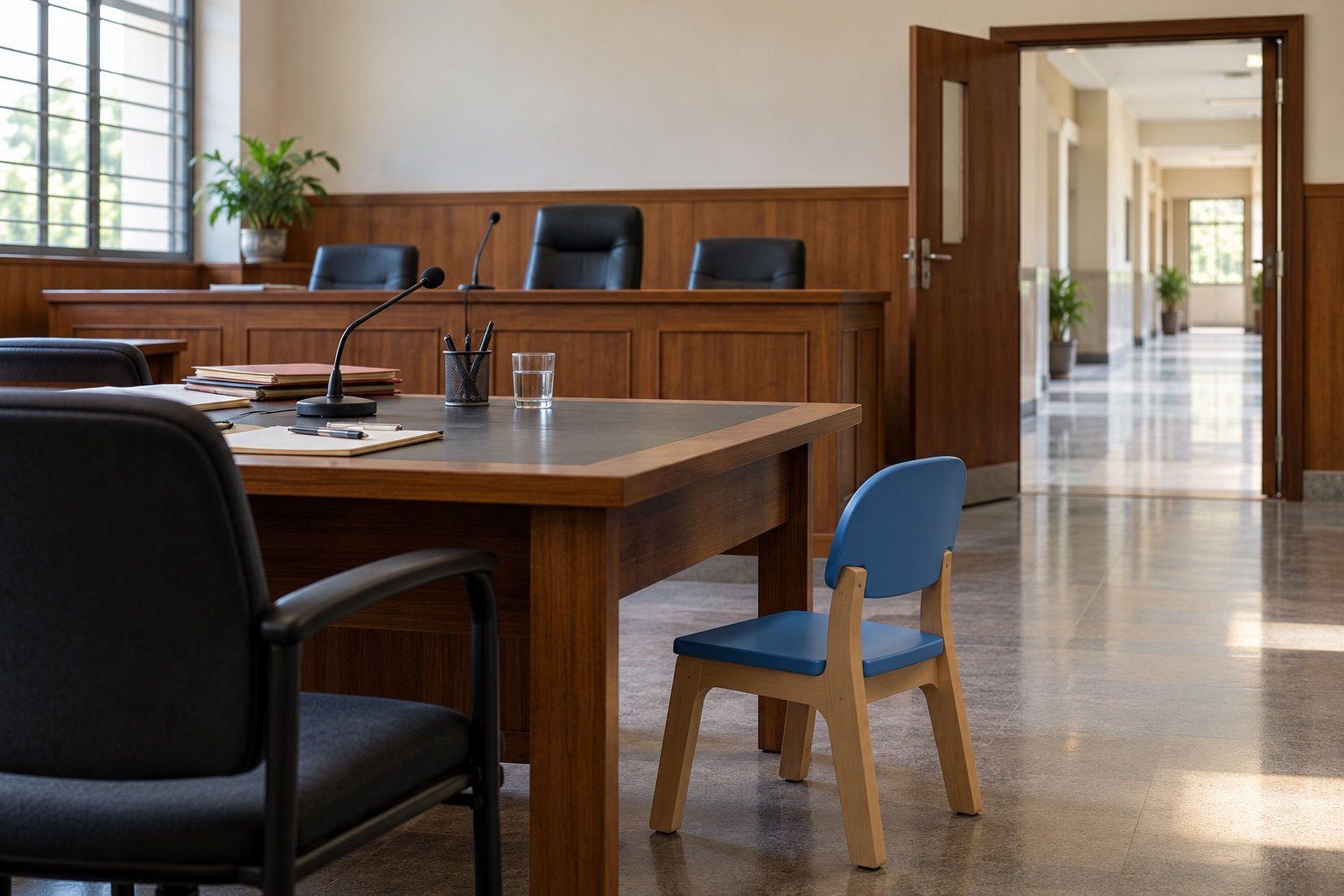
The Gauhati High Court on 28 September 2026 told Juvenile Justice Boards across Assam to inspect adult jails by 31 October. Any child found there must move to proper homes. On 13 October, the Andhra Pradesh High Court directed the State's Boards to order where a child denied bail stays. That means an observation home or place of safety.
Syllabus: Prelims · Polity & Governance; GS2 · Welfare of Vulnerable Sections; GS2 · Governance & e-Governance
Why this matters for UPSC
GS2 covers bodies that protect vulnerable sections. Prelims can ask how a Juvenile Justice Board is constituted and what Section 10 and Section 12 of the JJ Act provide; Mains, about children's rights in custody.
Why it matters
A teenager picked up by the police in a district with no children's home can spend days in a place no judge chose, and a child lodged in an adult jail lives among adult prisoners. The two orders push the Boards to look inside jails themselves and to decide in writing where each child stays. Custody then rests on a judicial order, not police convenience, and families get an order they can challenge. The larger question is whether States build enough homes and whether Boards act on their own, since juvenile justice is meant to reform a child, not punish one.
Prelims pointers
- JJ Act, 2015, Section 4: a Board is a Principal Magistrate (Metropolitan Magistrate or Judicial Magistrate of First Class, three years' experience) and two social workers, one a woman.
- Section 10: an apprehended child goes before the Board within 24 hours, journey time excluded; in no case into a police lockup or jail.
- Section 12: bail for a child covers bailable and non-bailable offences; refusal only for links with known criminals, danger to the child or defeating justice, reasons recorded.
- Section 15: for a heinous offence (minimum punishment seven years or more) alleged against a child aged 16 or above, the Board makes a preliminary assessment of capacity.
- Section 14: the Board completes its inquiry within four months of first production, extendable by two months for reasons recorded in writing.
- Section 107: each police station may designate a child welfare police officer not below assistant sub-inspector; each district's Special Juvenile Police Unit is headed by a DSP or above.
- Article 39A of the Constitution asks the State to provide free legal aid; a State Legal Services Authority's Patron-in-Chief is the High Court's Chief Justice.
- Section 2(13): whether a person is a child in conflict with law is judged by age on the date of the alleged offence.
Practise a UPSC-style question
With reference to the Juvenile Justice Board under the Juvenile Justice (Care and Protection of Children) Act, 2015, consider the following statements:
1. The Board is constituted for every district by the Central Government.
2. Its Principal Magistrate is a Metropolitan Magistrate or Judicial Magistrate of First Class with at least three years' experience.
3. Of the two social worker members of the Board, at least one must be a woman.
Which of the statements given above is/are correct?
- (a) 1 and 2 only
- (b) 2 and 3 only
- (c) 1 and 3 only
- (d) 1, 2 and 3
Show the answer
Answer: (b) 2 and 3 only
Answer: (b) 2 and 3 only. The State Government, not the Centre, constitutes the Boards; the bench design in 2 and 3 is right.
Statement 1: incorrect. Section 4(1) of the JJ Act, 2015 makes the State Government constitute one or more Boards for every district.
Statement 2: correct. Section 4(2) names a Metropolitan Magistrate or Judicial Magistrate of First Class, not a Chief Judicial Magistrate, with three years' experience.
Statement 3: correct. Section 4(2) adds two social workers to the bench, at least one of whom is a woman.
Eliminate: Statement 1 credits the Centre with a State Government power, so it is wrong. Out: (a), (c), (d).
Trap: Swapped attribution. The Act is a central law, so a student may assume the Centre also sets up its Boards; Section 4 gives that task to the State Government.
Remember: JJB = State-constituted, one per district at least; Principal Magistrate plus two social workers, one a woman.
More from the 23 October 2026 edition
- India questions UN rapporteur's funeral-rights report at Third Committee World & IR
- Illegal arrest: Bombay HC orders Rs 5 lakh, officers' suspension Polity
- Loss and Damage Fund makes first country allocation: $21.6 million to Nepal Environment
- India seeks text-based talks on UN Security Council reform World & IR
- Centre launches Khet Bachao Abhiyan for soil health and balanced fertiliser use Economy
- UN Women, World Bank brief maps parenthood leave gap in 190 economies World & IR
- Delhi High Court: hygienic public toilets part of the right to life Polity
- MP High Court: a spouse's consent cannot justify rehab detention Polity
- PM-DAKSH trained 1.87 lakh, placed 96,162 before PMKVY merger National
- Navy's First Training Squadron reaches Maldives under MAHASAGAR vision Defence
- J&K and Ladakh High Court: denying earned wages breaches Article 23 Polity
- Vague anti-social allegations cannot justify preventive detention: J&K High Court Polity