
OHCHR voices concern on Delhi detentions; India calls it interference
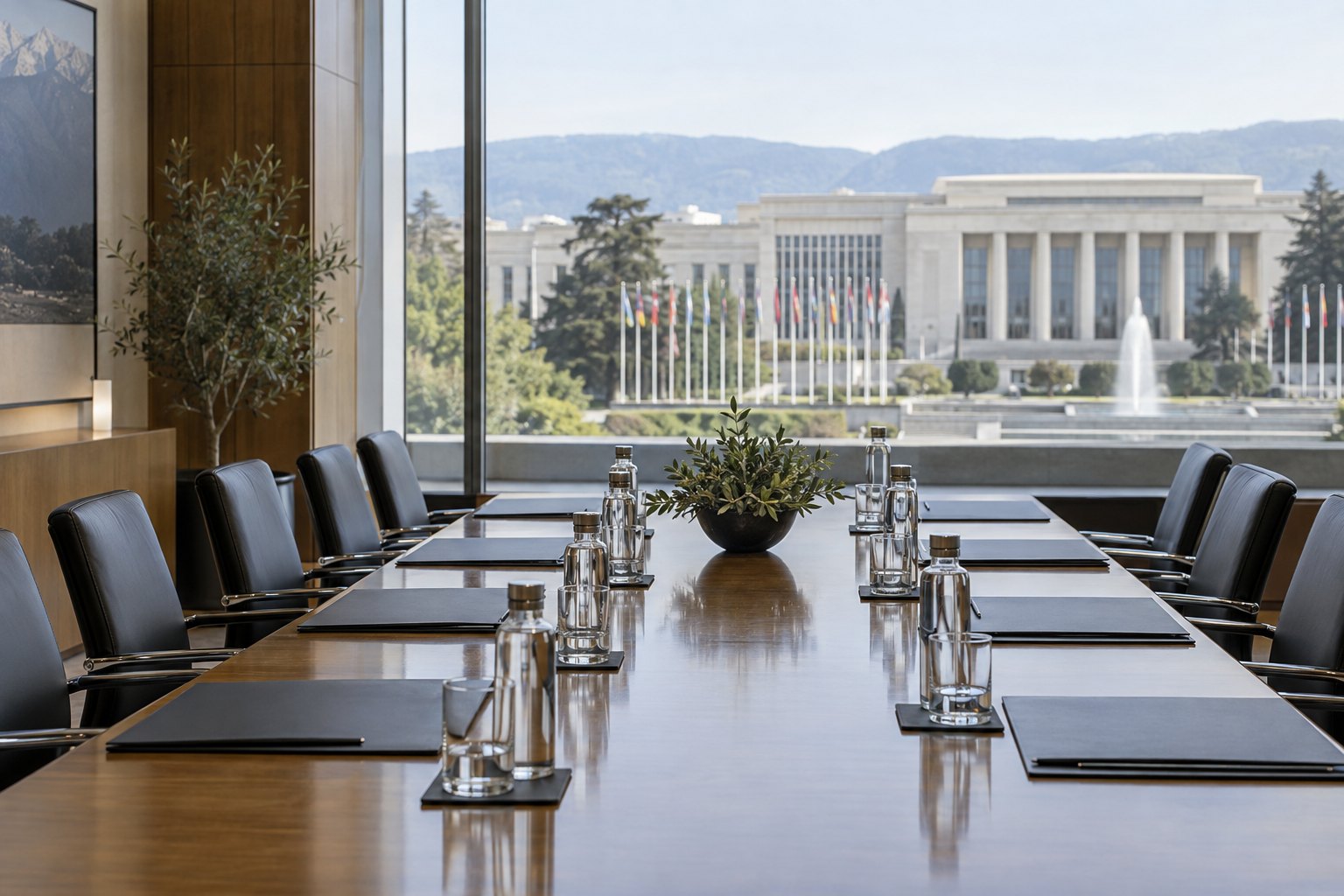
The Ministry of External Affairs on 11 October 2026 called remarks by the Office of the United Nations High Commissioner for Human Rights (OHCHR) "an unacceptable interference in the internal affairs of India". The OHCHR had on 10 October voiced concern over reported mass detentions around a Delhi protest. India's Permanent Mission in Geneva called it "misplaced" the same day.
Syllabus: Prelims · Current Affairs & IR; GS2 · Groupings & Agreements; GS2 · International Institutions
Why it matters
A person detained at a protest in India goes to an Indian court, not to Geneva. The OHCHR cannot order a release or bind a government; it works through public statements, dialogue and technical help. Its weight is its reputation, which is why India answered twice in two days and questioned the office's even-handedness. A remark by a UN office is quoted abroad and shapes how a country's record is seen. The older question behind the exchange is how far an international office may comment on events inside a member State. India rests on non-interference in internal affairs and on its own courts; the office rests on the mandate the General Assembly gave it in 1993.
Prelims pointers
- High Commissioner for Human Rights: appointed by the UN Secretary-General with the General Assembly's approval, for a four-year term that may be renewed once.
- Resolution 48/141 mandate: promote and protect all human rights, including the right to development; hold dialogue with governments; give technical assistance; coordinate UN human rights work.
- Human Rights Council: a subsidiary body of the General Assembly, created by resolution 60/251 of 2006; members serve three-year terms; it meets in Geneva.
- Universal Periodic Review: the Human Rights Council's review of the human rights record of every UN member State, carried out by other States.
- Special procedures: independent experts such as Special Rapporteurs and working groups, appointed by the Human Rights Council for a theme or a country; they are not UN staff.
- Article 19(1)(b) of the Constitution: citizens' right to assemble peaceably and without arms; Article 19(3) permits reasonable restrictions for the sovereignty and integrity of India or public order.
- Universal Declaration of Human Rights: adopted by the UN General Assembly in 1948; it is a declaration, not a treaty.
- International Covenant on Civil and Political Rights: a 1966 treaty that protects the right of peaceful assembly; India acceded to it in 1979.
Practise a UPSC-style question
With reference to the Office of the United Nations High Commissioner for Human Rights (OHCHR), consider the following statements:
1. The post of High Commissioner for Human Rights was created in 1993 by a resolution of the UN Security Council.
2. The Office functions as a part of the Secretariat of the United Nations and has its headquarters in Geneva.
Which of the statements given above is/are correct?
- (a) 1 only
- (b) 2 only
- (c) Both 1 and 2
- (d) Neither 1 nor 2
Show the answer
Answer: (b) 2 only
1 is incorrect: the post was created by General Assembly resolution 48/141 of 20 December 1993, not by the Security Council. 2 is correct: the OHCHR is part of the UN Secretariat and is headquartered at Palais Wilson in Geneva.
More from the 12 October 2026 edition
- Stabilisation policy's microfoundations win Hall, Woodford the 2026 economics Nobel Economy
- Seafarer safety and freedom of navigation: two Indians missing off Oman World & IR
- Removing a CEC under Article 324(5): what Keralam's Assembly resolution can do Polity
- State Public Service Commissions: Maharashtra sets up a paper-leak inquiry Polity
- Indians in the Gulf: India condemns Houthi-claimed attack on Riyadh airport World & IR
- NDRF drought aid: central team ends Maharashtra survey; memorandum next National
- Habeas corpus: High Court frees Goa protesters, noting no prohibitory order Polity
- Chennai Metro Phase-II, a 118.9 km project, opens its first stretch Economy
- Nino 3.4 sea temperature hits record as El Nino strengthens: Copernicus Environment
- Anti-submarine shallow water craft: Navy commissions third Cochin-built ship, INS Mangrol Defence
- India-Canada CEPA talks: 300-delegate Canadian trade mission begins India visit World & IR
- Census counts residents, not citizens: Mizoram to include refugees Polity