
India joins 14 economies in joint statement on industrial overcapacity
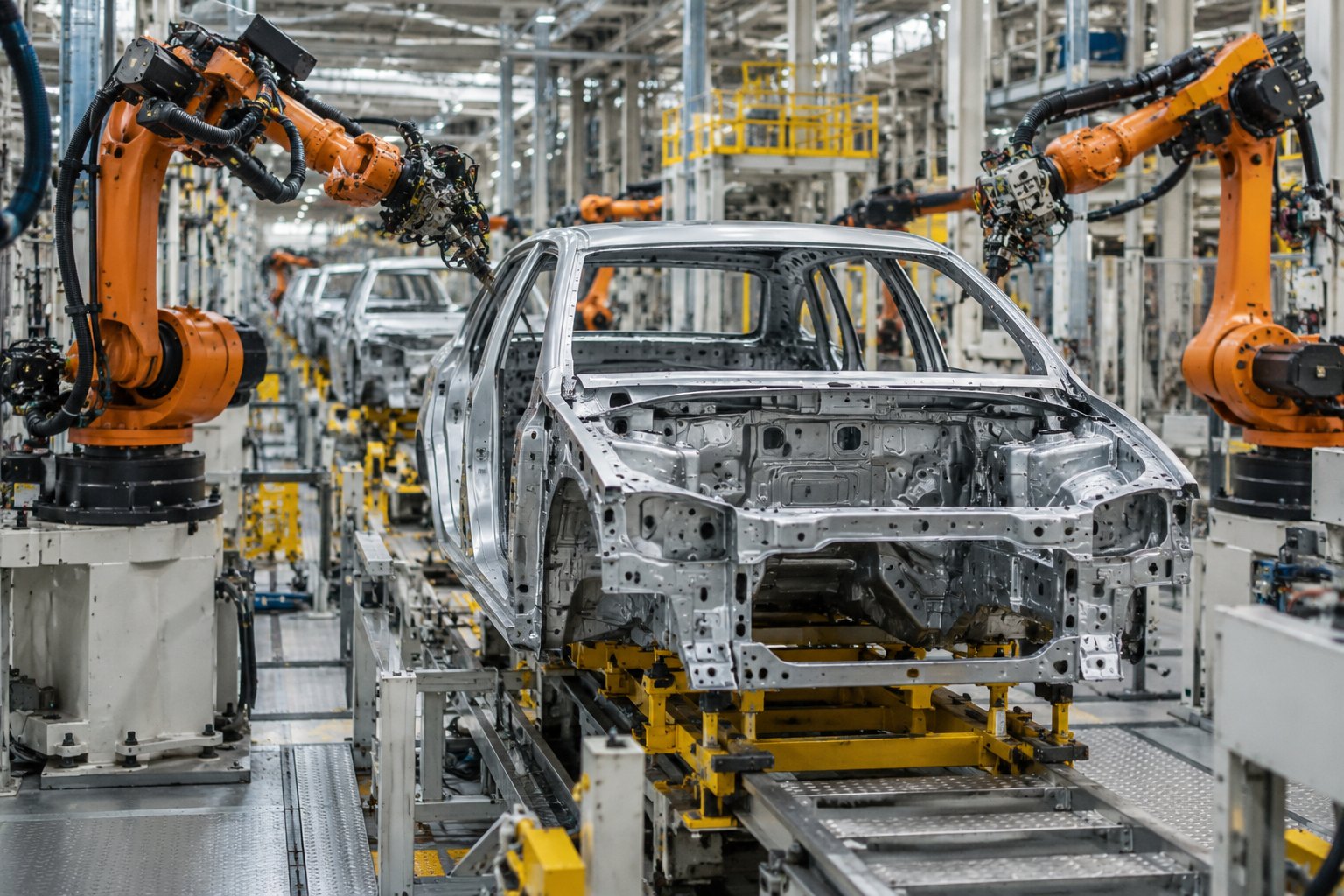
India joined the US and 13 other economies in a joint statement released on 7 October after G20 trade talks in Milwaukee. Signatories plan sectoral platforms covering autos and electric vehicles, batteries, chemicals, foundational semiconductors and solar panels. Technical discussions before December 2026 will prepare terms of reference and share non-confidential data.
Syllabus: Prelims · Current Affairs & IR; GS3 · Liberalisation & Industry; GS2 · Groupings & Agreements
Why it matters
India's participation links trade diplomacy with choices about manufacturing, employment and resilient supply chains. The signatories warn that market-distorting excess capacity can displace local production and weaken competition, while dependence on a single economy can increase exposure to export restrictions. For India, the policy question is how to support industrial development while pursuing fair competition and reliable evidence in these sectoral platforms. These are analytical implications of the initiative. The signed statement does not settle any US investigation or guarantee tariff relief for India.
Prelims pointers
- Excess capacity means production capacity above demand; government interventions can create, sustain or contribute to persistent excess capacity.
- Section 301 of the US Trade Act of 1974 allows the US Trade Representative to investigate and act against unfair foreign trade practices.
- The G20 began in 1999 as a forum of finance ministers and central bank governors; India held its Presidency in 2023.
- The OECD is headquartered in Paris; India is not a member but works with it as a key partner.
- The Global Forum on Steel Excess Capacity was set up after the G20's 2016 Hangzhou summit and is facilitated by the OECD.
- The statement targets non-market policies that distort markets and contribute to excess capacity; it does not declare every subsidy unlawful.
Practise a UPSC-style question
With reference to the Organisation for Economic Co-operation and Development (OECD), consider the following statements:
1. The OECD is headquartered in Paris, and India is not one of its member countries.
2. The OECD was set up under the Bretton Woods agreements of 1944, alongside the IMF and the World Bank.
Which of the statements given above is/are correct?
- (a) 1 only
- (b) 2 only
- (c) Both 1 and 2
- (d) Neither 1 nor 2
Show the answer
Answer: (a) 1 only
1 is correct: the OECD is headquartered in Paris; India is an OECD Key Partner and is absent from the member-country list. 2 is incorrect: the OECD Convention transformed the OEEC and entered into force on 30 September 1961, rather than establishing the OECD at Bretton Woods in 1944.
More from the 8 October 2026 edition
- CBAM: US invites comments as EU weighs widening carbon border levy Economy
- Glacial lake outburst flood exposure: Himalayan flood-zone building up 46% Environment
- Nobel Prize in Literature 2026: Swedish Academy honours Canada's Anne Carson World & IR
- World Development Report 2026 on AI gets its India launch Sci-Tech
- Nameri Tiger Reserve in Assam gets CA|TS Approved status Environment
- GST Council recommends scrapping arrest powers, ₹5 crore prosecution threshold Economy
- WMO forecasts December El Niño peak, drier conditions over India Environment
- Chhattisgarh High Court seeks State reply on anti-conversion law challenge Polity
- Centre to release AI regulation consultation paper within a month Sci-Tech
- Supreme Court orders expert panel on statutory curbs for pharma marketing National
- Saudi investment treaty to allow arbitration after two years, officials say Economy
- NMC bars fake reviews, referral fees and AI testimonials for doctors National