
Odisha sets up commission to study backward classes' political representation
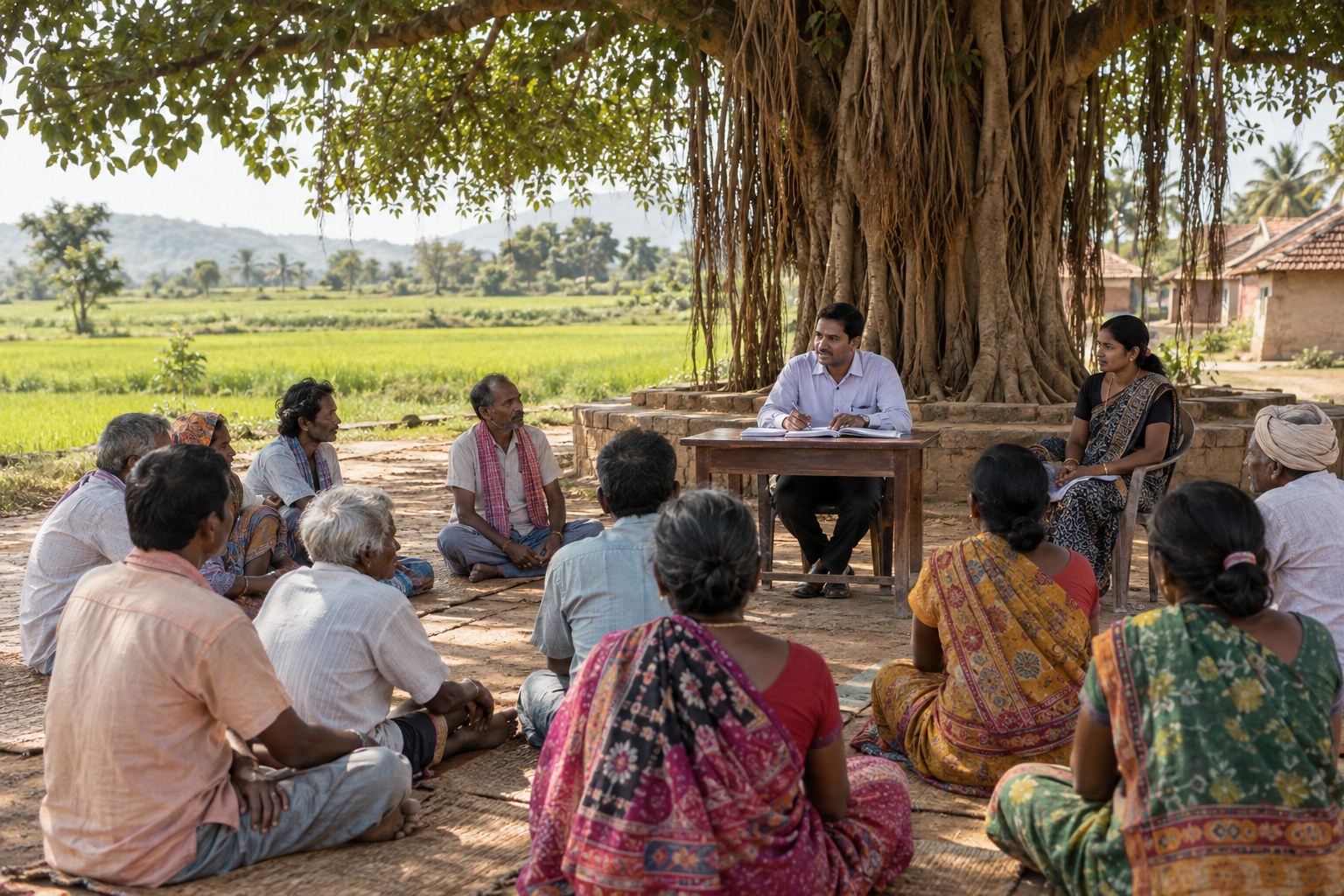
The Odisha government on Wednesday constituted a commission, headed by retired High Court judge Pramath Patnaik, to study the political representation of socially and educationally backward classes (SEBCs). It will assess their share in rural and urban populations and in local bodies. The move precedes panchayat and urban local body polls due early next year.
Syllabus: GS2 · Federalism & Local Government; Prelims · Polity & Governance; GS1 · Social Empowerment & Secularism
Why it matters
Seats reserved in panchayats and municipalities decide which communities get a say in how villages and towns are run. By unofficial estimates, backward classes may be more than half of Odisha's people, yet their quota in state jobs is only 11.25% and there is no official count of their numbers. A commission that measures their population share and their presence in local bodies would give the state hard data as it considers measures for their representation in local bodies, with polls due early next year. The larger question is how to widen representation fairly and on evidence, at a time when Opposition parties are pressing for bigger quotas for these groups.
Prelims pointers
- SEBC means socially and educationally backward classes, the phrase used in Article 15(4) of the Constitution.
- Urban local bodies covered by the study: municipal corporations, municipalities and notified area councils; rural ones: panchayati raj institutions.
- Article 243D(6) (panchayats) and Article 243T(6) (municipalities) let a state legislature reserve seats for backward classes of citizens.
- The 73rd and 74th Constitutional Amendment Acts, 1992, added Part IX (panchayats) and Part IXA (municipalities) to the Constitution.
- Supreme Court's triple test (Vikas Kishanrao Gawali, 2021): dedicated commission's empirical inquiry, local body-wise quotas on its findings, combined SC/ST/OBC reservation within 50%.
- The commission will examine the "nature and implications of political backwardness" of SEBC categories.
Practise a UPSC-style question
Consider the following statements:
1. Part IX of the Constitution, which deals with panchayats, was added by the 74th Constitutional Amendment Act, 1992.
2. Article 243D(6) allows a state legislature to reserve seats in panchayats for backward classes of citizens.
3. Article 243T(6) makes a similar provision for reserving seats for backward classes in municipalities.
Which of the statements given above is/are correct?
- (a) 1 and 2 only
- (b) 2 and 3 only
- (c) 1 and 3 only
- (d) 1, 2 and 3
Show the answer
Answer: (b) 2 and 3 only
1 is incorrect: Part IX on panchayats came from the 73rd Amendment; the 74th added Part IXA on municipalities. 2 is correct: Article 243D(6) lets the state legislature reserve panchayat seats for backward classes. 3 is correct: Article 243T(6) does the same for municipalities.
More from the 8 October 2026 edition
- CBAM: US invites comments as EU weighs widening carbon border levy Economy
- Glacial lake outburst flood exposure: Himalayan flood-zone building up 46% Environment
- Nobel Prize in Literature 2026: Swedish Academy honours Canada's Anne Carson World & IR
- World Development Report 2026 on AI gets its India launch Sci-Tech
- Nameri Tiger Reserve in Assam gets CA|TS Approved status Environment
- GST Council recommends scrapping arrest powers, ₹5 crore prosecution threshold Economy
- India joins 14 economies in joint statement on industrial overcapacity Economy
- WMO forecasts December El Niño peak, drier conditions over India Environment
- Chhattisgarh High Court seeks State reply on anti-conversion law challenge Polity
- Centre to release AI regulation consultation paper within a month Sci-Tech
- Supreme Court orders expert panel on statutory curbs for pharma marketing National
- Saudi investment treaty to allow arbitration after two years, officials say Economy