
International Solar Alliance (ISA): India-hosted treaty body for solar energy
Why in news: New Delhi hosts the 9th ISA Assembly on 2-5 November 2026, alongside the Bharat Renewable Energy Summit & Expo 2026 (PIB, 28 October 2026).
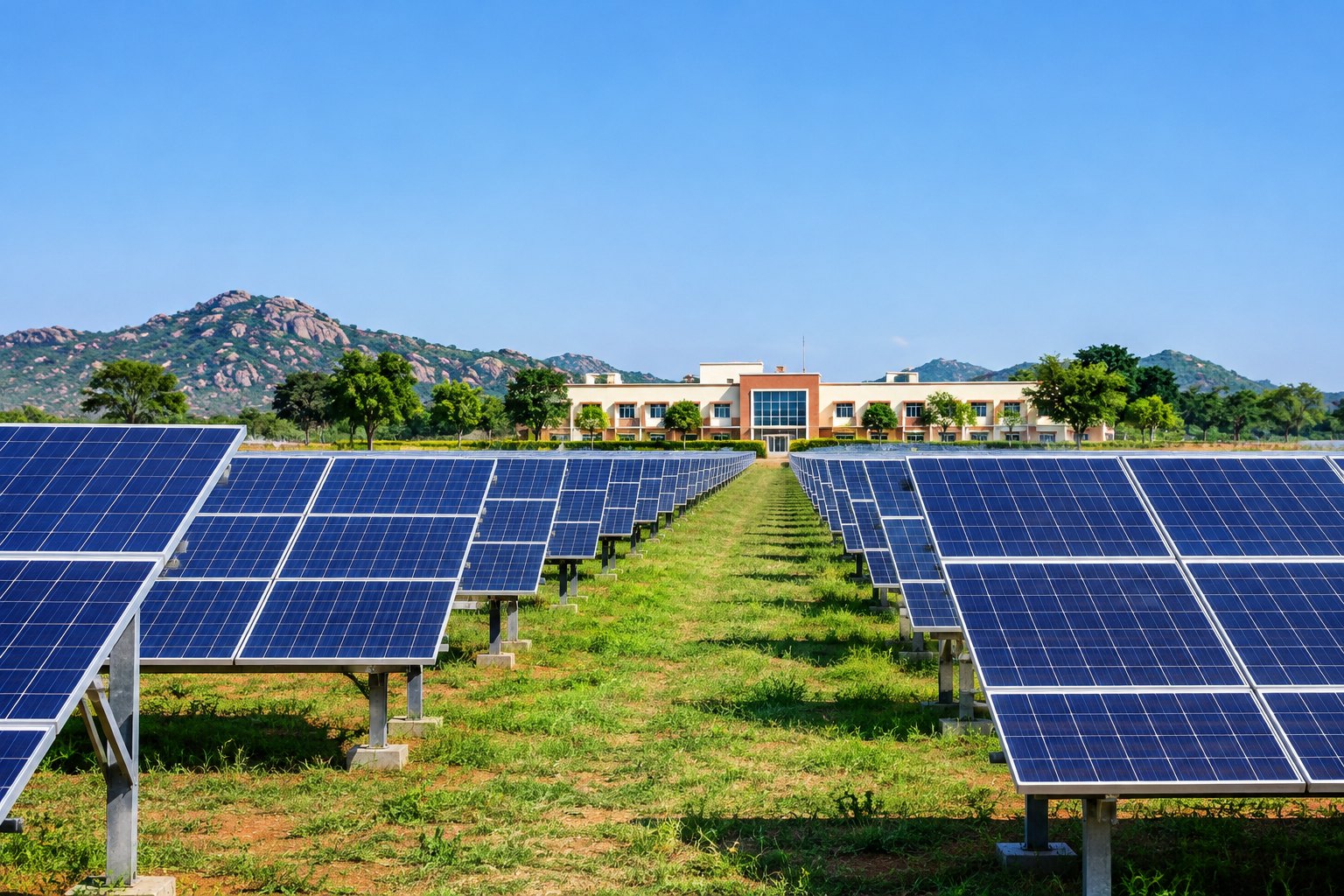
The International Solar Alliance (ISA) is a treaty-based body of countries that pools finance, skills and data to spread solar energy. Founded by India and France, it keeps its Secretariat in Gurugram, Haryana, and any UN member state may join. New Delhi hosts the 9th Session of the ISA Assembly, its apex body, from 2 to 5 November 2026.
Syllabus: Prelims · Environment & Ecology; GS3 · Infrastructure; GS2 · Groupings & Agreements
Why this matters for UPSC
GS2 international institutions and GS3 energy: the ISA, its Framework Agreement, organs and initiatives. Prelims can ask its founders, headquarters and membership rule; Mains, India's solar diplomacy.
In short
The International Solar Alliance (ISA) is a treaty-based intergovernmental organisation, launched by India and France at COP21 in 2015, that pools finance, skills and data to spread solar energy.
The ISA gives India a rare treaty platform; its value rests on turning signatures into ratifications and pledges into financed solar projects in poorer states.
Why it matters
A household without grid power in a least developed country, or a small island state that depends on costly imported fuel, gains when solar finance and trained technicians reach it. The ISA pools money, skills and data for such places. Its Global Solar Facility steers investment towards underserved regions, especially Africa, and STAR-C trains people in solar technology. For India, hosting the Secretariat and leading the Assembly lets it share home-grown programmes with the Global South, which builds goodwill and markets for Indian industry. The larger issue is climate change: solar power cuts emissions at scale only when poorer countries can afford to install it.
Prelims pointers
- The ISA works towards Sustainable Development Goal 7 on affordable and clean energy and Goal 13 on climate action, per the Ministry of New and Renewable Energy.
- ISA members are grouped into four regions for elections: Latin America and the Caribbean; Africa; Europe and Others; and Asia and the Pacific.
- The Standing Committee has eight Vice Presidents, two from each region, picked by seniority in ratifying the Framework Agreement.
- Only countries that have ratified the Framework Agreement sit in the Assembly as voting members; a signatory that has not ratified does not vote.
- The Global Solar Facility catalyses investment in underserved regions, mainly Africa; the Viability Gap Funding Scheme funds island states (Small Island Developing States) and the poorest nations with grants.
- STAR-C builds solar technology skills in developing economies, while the SolarX Startup Challenge, introduced at COP27, backs solar start-ups in member countries.
- The 8th Assembly in 2025 listed SUNRISE, for solar recycling and green jobs, and OSOWOG, for regional solar interconnections, among its outcomes.
Practise a UPSC-style question
With reference to the International Solar Alliance (ISA), consider the following statements:
1. It was launched jointly by India and France at COP21 in Paris in 2015.
2. Its Framework Agreement was opened for signature at COP22 in Marrakesh.
3. The Government of France is the depositary of its Framework Agreement.
Which of the statements given above is/are correct?
- (a) 1 and 2 only
- (b) 2 and 3 only
- (c) 1 and 3 only
- (d) 1, 2 and 3
Show the answer
Answer: (a) 1 and 2 only
Answer: (a) 1 and 2 only. The ISA began at COP21 and its treaty opened at COP22; India, not France, is the depositary.
Statement 1: correct. India and France launched the ISA on the sidelines of COP21 to the UNFCCC in Paris in 2015.
Statement 2: correct. The Framework Agreement opened for signature at COP22 in Marrakesh on 15 November 2016 and entered into force on 6 December 2017.
Statement 3: incorrect. The UN Treaty Collection names the Government of India as depositary; India also registered the treaty with the UN.
Eliminate: statement 3 is the surest to reject, since India holds the treaty. Out: (b), (c), (d).
Trap: Swapped attribution. France co-founded the ISA, so the question pins India's depositary role on the co-founder.
Remember: Launched at COP21 Paris; treaty opened at COP22 Marrakesh; India is depositary.
More Explainers
- Zero FIR: Section 173 of the BNSS and where it stops Polity
- Enforcement Directorate's PMLA powers depend on a scheduled offence Polity
- Preventive detention: Article 22 and the National Security Act, 1980 Polity
- Prohibition of Child Marriage Act, 2006 and Bal Vivah Mukt Bharat National
- Liberalised Remittance Scheme (LRS) under FEMA, 1999 Economy
- Carbon sinks: why the Amazon now releases more carbon than it absorbs Environment
- Pharmacovigilance and materiovigilance: how India tracks harm from medicines and devices National
- UGC equity regulations, 2026, against discrimination in higher education Polity
- Space debris and India's Debris Free Space Mission goal for 2030 Sci-Tech
- Somnath temple: Prabhas Patan's jyotirlinga, its destruction and 1951 rebuilding National
- Food safety enforcement: FSSAI, State Commissioners and central licensing Polity
- Safe harbour for internet intermediaries under Section 79 of the IT Act Polity