
India-EU Free Trade Agreement: coverage and steps to entry into force
Why in news: A PIB release of 2 November 2026 reports Brussels talks on customs cooperation and preparations to implement the India-EU FTA.
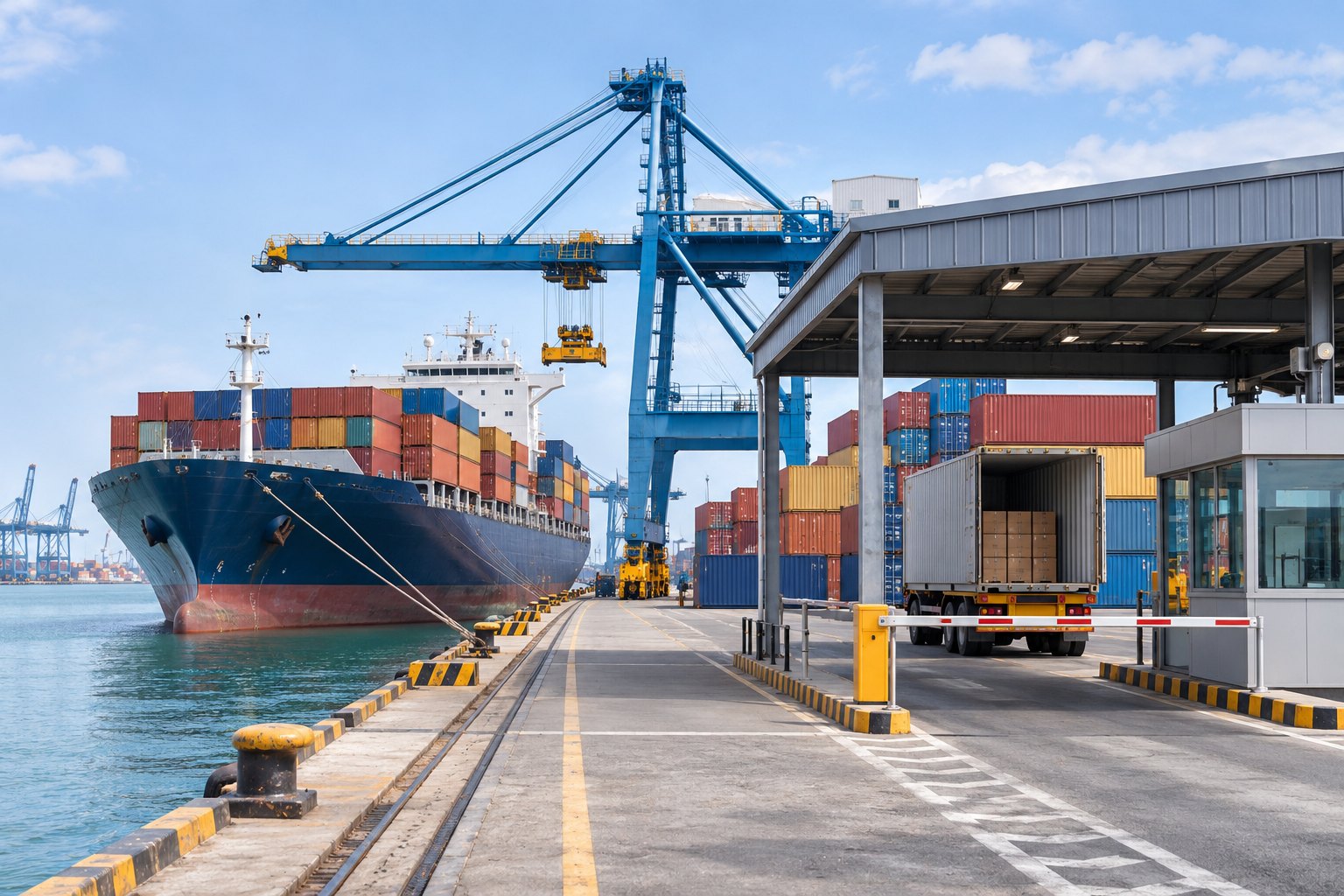
A pact with the 27-member EU, the India-European Union Free Trade Agreement, or India-EU FTA, cuts tariffs and sets rules on goods, services, origin, customs and digital trade. Talks begun in 2007 were concluded on 27 January 2026; the deal is not yet signed or in force. In Brussels, India's Commerce Secretary has now discussed customs preparations for its implementation.
Syllabus: GS3 · Indian Economy & Growth; Prelims · Current Affairs & IR; GS2 · Groupings & Agreements
Why this matters for UPSC
GS2 international relations: India-EU ties and trade agreements; GS3 trade policy. Prelims can ask the FTA's chapters and EU approval steps; Mains, its gains and farm safeguards.
In short
Concluded in 2026, the India-European Union Free Trade Agreement, or India-EU FTA, is an unsigned trade pact that cuts tariffs, opens services and sets shared trade rules.
Its value now rests on timely signature and ratification, ready customs systems and help for small exporters to meet European origin and carbon rules.
Why it matters
An Indian garment, leather or seafood exporter would pay no EU import duty once the agreement takes effect, so its goods could sell more cheaply in European shops and keep factory jobs busy. An Indian dairy farmer is shielded, because India kept milk products out of its tariff cuts. Indian buyers may find European machines, wine and cars cheaper, while Indian car makers face more competition. None of this begins until the deal is signed, approved by the European Parliament and ratified by India. The larger question is how India opens trade with a rich partner while protecting farm livelihoods and meeting Europe's new carbon rules.
Prelims pointers
- An EU trade deal passes Council adoption, signature, consent by the European Parliament, a Council decision to conclude it, and the partner's ratification, before entry into force.
- Rules of origin use wholly obtained criteria or, for processed goods, change in tariff classification, value addition or a specific processing rule.
- The EU-India Trade Sub-Commission was set up under the 1994 Cooperation and Partnership Agreement; a High-Level Dialogue on Trade and Investment began in 2021.
- The EU and EFTA are different European groupings: India has a separate trade deal with EFTA and another with the UK, besides the EU agreement.
- The FTA reinforces TRIPS-level IP protection, affirms the Doha Declaration and recognises the Traditional Knowledge Digital Library initiated by India.
Practise a UPSC-style question
With reference to the steps before the India-European Union Free Trade Agreement can enter into force, consider the following statements:
1. The European Commission takes the EU's final decision on concluding the agreement.
2. After signature, the agreement needs the consent of the European Parliament.
3. India must ratify the agreement before it can enter into force.
Which of the statements given above is/are correct?
- (a) 1 and 2 only
- (b) 2 and 3 only
- (c) 1 and 3 only
- (d) 1, 2 and 3
Show the answer
Answer: (b) 2 and 3 only
Answer: (b) 2 and 3 only. The Council, not the Commission, decides on conclusion; Parliament's consent and India's ratification come before entry into force.
Statement 1: incorrect. The Commission proposes signature and conclusion to the Council; the decision on conclusion belongs to the Council.
Statement 2: correct. The Commission's next-steps note says that after signature the agreement requires the European Parliament's consent.
Statement 3: correct. The Commission states the agreement can enter into force once India also ratifies it.
Eliminate: Statement 1 is the surest: concluding the deal is the Council's decision, not the Commission's. Out: (a), (c), (d).
Trap: Swapped attribution. The Commission drives the process by proposing signature, so handing it the final decision sounds right.
Remember: Commission proposes, Council authorises signing and concludes, Parliament consents, India ratifies.
More Explainers
- Zero FIR: Section 173 of the BNSS and where it stops Polity
- Enforcement Directorate's PMLA powers depend on a scheduled offence Polity
- Preventive detention: Article 22 and the National Security Act, 1980 Polity
- Prohibition of Child Marriage Act, 2006 and Bal Vivah Mukt Bharat National
- Liberalised Remittance Scheme (LRS) under FEMA, 1999 Economy
- Carbon sinks: why the Amazon now releases more carbon than it absorbs Environment
- Pharmacovigilance and materiovigilance: how India tracks harm from medicines and devices National
- UGC equity regulations, 2026, against discrimination in higher education Polity
- Space debris and India's Debris Free Space Mission goal for 2030 Sci-Tech
- Somnath temple: Prabhas Patan's jyotirlinga, its destruction and 1951 rebuilding National
- Food safety enforcement: FSSAI, State Commissioners and central licensing Polity
- Safe harbour for internet intermediaries under Section 79 of the IT Act Polity