
MHA's Ladakh draft: proposed Article 371K body, regulations need L-G assent
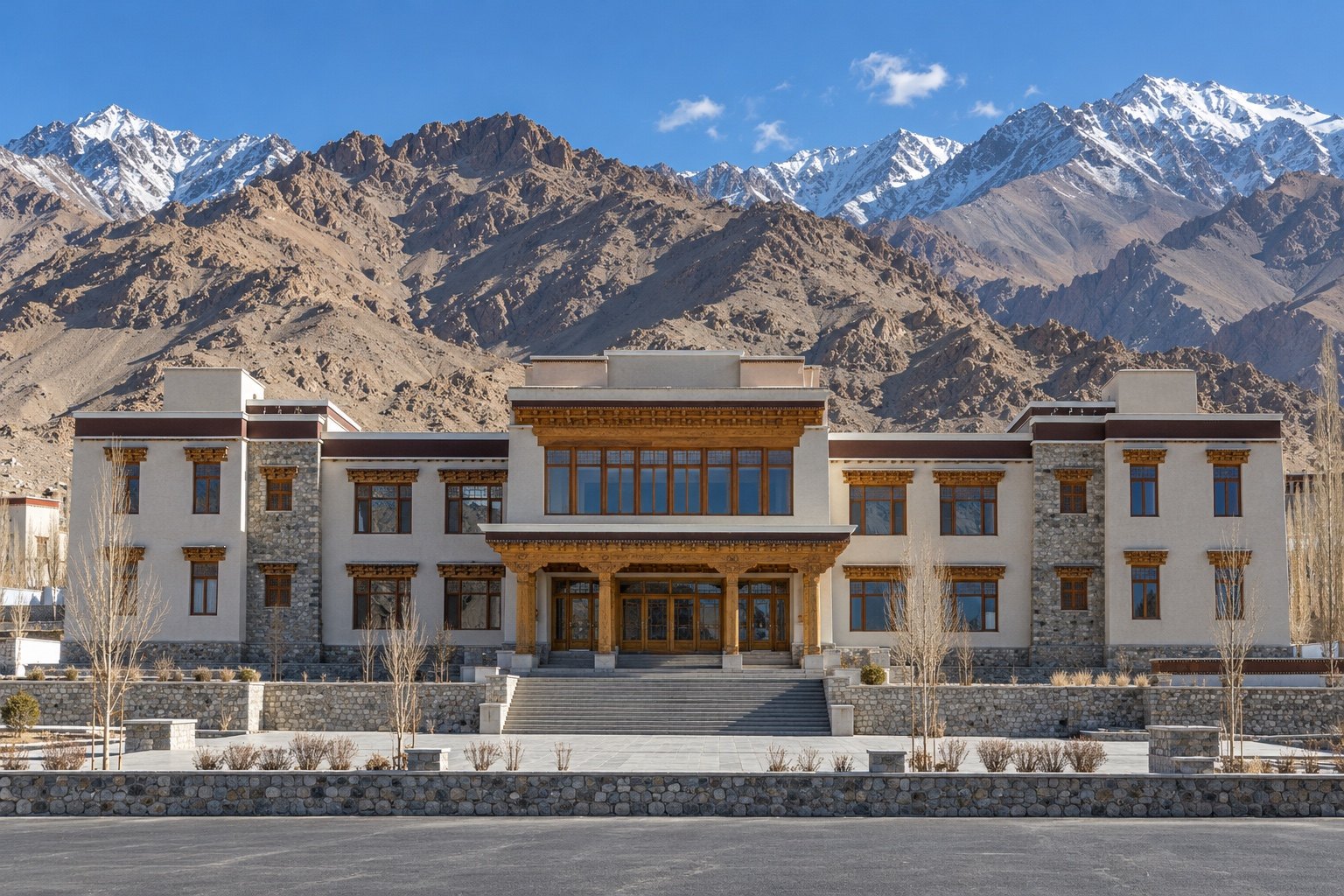
A Ministry of Home Affairs draft for consultation on Ladakh proposes a Union Territory-level elected body with constitutional status under a new Article 371K. A Presidential regulation under Article 240 would set its composition, elections and powers. Its regulations would take effect only after the Lieutenant Governor's assent, and Central laws would continue to apply.
Syllabus: GS2 · Constitution; GS2 · Federalism & Local Government; Prelims · Polity & Governance
Why this matters for UPSC
GS2 federalism and Union territories: Prelims can ask what Article 239A, Article 240 and Article 371A provide; Mains, whether a regulation-making body under the proposed Article 371K meets Ladakh's demand for a legislature.
Why it matters
For a family in Ladakh, the design decides who has the last word on community land, a forest outside the reserved ones, or a project in a fragile valley. Under the draft, local representatives could frame rules on such matters, but each rule would wait for the Lieutenant Governor's approval, and laws made by Parliament would still apply. The draft spells out no way for the elected body to refuse a national law on land, jobs or culture, which is the protection the region's groups want. The dispute tests a larger question for India's federal design: how much self-rule a border Union territory can have, and whether what its leaders say was agreed in May reaches the final text.
Prelims pointers
- Article 239(1): unless Parliament by law provides otherwise, the President administers every Union territory through an administrator, with a designation he specifies.
- Article 239(2): a State Governor appointed administrator of an adjoining Union territory acts independently of his own Council of Ministers.
- Article 239A(2): a law creating a Union territory legislature is not deemed a constitutional amendment for Article 368, even if it has that effect.
- Article 240(1) lists the Andaman and Nicobar Islands, Lakshadweep, Dadra and Nagar Haveli and Daman and Diu, and Puducherry; Ladakh's regulations rest on section 58(2) of the 2019 Act.
- Article 240(2): a regulation may repeal or amend an Act of Parliament applying to the territory and has the same force as an Act of Parliament.
- Article 240 proviso: once Puducherry's Article 239A legislature first meets, the President stops making regulations for it, except while it is dissolved or suspended.
- Article 246(4): Parliament may make laws for any part of India not included in a State, even on matters in the State List.
- Article 371G (Fifty-third Amendment, 1986): Acts of Parliament on Mizo customary law, practices and land ownership apply in Mizoram only if its Assembly so resolves.
Practise a UPSC-style question
With reference to Article 240 of the Constitution of India, consider the following statements:
1. The President may make regulations for the peace, progress and good government of Lakshadweep.
2. A regulation made under Article 240 cannot amend an Act of Parliament that applies to the Union territory.
3. Once Puducherry's legislature under Article 239A first meets, the President ceases to make regulations for it, save during dissolution or suspension.
Which of the statements given above is/are correct?
- (a) 1 and 2 only
- (b) 2 and 3 only
- (c) 1 and 3 only
- (d) 1, 2 and 3
Show the answer
Answer: (c) 1 and 3 only
Answer: (c) 1 and 3 only. Article 240 covers Lakshadweep and yields to Puducherry's legislature, and its regulations can amend Acts of Parliament.
Statement 1: correct. Article 240(1)(b) names Lakshadweep among the Union territories for which the President may make regulations.
Statement 2: incorrect. Article 240(2) lets a regulation repeal or amend an Act of Parliament applying to the territory, with the force of an Act of Parliament.
Statement 3: correct. The first proviso to Article 240 stops regulation-making from the first meeting of Puducherry's Article 239A legislature; the second allows it during dissolution or suspension.
Eliminate: Statement 2 is the surest: Article 240(2) expressly allows amendment of Acts of Parliament. Out: (a), (b), (d).
Trap: Reversed direction. Statement 2 turns the power to amend an Act of Parliament into a bar on doing so; a student who assumes executive law must yield to Parliament falls for it.
Remember: An Article 240 regulation can repeal or amend an Act of Parliament and has the same force as one.
Explainers on this topic
More from the 25 October 2026 edition
- Road Ministry seeks CERT-In audit of VAHAN, SARATHI over data on sale Sci-Tech
- Bundibugyo Ebola: TUMAINI vaccine trial starts in DR Congo; outbreak reaches Nigeria Sci-Tech
- DGHS bars reuse of single-use medical devices in all hospitals National
- AgriStack and the Farmer ID: how India's farmer registry works Economy
- DRDO's Air Independent Propulsion module for submarines enters Setting to Work Phase-2 Defence