
China puts tunnel boring machines under dual-use export control
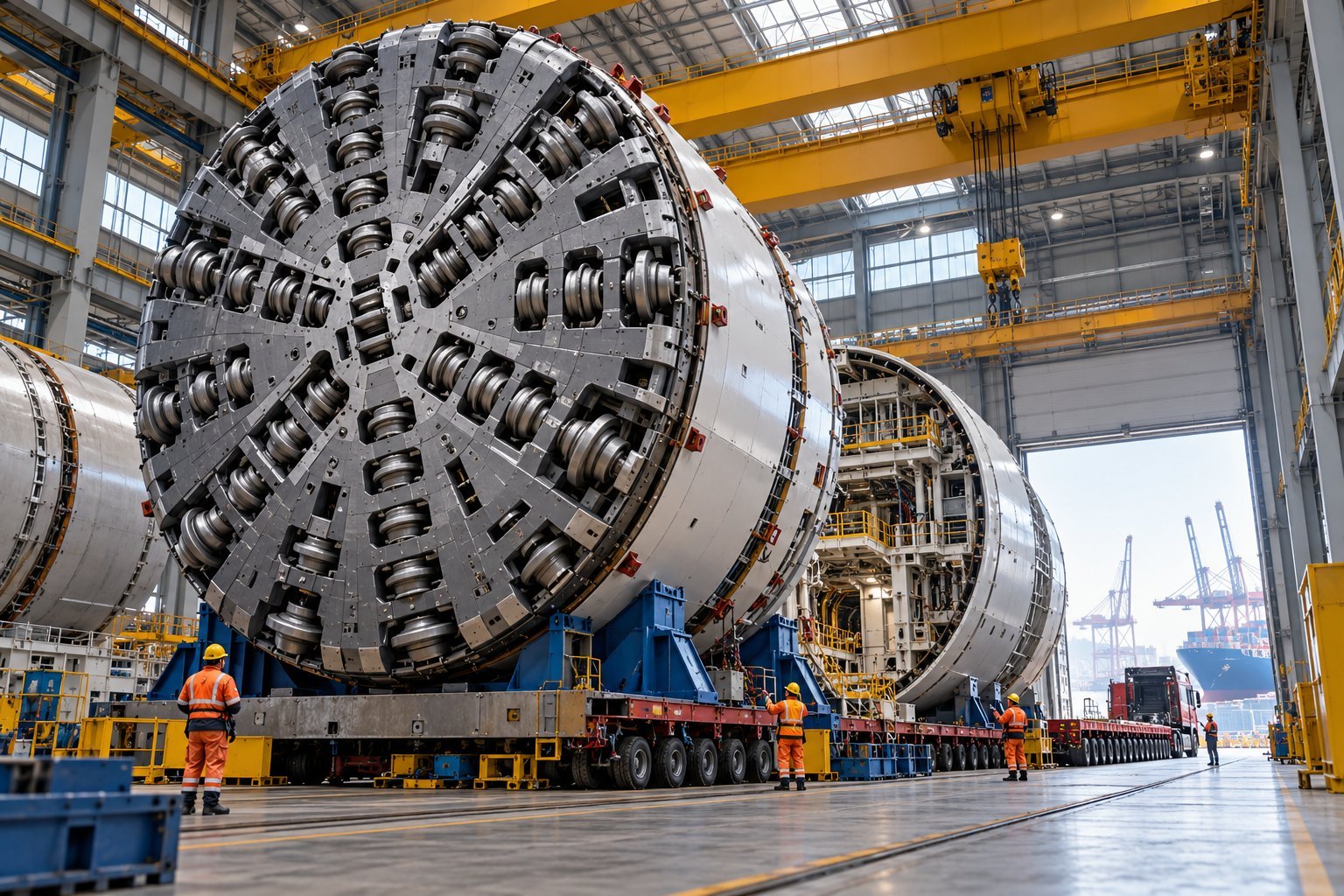
China's Ministry of Commerce and General Administration of Customs on 19 October 2026 placed tunnel boring machines, their key parts and remanufacturing technology under dual-use export control from 18 November 2026. Exports to "sensitive countries and regions that have disputes with China" will need a licence. The announcement names no country; India relies heavily on imported tunnel boring machines.
Syllabus: GS3 · Infrastructure; GS2 · India & its Neighbourhood; GS2 · Foreign Policies & the Diaspora
Why this matters for UPSC
GS2 India–China relations and GS3 infrastructure: Prelims can ask what dual-use items are, who belongs to the Wassenaar Arrangement and what India's SCOMET list covers; Mains, about export controls as leverage and dependence on imported tunnel boring machines.
Why it matters
Metro lines, rail tunnels and mountain highways in India are dug by machines the country largely buys abroad, with China a key supplier. If a Chinese seller now needs a licence for an Indian order, each machine or spare cutterhead can wait on a decision in Beijing. A stalled machine idles a whole project: crews, contracts and loans keep running while the tunnel does not move, as the bullet-train delay showed. Because parts and remanufacturing technology are listed too, repairs can also slow. The larger issue is dependence on one supplier for critical equipment: the tool China earlier used on rare earths and fertilisers now reaches construction machinery, which strengthens the case for building these machines in India.
Prelims pointers
- Export Control Law of the People's Republic of China: adopted by the NPC Standing Committee on 17 October 2020; in force from 1 December 2020.
- China's Export Control Law: a temporary control on items outside the control list may last at most two years; it also governs re-export and transshipment.
- Wassenaar Arrangement: India is a Participating State, China is not; its Plenary decides by consensus and its secretariat is in Vienna.
- Wassenaar Arrangement: Participating States report transfers and denials of certain dual-use goods to non-members every six months; each state decides transfers by national discretion.
- SCOMET list (Appendix 3), published by the DGFT: Category 0 nuclear items, Category 5 aerospace systems including UAVs, Category 6 the Munitions List.
- Mixshield tunnel boring machine: adopted for the bullet-train tunnel in urban Mumbai for its tight control of ground settlement and minimal surface disruption.
- Indian Railways first used a tunnel boring machine in Himalayan geology on Tunnel T-8 (14.8 km) of the Rishikesh–Karnaprayag line; the NATM is widely adopted in the Himalayas.
Practise a UPSC-style question
With reference to the Export Control Law of the People's Republic of China, consider the following statements:
1. It was adopted by the State Council of China in 2020.
2. It defines dual-use items as goods, technologies and services usable for both civil and military purposes.
Which of the statements given above is/are correct?
- (a) 1 only
- (b) 2 only
- (c) Both 1 and 2
- (d) Neither 1 nor 2
Show the answer
Answer: (b) 2 only
Answer: (b) 2 only. The law was adopted by the NPC Standing Committee, not the State Council; its dual-use definition is as stated.
Statement 1: incorrect. The Standing Committee of the National People's Congress adopted the law on 17 October 2020; the State Council approves control decisions under it.
Statement 2: correct. Article 2 defines dual-use items as goods, technologies and services usable for civil or military purposes, especially for weapons of mass destruction.
Eliminate: Statement 1 is wrong because a law is made by the legislature's Standing Committee, not the cabinet. Out: (a), (c).
Eliminate: Statement 2 matches the law's own definition of dual-use items. Out: (d).
Trap: Swapped attribution. The State Council does appear in the news, approving the tunnel-machine controls, so a student may credit it with making the law itself.
Remember: China's Export Control Law, 2020 was made by the NPC Standing Committee; dual-use means civil and military use.
More from the 20 October 2026 edition
- China proposes export curbs on 40 AI, solar and biomedicine technologies World & IR
- Parallel distribution licence: HERC grants one for Gurugram and Nuh Economy
- DGFT notifies tariff-rate quotas for New Zealand apples, kiwifruit, honey Economy
- Remand is judicial work, not a formality: Allahabad High Court Polity
- Karnataka High Court upholds AMASR Act's prohibited and regulated zones Polity
- High Court allows Punjab's plea against MEA's political clearance refusal Polity
- IT Rules due diligence: MeitY advisory tells Meta to review recommendation systems Polity
- Who may practise law: Karnataka HC refuses to quash AIBE case Polity
- CCPA uses Consumer Protection Act to curb online explosives sales Polity
- Section 17A, Prevention of Corruption Act: bribe demand needs no approval Polity
- Orangutan seized in Thane reported repatriated to Indonesia under CITES Environment
- FSSAI directs cold-chain compliance for perishables under 2011 Licensing Regulations National