
Backward Class quota in local bodies: Supreme Court rejects 34% plea
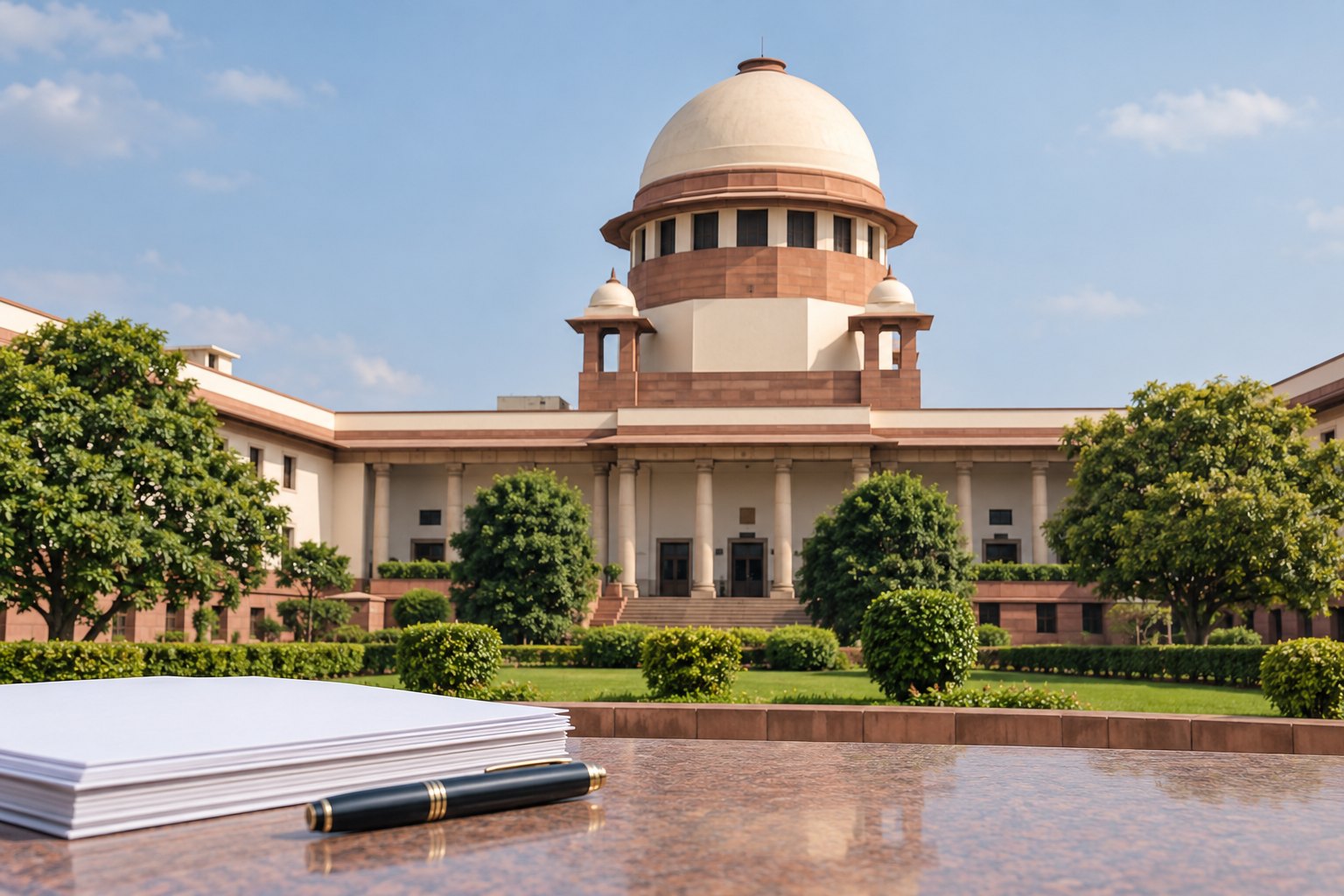
The Supreme Court on October 9, 2026 dismissed Andhra Pradesh's petition against a High Court ruling that struck down its orders giving Backward Classes 34% reservation in rural local bodies and 33.33% in urban ones. The High Court had held on October 1 that total reservation crossed the 50% ceiling and the State's survey was no empirical inquiry.
Syllabus: GS2 · Constitution; GS2 · Federalism & Local Government; Prelims · Polity & Governance
Why it matters
A voter in an Andhra Pradesh village will elect the next sarpanch and ward members under a seat chart in which reservation for Scheduled Castes, Scheduled Tribes and Backward Classes together stays within half the seats. The terms of the State's local bodies ended in March and April 2026, so these elections are already overdue. For every State the lesson is the same: a population count or a household survey cannot by itself justify a quota in panchayats and municipalities. A dedicated commission has to study how far Backward Classes are under-represented in each local body. The larger issue is how to widen the political representation of Backward Classes while keeping open seats, and the burden of proof lies on the State.
Prelims pointers
- Article 243D(6): a State Legislature may reserve Panchayat seats and chairperson offices for backward classes of citizens; the clause is enabling, not mandatory.
- Article 243T(6): the same enabling power for seats and chairperson offices in Municipalities.
- Article 243D: seats for Scheduled Castes and Scheduled Tribes in proportion to their population; not less than one-third of seats for women.
- 73rd Amendment Act, 1992: Part IX (Panchayats) and the Eleventh Schedule. 74th Amendment Act, 1992: Part IXA (Municipalities) and the Twelfth Schedule.
- K. Krishna Murthy v. Union of India (2010): Constitution Bench upheld backward-class reservation in local bodies; total capped at 50%, except for Scheduled Tribes in Scheduled Areas.
- Triple test, Vikas Kishanrao Gawali (2021): dedicated commission's empirical inquiry; quota specified local body-wise; total for SCs, STs and Backward Classes within 50%.
- Article 243K and Article 243ZA: the State Election Commission conducts elections to Panchayats and Municipalities.
- Article 136: the Supreme Court may, in its discretion, grant special leave to appeal against a judgment or order of any court or tribunal.
Practise a UPSC-style question
With reference to the reservation of seats in Panchayats under the Constitution of India, consider the following statements:
1. Reservation of seats for the Scheduled Castes and the Scheduled Tribes is left to the discretion of the State Legislature.
2. The Legislature of a State may provide for reservation of seats in favour of backward classes of citizens.
Which of the statements given above is/are correct?
- (a) 1 only
- (b) 2 only
- (c) Both 1 and 2
- (d) Neither 1 nor 2
Show the answer
Answer: (b) 2 only
1 is incorrect: Article 243D makes reservation for Scheduled Castes and Scheduled Tribes compulsory, in proportion to their population in the Panchayat area. 2 is correct: Article 243D(6) only enables a State Legislature to reserve seats for backward classes; it is the State's choice.
More from the 10 October 2026 edition
- WHO uses International Health Regulations to verify Russian lab worker's death World & IR
- IISc simulation: magnetic fields may push white dwarfs past Chandrasekhar limit Sci-Tech
- PM Dhan-Dhaanya Krishi Yojana: all 100 districts have action plans Economy
- Sarus crane: BNHS holds all-India count to set national baseline Environment
- NIA invokes Anti-Hijacking Act, 2016 over attack on Indian pilot abroad Polity
- External Affairs Standing Committee seeks public technology strategy document Polity
- Draft Drugs Rules amendment extends prescription-drug ad curb to chemists National
- Form 7 for voter-roll deletions: Election Commission caps filings at 10 Polity
- MoSPI proposes expenditure-side Gross State Domestic Product estimates for all States Economy
- RBI raises daily CRR maintenance floor to 99%, plans OMO sale Economy
- Inter-Parliamentary Union elects new President as 153rd Assembly closes in Arusha World & IR
- SEBI notifies Settlement Regulations, 2026 with a fast-track route Economy