
World vegetable-oil prices up 18.3% in a year, raising India’s import costs
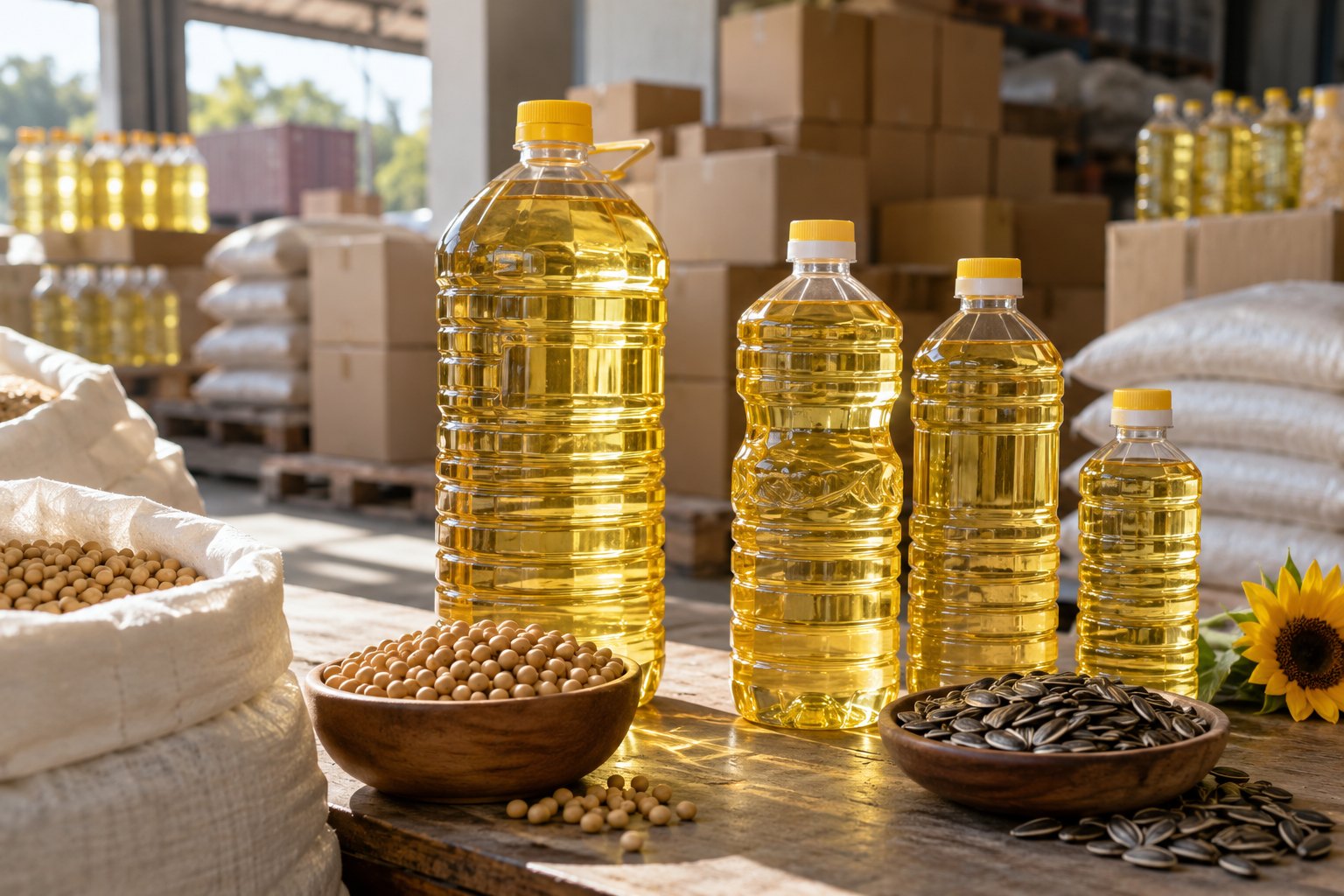
The FAO Vegetable Oil Price Index averaged 198.6 points in September 2026, 18.3% above a year earlier, as palm oil prices rose for a fourth month. Indonesia’s palm oil association expects lower output and record biodiesel demand to cut 2027 exports 14.9%, to 26.5 million tonnes. The Solvent Extractors’ Association of India puts 2026–27 imports at 16.5–17 million tonnes.
Syllabus: GS3 · Indian Economy & Growth; Prelims · Current Affairs & IR; GS3 · MSP, Subsidies & Food Security
Why it matters
A household buying palm or sunflower oil in India pays for weather in Sumatra, fuel policy in Jakarta and shipping in the Black Sea. India imports more than half of the edible oil it eats, so when Indonesia blends more palm oil into diesel or El Niño cuts plantation yields, the landed cost of imports rises and shop prices follow. The government has already cut import duties to shield consumers ahead of the festive season. The larger issue is food versus fuel: biofuel mandates in producing countries compete with kitchens in importing ones, which strengthens the case for higher oilseed yields at home.
Prelims pointers
- FAO Food Price Index: average of five commodity group indices (cereals, vegetable oils, dairy, meat, sugar) weighted by 2014–2016 export shares; 2014–2016 = 100.
- Biodiesel (FAME): made by transesterification, in which oil or fat reacts with methanol over a catalyst such as sodium hydroxide, leaving glycerin as a coproduct.
- ‘B50’ means diesel blended with 50% biodiesel; Indonesia made it mandatory from 1 July 2026 by a decree of its energy ministry.
- Indonesia is the largest palm oil producer and Malaysia the second; Colombia is the fourth-largest and Latin America’s largest.
- National Mission on Edible Oils: Oil Palm arm (NMEO-OP, 2021, Rs 11,040 crore) and Oilseeds arm (NMEO-OS, 2024–25 to 2030–31, Rs 10,103 crore).
- El Niño: warming of the central and eastern tropical Pacific that tends to bring drought to Indonesia and Malaysia, the main palm oil growers.
Practise a UPSC-style question
Consider the following statements about the FAO price indices for September 2026:
1. The vegetable oil index stood at the highest level in its recorded history.
2. The vegetable oil index was 18.3% higher than in September 2025.
3. The overall FAO Food Price Index averaged about 136 points in the month.
Which of the statements given above is/are correct?
- (a) 1 and 2 only
- (b) 2 and 3 only
- (c) 1 and 3 only
- (d) 1, 2 and 3
Show the answer
Answer: (b) 2 and 3 only
1 is incorrect: at 198.6 points the vegetable oil index was at its highest since June 2022, but well below its record of 251.8 points in March 2022. 2 is correct: FAO's release puts the index 18.3% above its level a year earlier. 3 is correct: the FAO Food Price Index averaged 136.0 points, 5.8% above a year earlier. So 2 and 3 only.
More from the 5 October 2026 edition
- India and Japan launch operational manual for Joint Crediting Mechanism Environment
- National Waterway-2 and Protocol Route: Assam methanol barge sails for Dhaka Economy
- TDB backs indigenous AI vision chip with ₹130 crore Sci-Tech
- India conveying messages between Russia and Ukraine, says Jaishankar World & IR
- BRICS tax heads create India-led groups on transfer pricing, revenue statistics Economy
- Supreme Court extends three-language relief to CBSE Class 6 students National
- Indian team demonstrates 5.56-km free-space quantum key distribution link Sci-Tech