
Centre allows final decisions on pending post-facto environmental clearance cases
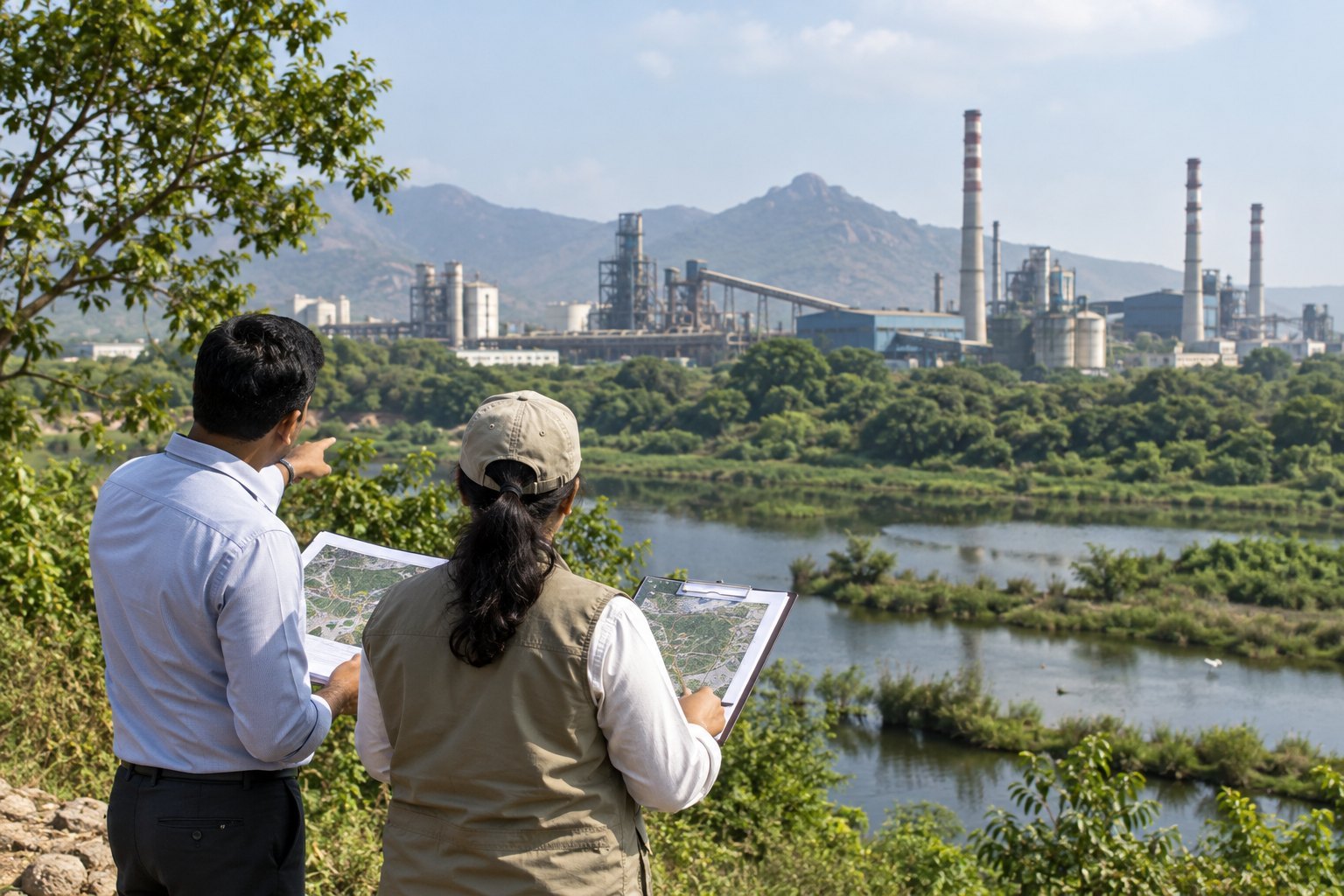
The Union Environment Ministry on September 30, 2026 told expert appraisal bodies and pollution control boards to take pending post-facto environmental clearance proposals to their logical conclusion. The order implements the Supreme Court's July 29 Vanashakti verdict, which quashed a 2021 Office Memorandum but allowed pending applications to be decided under law. Fresh proposals will not be accepted.
Syllabus: Prelims · Current Affairs & IR; GS2 · Executive & Judiciary; Prelims · Environment & Ecology
Why it matters
A builder, miner or factory owner who began work without environmental clearance and later applied under the 2017 or 2021 route can now get a final decision after years of waiting. Homebuyers and workers tied to such projects, whom the Supreme Court treated as innocent third parties, wait on that decision too. For everyone else the door is shut. No new post-facto application will be taken, and the Court said a project begun without clearance invites closure, demolition and the cost of repairing the damage. The larger issue is who may relax a safeguard. Checking a project's harm before it is built is the rule. The Court held that an exception can come through a notification under the Environment (Protection) Act, 1986, and not through a ministry's office memorandum.
Prelims pointers
- EIA Notification, 2006: issued on September 14, 2006 under Section 3 of the Environment (Protection) Act, 1986; it replaced the 1994 notification and requires prior environmental clearance.
- Category A projects are cleared by the Union Environment Ministry on an Expert Appraisal Committee's recommendation; Category B projects by the State Environment Impact Assessment Authority.
- The clearance process has four stages: screening (Category B only), scoping, public consultation and appraisal. The State Pollution Control Board conducts the public hearing.
- Environment (Protection) Act, 1986: enacted to implement decisions of the 1972 Stockholm Conference; Section 3 empowers the Central Government to take all measures to protect and improve the environment.
- Post-facto environmental clearance: approval granted after a project has begun, expanded or modernised without prior clearance.
- Precautionary principle and polluter pays principle: held part of India's environmental law in Vellore Citizens' Welfare Forum v. Union of India (1996).
- Article 48A, a Directive Principle, asks the State to protect the environment; Article 51A(g) makes it a citizen's fundamental duty; a clean environment is read into Article 21.
- National Green Tribunal: set up in 2010 under the National Green Tribunal Act, 2010; its 2021 direction for a standard operating procedure led to the 2021 memorandum.
Practise a UPSC-style question
With reference to the Environment Impact Assessment (EIA) Notification, 2006, consider the following statements:
1. It was issued under the Water (Prevention and Control of Pollution) Act, 1974.
2. It requires prior environmental clearance before construction work or preparation of land begins on a listed project.
3. Category 'A' projects are cleared by the Central Government on the recommendations of an Expert Appraisal Committee.
Which of the statements given above is/are correct?
- (a) 1 and 2 only
- (b) 2 and 3 only
- (c) 1 and 3 only
- (d) 1, 2 and 3
Show the answer
Answer: (b) 2 and 3 only
1 is incorrect: the notification was issued on September 14, 2006 under Section 3 of the Environment (Protection) Act, 1986, not under the Water Act of 1974. 2 is correct: a listed project needs clearance before any construction work or preparation of land, other than securing the land, is started. 3 is correct: Category 'A' projects are cleared by the Central Government on the recommendations of an Expert Appraisal Committee, while Category 'B' projects go to the State Environment Impact Assessment Authority.
More from the 3 October 2026 edition
- Law Ministry notifies rules for National Tribunals Commission and tribunal selection Polity
- Strategic petroleum reserves: G7 to release 100 million barrels through IEA Economy
- Tigress T138 released into Bengal's Buxa Tiger Reserve Environment
- Split SC Bench sends Election Commissioners law challenge to CJI Polity
- Jal Arpan: over 1,850 panchayats take charge of rural water schemes National
- MHA orders 48-hour reporting of cases against AGMUT officers Polity
- Forest-loss dispute in Udanti Sitanadi tests conservation and community rights Environment
- Allahabad HC rules hookah service barred in designated smoking areas Polity
- Allahabad HC opens noise-enforcement PIL, seeks accountability Environment
- INS Sahyadri and Kulish conclude AIME 2026 in the Philippines Defence