
Allahabad HC opens noise-enforcement PIL, seeks accountability
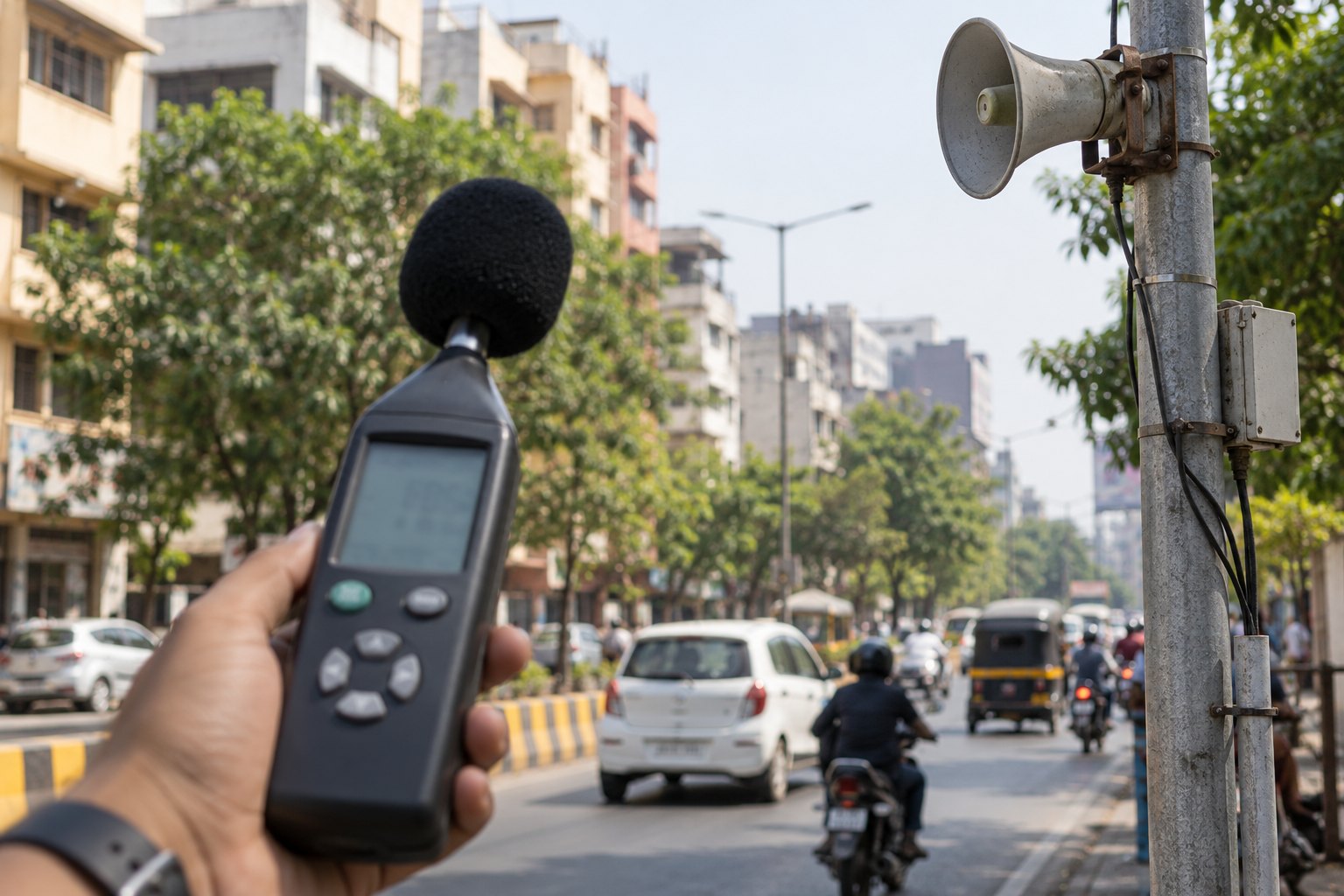
In a September 28 order, the Allahabad High Court's Lucknow bench took up noise pollution as a suo motu PIL after a seven-year-old girl died on September 22, having collapsed in her Balrampur classroom as a loudspeaker procession passed. The court said it had drawn no conclusion on the cause and listed the case for October 12.
Syllabus: Prelims · Environment & Ecology; GS3 · Environment & Conservation; GS2 · Governance & e-Governance
Why it matters
The proceeding connects noise pollution with the practical accountability of police, pollution-control bodies and civic authorities. For UPSC, it provides a concrete example of implementation gaps in environmental regulation and the use of suo motu judicial proceedings to seek information and compliance. The reported order calls for monitoring and public awareness rather than treating enforcement as a single response to one incident. A separate question about the child's death remains unresolved, so the article should not turn temporal proximity to loud music into proof of causation.
Prelims pointers
- Noise Pollution (Regulation and Control) Rules, 2000: penalties for violations are imposed in terms of the Environment (Protection) Act, 1986.
- Suo motu cognisance: a court acts on its own motion, without a petition, here prompted by reports of the incident.
- Both the Uttar Pradesh Pollution Control Board and the Central Pollution Control Board were made parties to the PIL.
- The Lucknow bench of the Allahabad High Court took up the matter while hearing PILs on pressure horns, modified silencers and hooters.
Practise a UPSC-style question
Consider the following statements about the Allahabad High Court's September 28 order on noise pollution:
1. The court held that the loud music caused the student's death.
2. The PIL will examine whether regular monitoring of compliance with noise rules is required.
3. The court said a lack of awareness among citizens is one of the main reasons for violations.
Which of the statements given above is/are correct?
- (a) 1 and 2 only
- (b) 2 and 3 only
- (c) 3 only
- (d) 1, 2 and 3
Show the answer
Answer: (b) 2 and 3 only
Statements 2 and 3 are correct. The court expressly said it had drawn no conclusion on the cause of death, so statement 1 is wrong.
More from the 3 October 2026 edition
- Centre allows final decisions on pending post-facto environmental clearance cases Environment
- Law Ministry notifies rules for National Tribunals Commission and tribunal selection Polity
- Strategic petroleum reserves: G7 to release 100 million barrels through IEA Economy
- Tigress T138 released into Bengal's Buxa Tiger Reserve Environment
- Split SC Bench sends Election Commissioners law challenge to CJI Polity
- Jal Arpan: over 1,850 panchayats take charge of rural water schemes National
- MHA orders 48-hour reporting of cases against AGMUT officers Polity
- Forest-loss dispute in Udanti Sitanadi tests conservation and community rights Environment
- Allahabad HC rules hookah service barred in designated smoking areas Polity
- INS Sahyadri and Kulish conclude AIME 2026 in the Philippines Defence